
Best Stovetop Coffee Makers – 2026 Reviews

A good stovetop coffee maker earns its counter space by doing one thing well: turning ground coffee and heat into a cup you actually look forward to. The category splits into two families, moka pots and percolators, and that single choice shapes flavor, cleanup, and how much coffee you can make at once.
From there, the useful filters are material, cooktop compatibility, capacity, and how much fuss you tolerate. Aluminum moka pots heat fast and stay affordable; stainless steel versions add induction support and a more modern feel; glass percolators let you watch the brew but ask for careful handling. This guide surveys the market so you can pick the right stovetop coffee maker for your kitchen, camp kit, or everyday ritual.
Best Stovetop Coffee Makers – 2026 Reviews
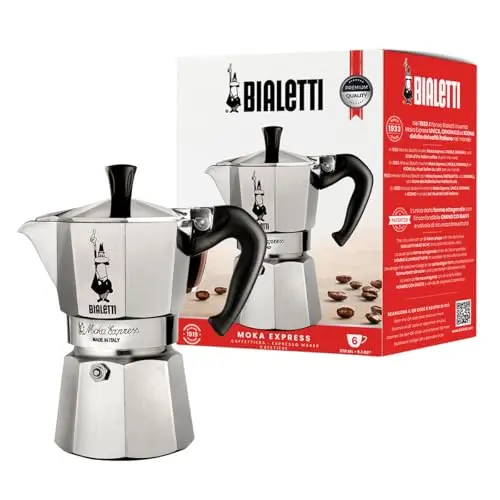
Moka Express – The Original Aluminum Moka Pot
The original Bialetti Moka Express is a six-cup aluminum stovetop espresso maker with the classic octagonal shape, a patented safety valve, and an ergonomic handle. It is made in Italy and designed for gas or electric stovetops, with induction support available through a Bialetti adapter plate.
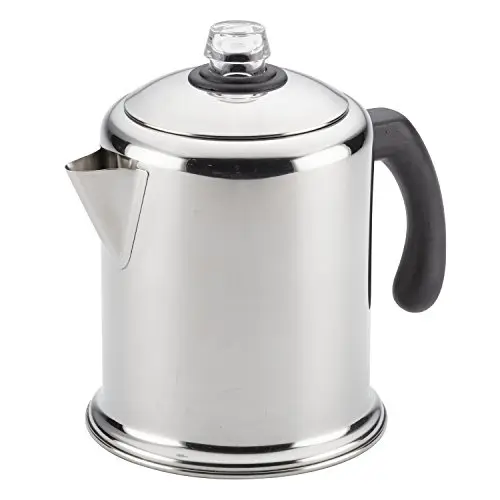
Classic Yosemite 12-Cup Percolator – Large-Batch Stainless
A 12-cup stainless steel stovetop percolator with a polished mirror finish, a clear glass knob, and a permanent filter basket. It is fully immersible, dishwasher safe, and built for large batches of hot coffee.
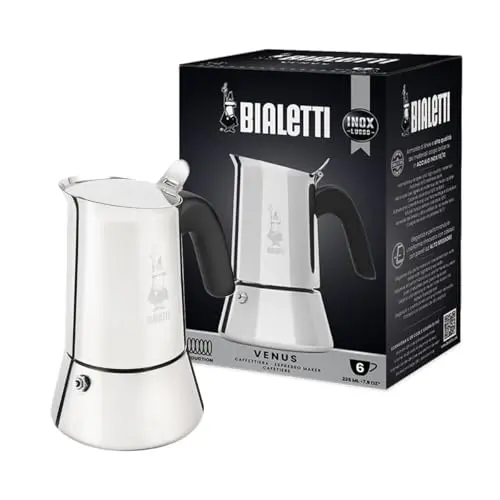
Venus Induction – Stainless Moka for All Hobs
A six-cup moka pot in 18/10 stainless steel, built for gas, electric, and induction cooktops. The Venus pairs Bialetti’s classic brewing method with a durable stainless body and a simple rinse-clean design.

Bozeman Percolator – Stainless Camp-Ready 9-Cup
A nine-cup stainless steel percolator with a glass view top and no aluminum or plastic brewing path. It is designed for camp stoves, grills, and open fires, and it is dishwasher safe at home.
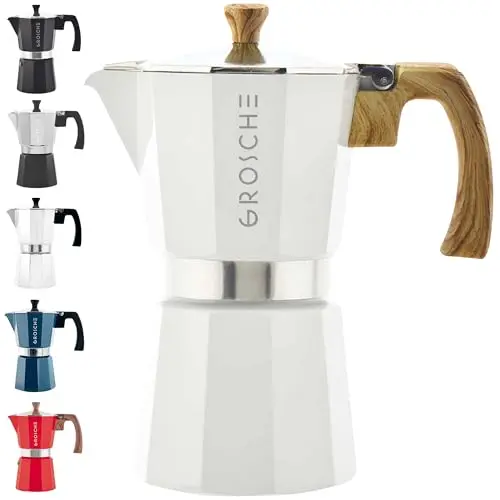
Milano Stovetop Espresso Maker – Soft-Touch 6-Cup Moka
A six-cup stovetop espresso maker in food-grade anodized aluminum with a soft-touch handle, a burn guard, and an Italian safety valve. It works on gas, electric, and propane stoves, and heats slowly on induction.

Classic Stovetop Espresso Maker – Everyday 6-Cup Moka
A six-cup cast aluminum moka pot with a flip-top lid, heat-resistant knob and handle, and broad stovetop compatibility. It is a straightforward, value-oriented option for espresso-style coffee at home or while camping.

Stovetop Espresso Maker – Classic 6-Cup Moka
A six-cup aluminum moka pot with a safety valve, stay-cool handle and knob, and a classic minimalist design. It is built for gas and electric stovetops and makes up to six demitasse cups.
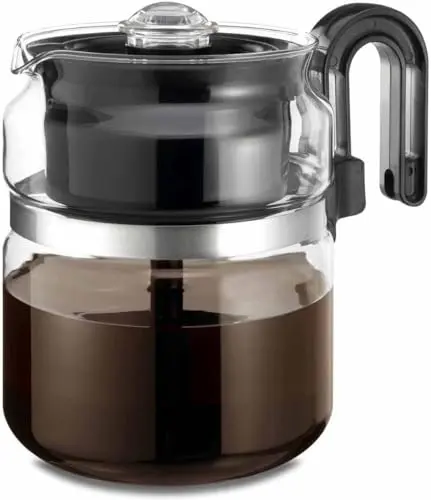
Glass Stovetop Percolator – Clear Brewing for 8 Cups
An eight-cup glass stovetop percolator made from German borosilicate glass with BPA-free brewing components. It includes a heat diffuser and is dishwasher safe for easy cleanup.

Diego Stovetop Espresso Maker – 12-Cup Induction Moka
A 12-cup stainless steel moka pot with an 18/8 body, a heat-resistant hollow handle, a reducer, and a safety valve. It is rated for gas, electric, and induction cooktops and is dishwasher safe.

Aluminum Stovetop Espresso Maker – Compact 6-Cup Moka
A six-cup aluminum stovetop espresso maker with a cool-touch bakelite handle and knob, a flip-up top lid, and a side pour spout. It is compact and works on gas, ceramic, and electric coil stovetops.
How We Evaluated These Stovetop Coffee Makers
We didn’t run controlled kitchen lab tests or long-term reliability trials. What we did: cross-referenced 10 stovetop coffee makers from 9 distinct brands across six decision axes – brewing method, material and build, cooktop compatibility, capacity, cleaning and care, and safety features. We triangulated published specifications, feature sets, and owner feedback where available, then mapped each option against realistic buyer profiles for this category.
The scoring framework weighted real-world fit and performance (70%) – how well each stovetop coffee maker delivers on its stated brewing style and kitchen setup – against feature differentiation (30%) – unique technical advantages such as induction support, safety valves, soft-touch handles, and dishwasher-safe construction. We have no commercial relationship with any brand featured; recommendations track fit and differentiation, not brand preference. If you want the classic moka experience, the Bialetti Moka Express is the natural starting point; if you need a bigger pot for a crowd, the Farberware Classic Yosemite is the better route.
Practical details got extra weight: whether the handle stays cool, whether the pot is hand-wash only or dishwasher safe, how clearly the manufacturer states cup capacity, and whether the base works on gas, electric, ceramic, or induction. We also audited each listing for enough specification detail to support a fair comparison, and we kept the notes shorter where the input data was thinner. That means some picks are easier to recommend for a specific job than as an all-purpose default.
How to Choose the Right Stovetop Coffee Makers
1. Moka Pot vs. Percolator: Which Stovetop Coffee Maker Fits Your Routine
Most stovetop coffee makers fall into one of two camps. A moka pot uses pressure to push hot water up through finely ground coffee, producing a concentrated, espresso-like cup. A percolator repeatedly cycles water through coarser grounds, yielding a gentler, drip-style brew that can stay hot in the pot. Neither is objectively better; the right choice depends on whether you want intensity or volume.
Moka pots suit readers who drink espresso, Cuban coffee, or milk-based drinks and want a small, fast brew. Percolators make more sense for campsites, family breakfasts, and anyone who likes a rounder cup that holds heat. If espresso-style intensity is the goal, the Bialetti Moka Express is the pick here; if you want a large pot for a group, start with a percolator instead.
2. Match Your Stovetop Coffee Maker to Gas, Electric, or Induction
Cooktop compatibility is the most common source of returns in this category. Aluminum moka pots generally work on gas and electric coils, but they need an adapter plate for induction. Stainless steel models with a magnetic base are the safer bet for induction cooktops. Glass percolators are usually limited to gas, ceramic, and electric stovetops, and they need a heat diffuser to soften the flame.
If you have induction, choose a model explicitly rated for it rather than hoping a generic pot will heat evenly. The Bialetti Venus is the induction-ready pick in this lineup, while aluminum pots remain the better fit for gas and electric owners who want faster, lighter brewing.
3. Capacity and Cup Sizes: What Stovetop Coffee Maker Numbers Really Mean
Stovetop coffee maker capacity is not the same as a mug count. Moka pots are usually rated in demitasse cups, roughly two ounces each, so a six-cup pot makes about twelve ounces of strong coffee. Percolators often use a five-ounce cup standard, which is closer to a small mug but still not a full travel tumbler. Read the manufacturer’s fluid-ounce figure when it is provided.
Buy for the number of people you actually serve, not the biggest number on the box. A six-cup moka pot is a sensible default for one or two drinkers; a nine- to twelve-cup percolator is better for families or camp groups. If you regularly make lattes, remember that milk dilutes the brew, so a slightly larger pot can be useful.
4. Material and Build Quality in Stovetop Coffee Makers
Aluminum is the classic moka pot material because it heats quickly and costs less. It also reacts with acidic detergents, so most aluminum pots are rinse-only and should not go in the dishwasher. Stainless steel adds induction support and a more resistant surface, but it can discolor with heat and usually costs more. Glass percolators are the most transparent option, literally and figuratively, yet the glass and plastic components demand gentler handling.
Look at the handle and knob as much as the body. A heat-resistant handle, a secure lid, and a clearly marked safety valve matter more day to day than a mirror finish. If the handle feels like an afterthought, assume it will be the first part to cause trouble.
5. Cleaning, Care, and Longevity for Stovetop Coffee Makers
Most moka pots reward simple care: rinse with warm water, dry fully, and skip harsh detergents. Aluminum models should not go in the dishwasher, while many stainless steel and glass percolators are dishwasher safe. Gaskets and seals are wear items; if your pot starts sputtering or leaking around the middle, a replacement gasket is often the fix.
Percolators need the stem and basket cleaned thoroughly so old oils do not turn bitter. Moka pots need the filter plate checked for clogged holes. In both cases, air-drying completely before reassembly helps prevent odors and mineral buildup.
6. Budget, Mid-Range, and Premium Stovetop Coffee Maker Tiers
Entry-level stovetop coffee makers get you the basic brewing method with fewer refinements. You may give up a soft-touch handle, a more precise safety valve, or induction compatibility. Mid-range models tend to improve the handle, gasket, and finish without changing the core experience. Premium picks add stainless steel construction, larger capacities, or induction-ready bases for cooks who want one pot to work everywhere.
Spend for the features you will actually use, not for the badge on the box. If you are brewing on a gas range and making one or two cups, a simple aluminum moka pot is enough. For a budget-friendly starting point, the Imusa Aluminum Stovetop Espresso Maker covers the basics; step up only if you need induction, a larger batch, or a more forgiving handle.
Frequently Asked Questions
1. What's the difference between the Bialetti Moka Express and the Primula Classic Stovetop Espresso Maker?
Both are six-cup aluminum moka pots, but they approach the job differently. The Bialetti Moka Express is the original iconic shape with a simple safety valve and a made-in-Italy build; it is best treated as a rinse-only pot with a learning curve around heat and timing. The Primula Classic uses a cast aluminum body with a flip-top lid and is often positioned as a value-first moka pot for gas, electric, ceramic, and propane stoves.
Choose the Bialetti if you want the classic form and familiar design. Choose the Primula if you want a lower-cost moka pot and do not mind potential leakage and handle concerns. Neither is a stainless steel induction pot, so induction owners should look elsewhere.
2. How does the Farberware Yosemite percolator compare with the COLETTI Bozeman?
The Farberware Yosemite is a 12-cup stainless steel percolator built for large batches, with a permanent filter basket and dishwasher-safe body. The COLETTI Bozeman is a nine-cup stainless percolator with a glass view top and a camp-first design that works on camp stoves and open fires, though not on induction.
Pick the Farberware for kitchen batches and easy cleanup. Pick the COLETTI for camp coffee, where the glass view top helps you watch the brew and the smaller capacity is easier to pack. Both are percolators, so expect a rounder, less concentrated cup than a moka pot.
3. Do stovetop espresso makers work on induction cooktops?
Only if the pot is explicitly induction compatible. Aluminum moka pots generally are not magnetic, so they will not heat on an induction burner without a Bialetti induction adapter plate or a similar interface disc. Stainless steel models with a magnetic base are the straightforward choice.
If induction is your main cooktop, the Bialetti Venus is the safest recommendation in this lineup because it is built for all hob types. Avoid assuming that a shiny stainless pot is induction-ready; check the base specification before buying.
4. How many cups should I buy in a stovetop coffee maker?
Start with the number of people you serve and the strength you like. A three- to six-cup moka pot suits one or two espresso drinkers, while a nine- to twelve-cup percolator is better for families or camp groups. Remember that moka pot cups are demitasse-sized, not mugs.
If you make milk drinks, size up slightly for latte and cappuccino use. If you mostly drink straight espresso, a smaller pot keeps the brew fresher and easier to finish.
5. Is a moka pot or percolator better for camping?
A percolator is usually the easier camping choice because it can make a larger batch and many models work on camp stoves or open fires. The COLETTI Bozeman is purpose-built for that job, with a stainless body and a glass view top. A moka pot is more compact and makes a stronger cup, but it needs steady heat and careful handling.
If your camp setup is a propane stove and you want espresso-style coffee, a moka pot can work. If you are feeding a group and want simple, hot coffee, choose the percolator.
Final Verdict
For most readers, the Bialetti Moka Express is the stovetop coffee maker to start with. It delivers the classic moka experience in a simple aluminum pot, and the familiar brewing method is easy to learn. If you routinely make coffee for a crowd, the Farberware Classic Yosemite is the large-batch pick, with a stainless body and dishwasher-safe cleanup. Induction owners should go straight to the Bialetti Venus, which is built for all hob types and avoids adapter-plate fuss. And if camp coffee is the mission, the COLETTI Bozeman is the purpose-built option. Choose the pot that matches your cooktop and your realistic cup count, and you will not need a cabinet full of alternatives.
