
Best Superautomatic Coffee Makers – 2026 Reviews

The fantasy is a machine that turns beans into a cappuccino while you find your shoes. The reality is a deep box on the counter that needs water, beans, a rinse cycle, and the occasional descale. The better machines make that routine feel like almost nothing. The mediocre ones turn it into a chore you start resenting by week three.
Two things decide whether you’ll actually love owning one: how the milk system cleans up, and how much of the drink menu you’ll use. A frother with hidden tubes that takes ten minutes to flush loses to a two-part carafe you can run under the tap. A menu of twenty presets you never touch is just clutter on a color display. And durability sits underneath all of it, because a superautomatic has more moving parts than any drip machine you’ve owned – the grinder, brew group, and heater are what eventually complain.
We looked across the brands that define this category – the value-focused workhorses, the espresso specialists, and the premium Swiss and Italian names – and matched each machine to the buyer it genuinely suits. What follows is the short list worth your counter space, along with the tradeoffs that don’t make it onto the box.
Best Superautomatic Coffee Makers – 2026 Reviews
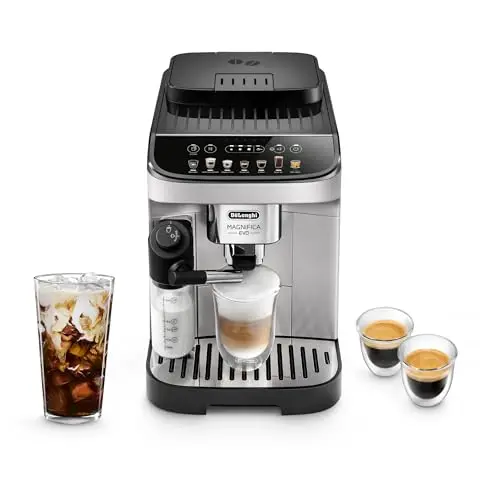
Magnifica Evo – Seven One-Touch Drinks, Iced Coffee Included
The Magnifica Evo covers the widest drink menu this side of the premium tier without asking you to learn a workflow. Seven one-touch recipes – espresso, coffee, cappuccino, latte macchiato, an Over Ice setting, hot water, and a savable My Latte – all run off a 13-setting conical burr grinder. The LatteCrema carafe textures dairy or plant milk and can live in the fridge between sessions, and the removable parts are dishwasher safe.
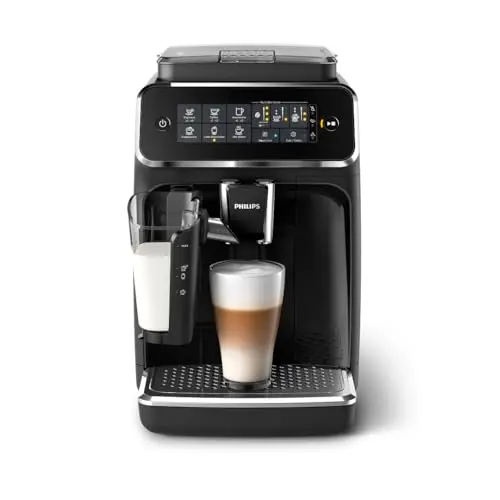
3200 Series – Five Coffees and a Fuss-Free Milk Carafe
Five coffees, one touch, and the easiest milk system in this group. The 3200’s LatteGo carafe is two parts with no internal tubes, so a full rinse takes seconds and the whole thing is dishwasher safe. A ceramic grinder, a removable brew group, and the AquaClean filter – which stretches descaling out to as many as 5,000 cups – round out a genuinely low-friction machine at the entry end of the category.
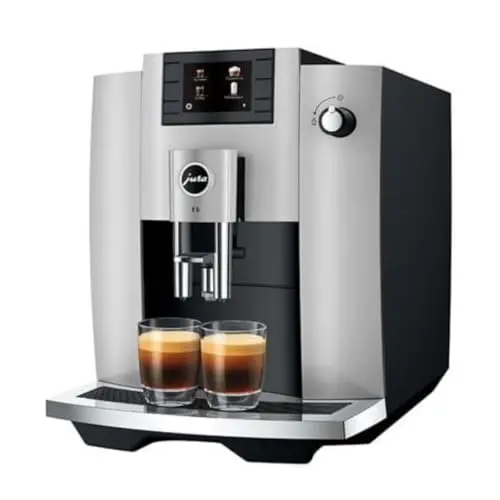
E6 Platinum – Espresso-First Build with Aroma Grinder
Jura’s entry point into its own ecosystem, and the most polished build here. The E6 runs a professional aroma grinder, pulse extraction for espresso, and an eighth-generation brew unit, with programmable strength, volume, temperature, and milk foam – plus hot water on demand for tea. It grinds, tamps, brews, froths, and self-cleans in under a minute.
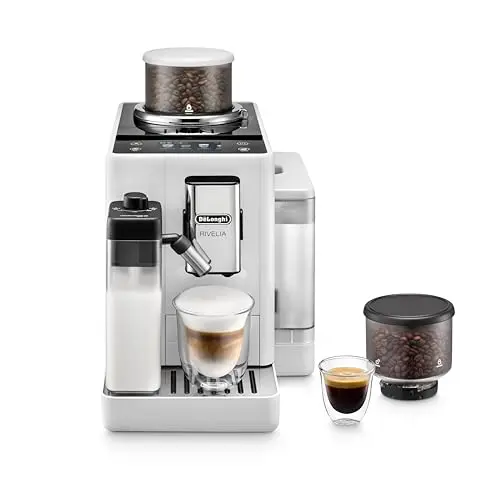
Rivelia – Two Bean Hoppers for On-the-Fly Switches
The Rivelia’s trick is a pair of swappable 8.8-ounce bean hoppers, so you can move from a dark roast at breakfast to decaf after dinner without emptying anything. Eighteen one-touch recipes run off a 13-setting burr grinder, the LatteCrema Hot system froths dairy or plant milk and auto-cleans, and a guided walkthrough sets grind, dose, and temperature for each new bean.
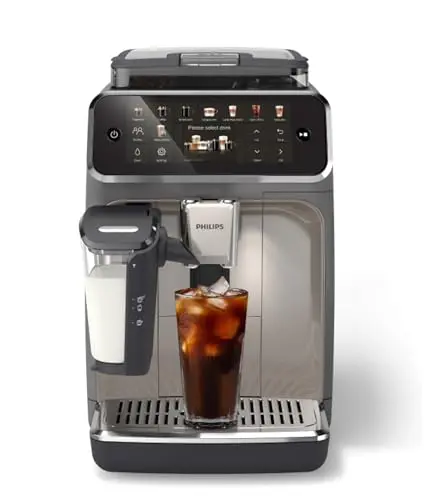
5500 Series – Twenty Presets, Quieter Grinding
The 5500 takes the LatteGo formula and adds range: twenty hot and iced presets, four memory profiles, and a ceramic grinder, all wrapped in SilentBrew sound shielding that Philips rates at 40% quieter than earlier models. It’s ready to brew three seconds after waking, with the same tube-free milk carafe and AquaClean filter setup as the rest of the line.
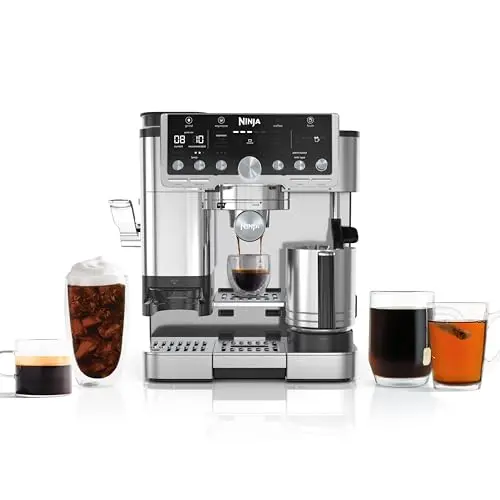
Luxe Cafe Pro – Espresso, Drip, and Cold Brew in One
Not a pure bean-to-cup machine, and that’s the point. The Luxe Cafe Pro handles espresso through a portafilter with an integrated lever tamper, then pivots to drip coffee, rapid cold brew, and hot water for tea. A 25-setting burr grinder, weight-based dosing, Barista Assist prompts, and a hands-free Dual Froth system with an extra-large milk jug make it the most versatile single box in this roundup.
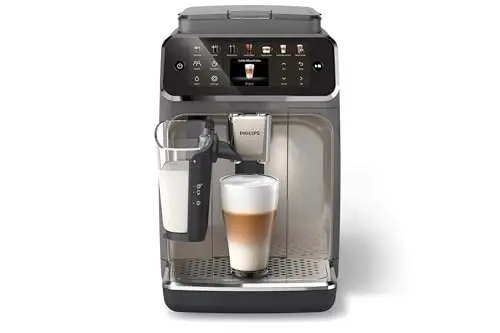
4400 Series – Twelve Hot and Iced Presets
Twelve hot and iced presets, two saved profiles, and the same tube-free LatteGo carafe as the rest of the Philips line. QuickStart has it ready in three seconds, SilentBrew shielding keeps the grind quiet, and a ceramic grinder plus the AquaClean filter handle the daily mechanics. It sits between the simpler 3200 and the wider-menu 5500.
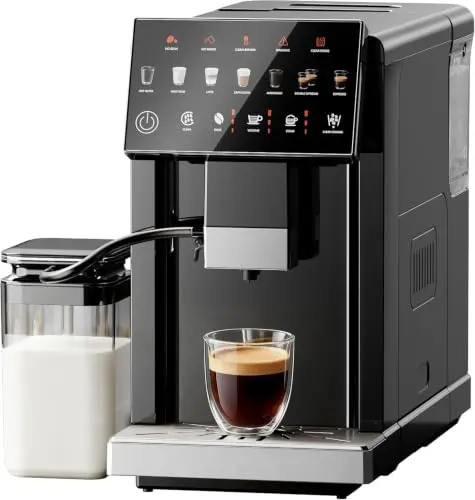
CM004-02 – Budget Bean-to-Cup with 20-Bar Brewing
An entry-level bean-to-cup machine that punches above its tier on paper: a 20-bar pump, a 15-setting integrated burr grinder, a touchscreen with real-time alerts for beans, water, and grounds, and an automatic milk frothing system with an adjustable spout. The 1.5-liter tank and 200-gram hopper are sized for a household rather than an office.
How We Evaluated These Superautomatic Coffee Makers
A few things we can’t tell you: how each machine’s brew group and seals will hold up after a year of daily service. What we can: we cross-referenced 8 superautomatic coffee maker models from 5 distinct brands across six decision axes – drink range, milk handling, grinder adjustability, cleaning routine, capacity and footprint, and support terms. We triangulated published specifications, feature sets, and owner feedback where available, then mapped each machine against realistic buyer profiles: the daily latte drinker who wants zero steps, the espresso drinker chasing shot quality, a household splitting regular and decaf, and the buyer who wants a decent cup before the first meeting.
The scoring framework weighed real-world fit (70%) – how reliably a machine delivers its advertised drinks with the least babysitting – against feature differentiation (30%) – grinder range, milk systems, memory profiles, and automation depth. We audited every claim against the manufacturer’s spec sheet rather than promotional copy, and we pressure-tested menus for overlap: twenty presets that all taste the same count for less than seven that don’t. Durability signals carried real weight too, because a superautomatic has more moving parts than any drip machine. There’s no commercial relationship with any brand here; placement tracks fit and differentiation, not brand preference. If your mornings are built around milk drinks, the Magnifica Evo is the machine we’d start with; if you want the shortest cleanup and a smaller menu, the 3200 Series makes more sense.
How to Choose the Right Superautomatic Coffee Maker
1. What Makes a Coffee Maker Truly Superautomatic
A superautomatic machine, often called bean-to-cup, holds whole beans in a hopper, grinds them with an integrated burr grinder, doses and tamps internally, and brews at the push of a button. There’s no portafilter to fill, no separate tamper, and no puck to knock out. Add an automatic milk system and a rinse program and the whole drink becomes one gesture.
The line gets blurry at the edges. The Ninja Luxe Cafe Pro uses a portafilter and a lever tamper but automates grinding, dosing, and frothing, so it behaves like a hybrid. That’s not a knock – it’s the reason it can also brew a pot of drip coffee and cold brew. If your definition is strictly hopper to cup with nothing to fill, stick to the Philips, De’Longhi, Jura, and EUHOMY machines.
2. Milk Systems: What You're Actually Cleaning Every Night
Milk handling is where ownership satisfaction lives or dies. Tube-based frothers pull milk through internal lines and need a full flush after every use, or the residue turns. Carafe systems like LatteGo and LatteCrema detach in two or three pieces, rinse in seconds, and are usually dishwasher safe. If you drink milk drinks daily, this is the single specification worth paying attention to.
Detachable carafes also store in the fridge, which means you’re not pouring milk back and forth. Steam-and-whisk systems, like the hands-free setup on the Ninja, are the third option: more manual prep but excellent foam and no hidden lines. For the shortest nightly routine, the 3200 Series and its two-part LatteGo carafe is the pick.
3. Grinder Settings, Bean Hoppers, and How Much Control You Need
More grind settings isn’t automatically better, but it does buy room to dial in. Thirteen settings covers the range for most beans; the 25 settings on the Ninja is the most we saw and suits anyone who rotates roasts. Ceramic grinders run quieter and resist heat, while conical steel burrs are the more traditional choice; both produce consistent doses once the machine is calibrated.
Hopper design matters more than most buyers expect. A single 8-ounce hopper is fine for one type of bean, but a household splitting between regular and decaf ends up scooping beans in and out twice a day. The De’Longhi Rivelia solves that with two interchangeable hoppers that swap in seconds and a guided routine that resets grind, dose, and temperature for each bean. If your shelf holds more than one bag at a time, it’s the machine that fits the habit.
4. Water, Filters, and the Descaling Schedule Nobody Enjoys
Every machine here needs descaling eventually; the question is how often. A water filter like AquaClean stretches the interval dramatically, and on the Philips machines it’s rated for up to 5,000 cups before a descale is needed. Filters are consumables, so work them into the running cost.
Look for a removable brew group you can rinse under the tap, dishwasher-safe milk parts, and a machine that prompts you rather than relying on your memory. Emptying the grounds container and rinsing the milk carafe are daily tasks on every model; the differences show up in how many parts you’re handling and whether any of them hide tubes.
5. Fitting a Superautomatic Coffee Maker to Your Counter and Your Habits
These are deep machines. Footprints in this group run from roughly 10 inches to nearly 20 inches deep, and weights span 17 to 27 pounds – relevant if the machine lives under a cabinet or has to move for cleaning. Check overhead clearance for the hopper lid as well as the width.
Then match capacity to volume. A 1.5 to 1.9 liter tank and a hopper in the 200-gram range covers a household of two or three. Larger households or heavy latte drinkers should lean toward bigger tanks and multiple user profiles, since re-dialing strength and milk settings every morning gets old fast. Noise matters too: SilentBrew shielding and Quiet Mark certification are worth having in an open-plan home or a kitchen next to a bedroom.
6. Budget, Mid-Range, and Premium: What the Money Buys
At the entry tier, you get genuine bean-to-cup brewing – an integrated grinder, a milk frother, and a touchscreen – with fewer presets and a lighter build. The EUHOMY CM004-02 is the example here, and it covers the basics without asking much.
Mid-range money buys menu breadth, quieter grinding, saved profiles, and better water filtration. That’s where most buyers land, because the jump in daily usability is bigger than the jump in price. Premium tiers pay for build materials, espresso-specific extraction technology, and features like dual bean hoppers – the Jura E6 Platinum sits there, and it makes sense if you drink straight espresso daily rather than occasionally.
Frequently Asked Questions
1. What's the difference between the De'Longhi Magnifica Evo and the Philips 3200 Series?
The Magnifica Evo is the broader machine: seven one-touch recipes including an Over Ice setting and a savable My Latte, plus 13 grind settings and a LatteCrema carafe that stores in the fridge. It’s aimed at people who want cappuccinos, iced drinks, and a personalized order without touching anything.
The Philips 3200 Series trades menu depth for simplicity. Five drinks, a two-part LatteGo carafe with no tubes, and an AquaClean filter that pushes descaling out to thousands of cups. If your routine is one latte a day, the 3200 Series is easier to own. If you make several different drinks a week, the De’Longhi earns its extra complexity.
2. Is a superautomatic coffee maker actually worth it over a semi-automatic?
If convenience is the point, yes. A bean-to-cup workflow grinds, doses, tamps, brews, and often froths in a single press, and cleanup is a rinse rather than a knock box and a portafilter scrub. Semi-automatic machines give you more control over extraction and let you change baskets and doses, but they add a learning curve, a separate tamper, and usually a standalone grinder.
The trade is control versus repetition. If you want to chase a perfect shot and enjoy the process, a semi-automatic rewards that. If you want the same good cappuccino every weekday morning without thinking, a superautomatic wins on consistency. Most households that buy one stop experimenting within a month.
3. How do the Jura E6 and De'Longhi Rivelia compare for espresso?
They’re solving different problems. The Jura E6 is built around the shot: a Professional Aroma Grinder, a Pulse Extraction Process, and an eighth-generation brew unit, with programmable strength, volume, temperature, and milk foam. It’s the most espresso-focused machine in this group and the most solidly built.
The Rivelia leans toward variety: two swappable bean hoppers, 18 one-touch recipes, and guided setup that dials grind and dose per bean. If you keep a decaf and a regular on the counter, that’s the more useful design. If you mostly drink straight espresso and want the best cup of it, the Jura is the pick; for drink range the Rivelia is the better fit.
4. Do superautomatic coffee makers work with oat, almond, and soy milk?
The machines here that list milk-alternative support handle them fine – LatteCrema and LatteGo both texture plant-based milk, and the Dual Froth system on the Ninja is specified for dairy or non-dairy. The bigger variable is the milk itself: barista-style oat and soy with added fat and stabilizers foam noticeably better than the standard cartons, which tend to sputter and produce thin foam.
Two practical notes. Rinse plant milk out of the carafe promptly, since it can separate and film up faster than dairy. And if foam quality matters a lot, buy the barista version of whatever you drink – it makes a bigger difference than which machine you choose.
5. How much weekly maintenance does a superautomatic coffee maker need?
Daily: rinse the milk carafe and empty the grounds container. Weekly: pull and rinse the brew group if yours is removable, wipe the spouts, and top up beans and water. Occasionally: swap the water filter and run the descale program when prompted.
Machines with no-tube milk systems and dishwasher-safe parts cut the weekly time to a few minutes; tube-based frothers and non-removable brew groups take longer and need more attention to stay fresh. Budget for filters and descaling solution as a running cost – that’s the part of ownership that rarely makes it into the brochure.
Final Verdict
For most households, the Magnifica Evo is the answer: seven one-touch drinks, a milk carafe you can park in the fridge, and enough grinder range to make a new bag of beans taste like it should. If cleanup and budget matter more than menu breadth, the 3200 Series is where I’d point a first-time buyer – five coffees, a two-part carafe, and a filter that keeps descaling off your list. And if espresso quality and counter presence are what you’re chasing, the Jura E6 Platinum earns its premium tier with the best build here. Buy for your actual habits: the drinks you make five days a week, not the ones on the box.
