
Best Tension Curtain Rods – 2026 Reviews

The rod that came with your place is probably a thin steel tube with hard plastic caps that has been holding on out of politeness. Then the curtain slips, the whole assembly drops at an angle, and you’re standing in a doorway with wet hands wondering why something this simple is this hard to get right.
Tension curtain rods look interchangeable and aren’t. Two specs do most of the work. The first is the load rating, which runs from about six pounds at the low end to the mid-thirties at the top. The second is the usable length range, which is always narrower than the number printed on the box. Get either one wrong and no amount of re-tightening will save you.
We went through the tension rod market across major brands to sort out which rods are actually worth the wall space. Some are built for wet shower liners, some for sheer kitchen curtains, and a couple are best bought in pairs for small openings. Here’s how they stack up.
Best Tension Curtain Rods – 2026 Reviews
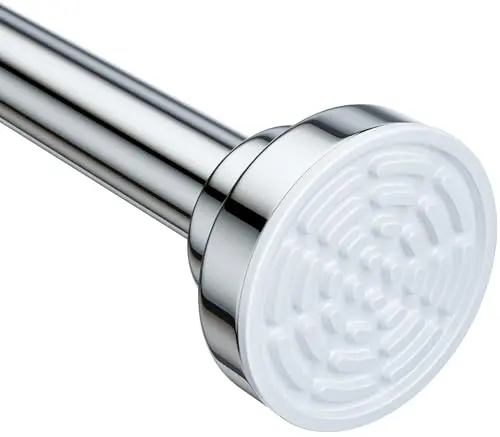
32-80 Inch Stainless Tension Rod – Wide-Range Workhorse
A one-inch stainless steel rod that stretches from narrow doorway openings to full tub surrounds, with a 30-pound load rating and oversized rubber end pads. It’s the most flexible single rod in this lineup and the easiest one to recommend blind.
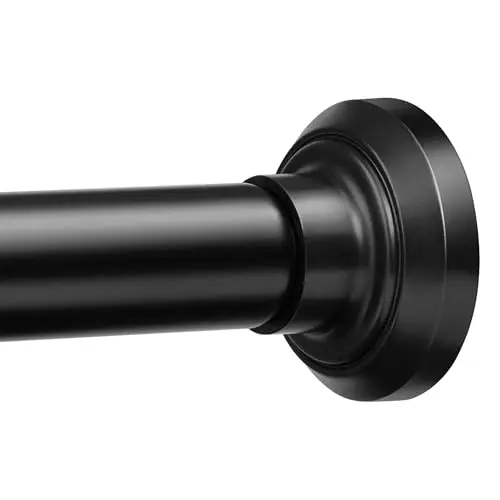
30-76 Inch No-Drill Tension Rod – Bathroom Staple
Stainless steel construction, a 30-pound rating, and a 30-76 inch span that lands on most standard tub surrounds without leaving a gap. The matte black finish is the differentiator – it reads as intentional rather than utility.
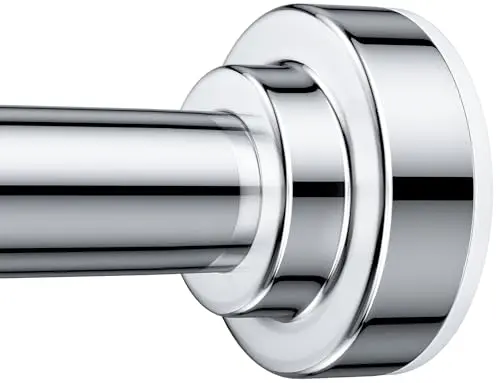
32-80 Inch Spring Tension Rod – Long-Span Simplicity
A one-inch stainless rod with a 22-pound rating, rubber end cups, and a genuinely simple rotation-based install. It covers wide openings and carries the most consistently positive feedback among the long-span group.
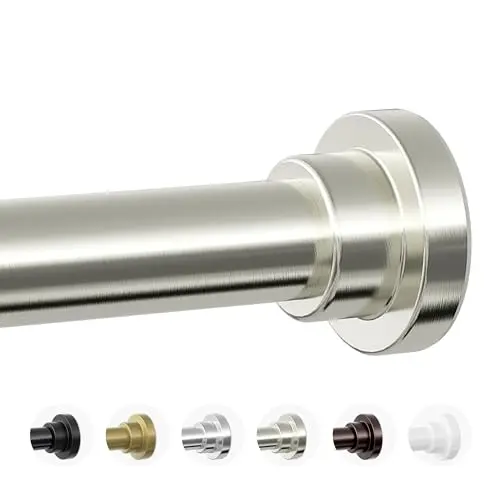
TSR2874 28-74 Inch Tension Rod – Brushed Nickel Heavy Hitter
A full one-inch stainless tube with a 35-pound rating, thick steel connectors, and a brushed nickel finish that looks a step above the black-and-white crowd. Built for heavy fabric and long spans.
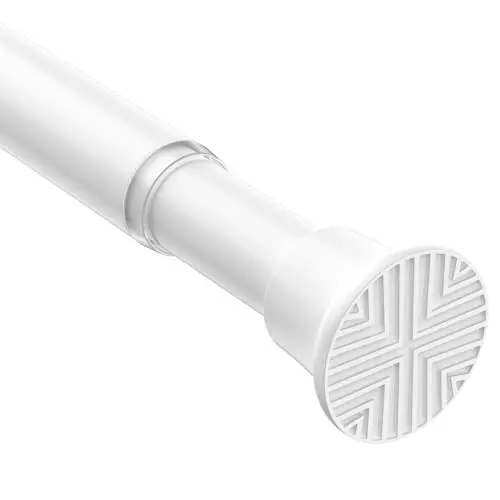
32-76 Inch White Tension Rod – Window Curtain Specialist
A white high-carbon steel rod with a reinforced wall section, designed around window and doorway curtains rather than shower duty. The white finish disappears against trim, which is the whole point.
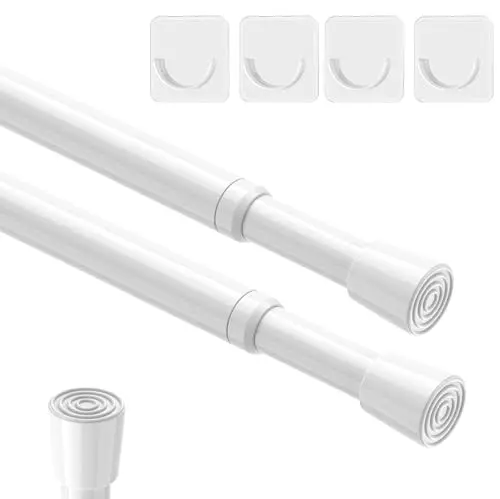
26-39 Inch Spring Tension Rod 2-Pack – Small-Space Pair
Two short white spring-loaded rods in one box, sized for small windows, cabinets, and doorways. No tools, no drilling, and enough adjustability to handle a range of tight openings.
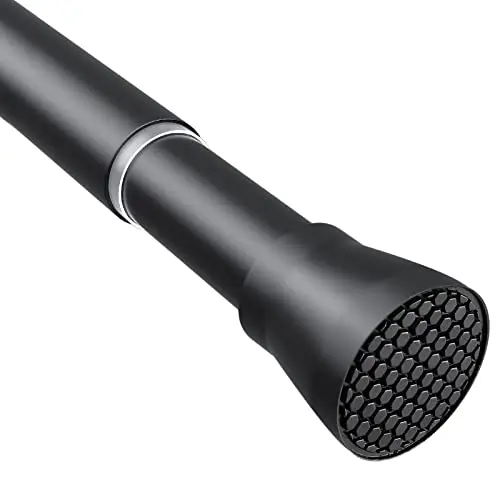
28-48 Inch Spring Tension Rod – Compact Doorway Fix
A shorter black rod built for doorways, closets, and small windows, with an anti-rust coating and thickened rubber pads. Best when you need something between a shower rod and a mini rod.
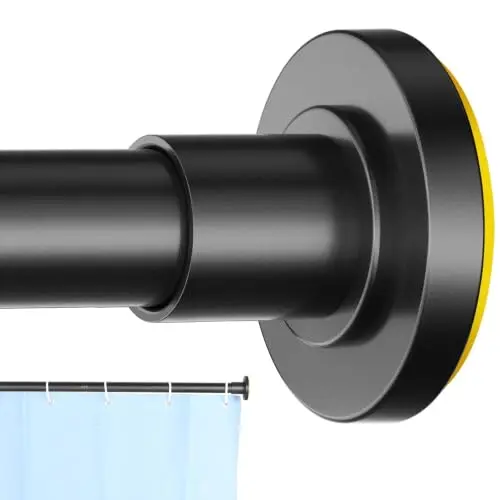
31-80 Inch Tension Rod – Long-Reach Steel
A one-inch stainless rod that reaches up to 80 inches through a combination of splices and a telescoping outer section. Thirty-pound rating and a black finish that suits a modern bathroom.
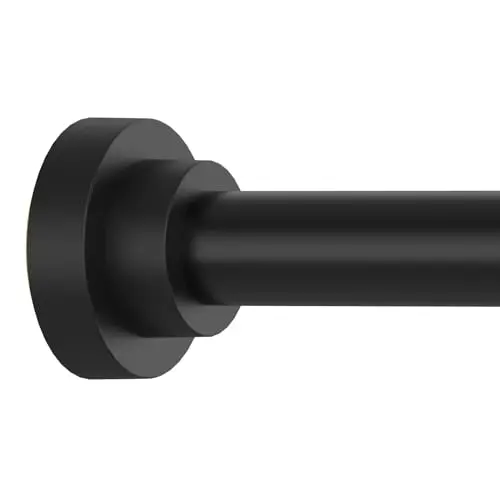
Y-004-FD 43-78 Inch Tension Rod – Long-Span Option
A stainless rod with a rust-resistant coating, rubber end pads, and a 43-78 inch span aimed at wide openings. Tool-free install with a spring-loaded core.
How We Evaluated These Tension Curtain Rods
We didn’t mount these rods in our own bathrooms for months of steam and shower use. What we did: cross-referenced nine tension rod models from nine distinct brands across six decision axes – usable length range, rated load, tube material and diameter, end-cap grip design, installation friction, and corrosion resistance claims. We triangulated published specifications, feature sets, and owner feedback where available, then mapped each rod against the openings people actually shop for: shower stalls, doorways, kitchen windows, and rentals where drilling is off the table. Sectional assembly got extra weight in our scoring, because splicing is where these rods either hold firm or start to sag.
The scoring framework weighted real-world fit (70%) – how reliably a rod holds where it’s actually installed – against feature differentiation (30%) – the build choices that separate one model from the next. We have no commercial relationship with any brand featured here, and recommendations track fit and differentiation rather than brand preference. Where owner feedback was thin or contradictory, we leaned on published specifications and called it out in the individual write-ups. If you want one rod that covers the widest spread of openings, the Ausemku 32-80 Inch Tension Rod is the pick. If a standard tub surrounds the whole job, the ENJOYBASICS 30-76 Inch Tension Rod is the cleaner fit.
How to Choose the Right Tension Curtain Rods
1. Length Range and Section Count: Reading a Tension Curtain Rod Spec Sheet
Almost every rod in this category is sectional, not one continuous telescoping tube. You get a spring-loaded outer piece plus a handful of straight splices, and the advertised maximum is the length you reach with every piece threaded on. That number is a ceiling, not a target. The usable range sits below it – one manufacturer lists a 26-39 inch rod with a best-use window of 28-36 inches, which is an honest way of saying the extremes get shaky.
Measure your opening at the top, middle, and bottom before you buy. Door frames and older walls are rarely square, and a rod that fits at the top can gap at the bottom. For tight jobs like a kitchen window with sheers, a lighter-duty rod is genuinely fine and easier to handle – the SISELBA 32-76 Inch Tension Rod fits that brief.
2. Why Load Rating Is the Most Overlooked Tension Curtain Rod Spec
The spread here is enormous: some rods are rated for around 6 pounds, others for 30 to 35 pounds. That gap is the difference between hanging sheers and hanging a soaked shower liner. A wet liner is heavy, and it swings. If your curtain load is real, buy on the rating, not the length.
Heavier ratings come from three things: a thicker tube wall, a stronger inner spring, and wider end pads that spread pressure across more surface. When you’re hanging something substantial, the Mcrbeay 28-74 Inch Tension Rod is the one we’d point you toward – it carries the highest load rating in this lineup and uses a full one-inch tube.
3. Wall Surface and End-Cap Grip: Where Tension Rods Actually Fail
Almost every slipping complaint traces back to the contact patch, not the spring. Smooth, glossy surfaces – tile, glass, polished stone – are the hardest to hold. Painted drywall and wallpaper are easier on grip but easier to dent, so over-tightening becomes a real risk. Soft rubber pads beat hard plastic ones on both counts.
One practical habit: install, then re-tighten after an hour. Rods settle as the pads compress, and that second twist is often all that separates a rod that holds for a year from one that drops in a week.
4. Rust Resistance in Bathrooms: What Stainless Steel Actually Buys You
In a humid bathroom, finish is not cosmetic. Coated carbon steel is fine until the coating chips at a splice joint, which is exactly where water collects. A stainless steel tube costs a little more and resists far better, though even stainless can show spotting at the seams if the rod never dries out.
Be skeptical of absolute claims. Even rods advertised as never-rusting pick up complaints over months of steam. If you’re hanging in a shower, prioritize stainless and wipe the rod down occasionally.
5. What Tension Curtain Rods Cost at Each Tier
This is a budget category, and the tiers are narrow. Entry-level rods are usually thin carbon steel, often sold in multi-packs, and best for sheers, doorways, and small windows. Mid-range is where stainless steel and a full one-inch tube start showing up. The premium end of this category mostly buys a nicer finish and a higher load rating, not a fundamentally different design.
If you need two or three small rods rather than one big one, a multi-pack makes more sense than buying singles – the AIZESI 26-39 Inch Tension Rod 2-Pack is the practical answer for cabinet, doorway, and small-window jobs.
6. Ausemku vs TEECK: Two Long-Reach Tension Curtain Rods Compared
Both cover a wide span and both install without tools, so the decision comes down to load and grip. The Ausemku carries a 30-pound rating and larger end pads, which makes it the safer pick over a full tub. The TEECK is lighter-duty at a 22-pound rating but has the more consistent owner sentiment of the two, with fewer notes about mid-span sag.
For a shower, go Ausemku. For a wide doorway or a long window where the load stays light, the TEECK 32-80 Inch Tension Rod is easier to live with and less fussy to set.
Frequently Asked Questions
1. What's the difference between the Ausemku tension rod and the TEECK tension rod?
Both cover a wide span and both install without tools, so the split comes down to load and grip. The Ausemku carries a 30-pound rating and oversized end pads, which makes it the safer choice over a full tub. The TEECK is rated for 22 pounds but has the more consistent owner feedback of the two, with fewer notes about mid-span sag. If you’re hanging a wet liner, go Ausemku. For a wide doorway or a long window with lighter curtains, the TEECK 32-80 Inch Tension Rod is easier to live with.
2. How does the ENJOYBASICS rod compare to the CorkLatta rod?
They’re close cousins on paper – both use stainless steel, both carry a 30-pound rating, and both rely on a sectional splice design. The difference is the fit window and the finish. ENJOYBASICS lands at 30-76 inches in matte black, which maps almost exactly onto standard tub surrounds. CorkLatta reaches 31-80 inches, so it wins on very wide openings but is more prone to mid-span sag once fully assembled. For a standard bathroom, ENJOYBASICS is the tighter fit.
3. Can a tension curtain rod really hold a heavy curtain without drilling?
Yes, if you buy on the load rating rather than the length. The rods here range from roughly 6 pounds to 35 pounds of rated capacity, and a wet shower liner plus an outer curtain sits well above the low end. Look for a one-inch tube, a strong inner spring, and wide rubber end pads – those three things carry the load. Then re-tighten after the first hour, once the pads have compressed.
4. Why do tension rods sag or fall after a few weeks?
Almost always the contact patch, not the spring. Pads compress over time, and on smooth tile or glass the rod slowly creeps down. Long assemblies add a second problem: splice joints flex, which shows up as mid-span sag. A second tighten after installation solves most of it. If it doesn’t, the rod is probably over-extended past its usable range.
5. Are two-pack tension rods worth it for small windows?
Usually, yes. If you have two or three small openings – a bathroom window, a cabinet bay, a narrow doorway – buying singles adds up fast, and short rods are simple enough that build quality matters less. The AIZESI 26-39 Inch Tension Rod 2-Pack covers that job at an entry-level price. Just stay inside its recommended range rather than stretching to the maximum, and don’t expect a 6-pound-rated rod to hold a heavy panel.
Final Verdict
For most people, the Ausemku 32-80 Inch Tension Rod is the right call. It spans the widest range of openings here, carries a 30-pound rating, and uses a full one-inch stainless tube that won’t flex over a tub. It’s the one rod you can buy without measuring twice.
If you’re outfitting small windows or doorways, the AIZESI 26-39 Inch Tension Rod 2-Pack covers two small openings at an entry-level price. And if your curtain load is genuinely heavy – a thick liner, a full blackout panel – the Mcrbeay 28-74 Inch Tension Rod carries the highest rating in the lineup and won’t flinch.
Match the rating to the load, measure at three points, and re-tighten after an hour. Do that and almost any rod here will hold.
