
Best Thick Comforters – 2026 Reviews

A comforter that looks lofty online can feel like a flat layer once it’s out of the vacuum bag. That’s the central frustration with shopping for a thick comforter: thick gets used as a marketing adjective, not a measurement. The useful distinction is between a comforter that’s genuinely stuffed and one that just has a puffy photo.
For this roundup, we treated thick as a real performance bar. We looked at fill weight and loft, shell fabric, warmth without overheating, and how the comforter holds its shape after washing. A thick comforter should feel substantial on the bed, not just heavy in the box, and it should suit the sleepers who actually want that extra layer.
We cross-shopped a spread of comforters from different brands, from down-alternative workhorses to plush fleece sets. The picks below cover the real spread: the cloud-like splurge, the heavyweight winter workhorse, the hotel-style feather blend, and the budget-friendly plush option. Choose by sleep temperature and style, not by the word thick alone.
Best Thick Comforters – 2026 Reviews

Marshmellow Comforter – Double-Stuffed Cloud Loft
The Marshmellow is the closest thing here to a comforter that’s consciously overfilled. Mellow double-stuffs the down-alternative fill for visible loft, then uses heat-adaptive fibers and an OEKO-TEX Class I shell to keep the feel breathable and skin-friendly. It works as a standalone comforter or a duvet insert.
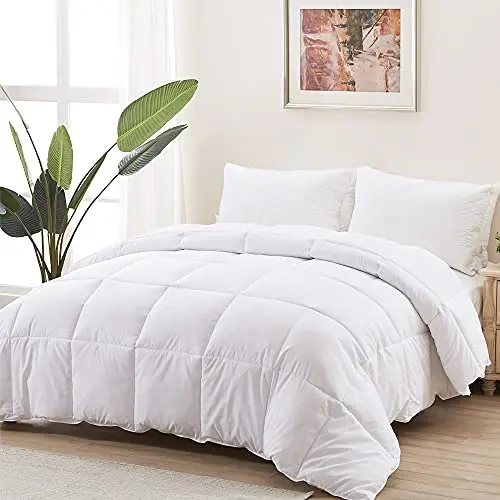
400GSM Down Alternative Comforter – Heavyweight Winter Warmth
ACCURATEX takes a more measurable route to thick: a 400GSM down-alternative fill rated medium/heavyweight, wrapped in a peach-skin polyester shell. The box stitching and piped edges are built to keep the fill in place, and eight corner tabs make it easy to anchor inside a duvet cover.
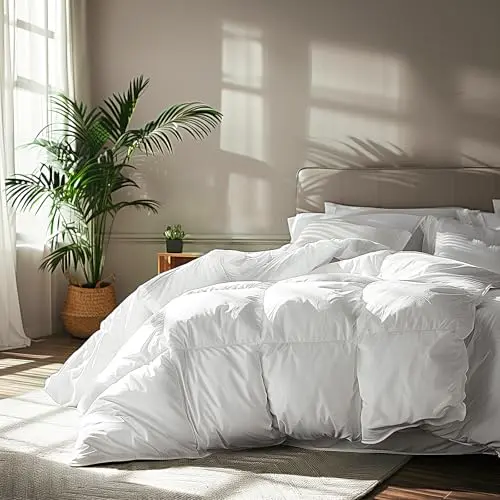
Goose Feather & Down Fiber Comforter – Hotel-Style Extra Warmth
Serta’s extra-warmth comforter uses a 90/10 blend of white goose feather fiber and down fiber, wrapped in a 100% cotton shell. The FreshLoft process and OEKO-TEX certification address odor and allergy concerns, while sewn-through box construction and corner loops keep the fill anchored.
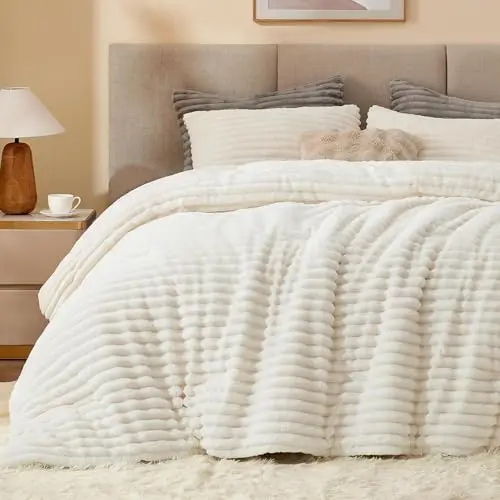
Fleece Comforter Set – Plush Faux-Fur Warmth
BEDELITE’s set takes thick in a different direction: a faux-fur fleece face, a micro-mink reverse, and down-alternative fill in a three-piece set with matching pillowcases. It’s less about crisp bedding and more about a warm, fuzzy layer for cold rooms.

3D Jacquard Sherpa Comforter Set – Cozy Cold-Night Cover
LLanCL pairs a 3D jacquard microfiber face with a thick Sherpa fleece back and down-alternative fill. The three-piece queen set includes two pillowcases and is built for cold-night coziness rather than a minimalist look.
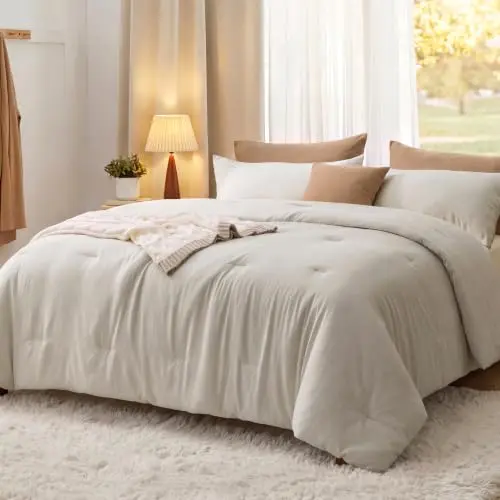
Prewashed Comforter Set – Oversized Softness
Bedsure’s prewashed set is the oversized, easygoing option. The polyester shell has a cotton-like softness, the three-piece set includes pillowcases, and the oversized king dimensions are built for beds that need a more generous drape.
How We Evaluated These Thick Comforters
We didn’t run long-term loft testing or multi-month durability trials. What we did: cross-referenced 6 thick comforter models from 6 distinct brands across 5 decision axes – fill weight and loft, shell material, warmth-to-breathability balance, construction and fill stability, and care requirements. We triangulated published specifications, feature sets, owner feedback where available, and use-case fit for sleepers who actually want a thicker bed layer. We mapped each option against the practical realities of a thick comforter: whether the loft survives the wash, whether the shell feels good against skin, whether the warmth is manageable rather than suffocating, and whether the size actually covers the bed it’s meant for. We also weighed care labels heavily, because a comforter that can’t be cleaned without a trip to the dry cleaner is a long-term liability. That’s the filter we applied before ranking anything.
The scoring framework weighted real-world fit and performance (70%) – how well each comforter delivers on warmth, loft, and comfort for its intended sleeper – against feature differentiation (30%) – unique construction, materials, and use-case strengths. We have no commercial relationship with any of the brands featured; recommendations track fit and differentiation, not brand preference. If you want the most visible loft, the Marshmellow Comforter is the match; if you want a measurable heavyweight build, the 400GSM Down Alternative Comforter is the better route.
How to Choose the Right Thick Comforter
1. What Actually Makes a Comforter Feel Thick
Thickness in a comforter comes from two things working together: fill weight and loft. Fill weight is the amount of fill packed into the shell; loft is how much air that fill traps. A comforter can be heavy on the scale and still feel flat if the fill is compressed or unevenly distributed. The better signal is a combination of a substantial fill spec, clean box stitching, and a shell that doesn’t fight the fill.
Shell material changes the feel more than most shoppers expect. A peach-skin polyester reads soft and smooth, while a 100% cotton shell feels more natural and breathable. Neither is automatically better; the right choice depends on whether you want a cool, crisp hand or a plush, fuzzy one.
2. Thick Comforters vs. Heavy Comforters: Not the Same Thing
A heavyweight comforter and a thick comforter overlap, but they aren’t identical. Weight is about how much the comforter presses on you; thickness is about visible loft and trapped warmth. A down-alternative comforter can feel thick and airy, while a dense feather-and-down fiber blend can feel heavier and more traditional. The key is matching heat retention to your sleep temperature, not just chasing the bulkiest photo.
If you want the traditional hotel feel, the Serta Goose Feather and Down Fiber Comforter is the pick here. Its cotton shell and feather blend give it a denser drape than the polyester options, though the tradeoff is a dry clean only care label.
3. Match the Thick Comforter to Your Sleep Temperature
Cold sleepers can usually handle a thicker, warmer comforter without much trouble. Hot sleepers need more nuance: a thick comforter can still work if the fill is temperature-balancing or the shell breathes well. The worst outcome is a comforter that feels great for the first ten minutes and then turns into a heat trap overnight.
For a cold bedroom or a sleeper who likes a fuzzy layer, the BEDELITE Fleece Comforter Set is a strong budget route. Its plush fleece face is warmer than a standard woven shell, but it’s less breathable than cotton or peach-skin polyester, so it suits cold sleepers better than year-round hot sleepers.
4. Construction Details That Keep a Thick Comforter From Going Flat
Thick comforters live or die by construction. Box stitching keeps fill from sliding into corners, while corner tabs or corner loops keep the comforter anchored inside a duvet cover. Piped edges add structure and reduce the chance of seams blowing out. None of these details make a thin comforter thick, but they help a thick one stay thick after washing and regular use.
Wash care matters too. A machine washable comforter is easier to keep fresh, but low-heat drying and gentle cycles matter more than the label alone. If the fill clumps after washing, the loft is gone even if the shell survives.
5. Sizing and Drape: Why a Thick Comforter Can Look Smaller on the Bed
A thick comforter can still look undersized if the dimensions are tight. Thick fill eats up some of the drop at the sides, so a standard queen comforter on a deep mattress may leave less overhang than expected. If you want a generous look, an oversized king or oversized queen matters more than another inch of loft.
Measure your mattress depth and decide how much drape you want before you buy. A comforter that’s technically the right size but barely covers the mattress will feel less luxurious than a slightly larger one with a little extra hang. This is also where standard queen sizing can disappoint buyers who are used to hotel bedding.
Frequently Asked Questions
1. What's the difference between the Mellow Marshmellow and the ACCURATEX 400GSM comforter?
The Marshmellow is the loft-first pick: it uses a double-stuffed down-alternative fill and temperature-balancing fibers to create a visibly puffy comforter that still aims to breathe. The ACCURATEX is more of a measurable heavyweight buy, with a 400GSM fill and a peach-skin shell that feels dense and winter-oriented. If you want the cloud look, the Marshmellow Comforter is the closer match; if you want a workhorse winter layer, ACCURATEX is the more practical route.
2. Is a thick comforter too warm for hot sleepers?
Not automatically. A thick comforter can work for hot sleepers if the fill is breathable and the shell doesn’t trap moisture. The risk is a dense heat-retaining build with a non-breathable cover, especially in a warm room. Look for temperature-balancing language and a shell that feels smooth rather than fuzzy; plush fleece is better for cold sleepers than for people who overheat.
3. How does the Serta feather comforter compare with the Bedsure prewashed set?
The Serta is the traditional feather-and-down fiber option, with a 100% cotton shell and a denser hotel-style drape. It’s warmer and more natural-feeling, but it’s dry clean only. The Bedsure Prewashed Comforter Set is the easier-care, oversized pick with a cotton-like polyester shell and a lighter loft. Choose Serta for a classic feather feel; choose Bedsure for a big-bed drape and simpler washing.
4. Do thick comforters go flat after washing?
They can if the fill clumps or the shell shrinks. Box stitching and corner tabs help the fill stay distributed, but wash care matters just as much. Use a gentle cycle, avoid high heat, and take time to low-dry the comforter with room to tumble. A thick comforter that’s machine washable is easier to maintain, but it still needs a little patience to restore its loft.
Final Verdict
For most buyers, the Marshmellow Comforter is the answer – it delivers the visible loft people expect from a thick comforter without feeling like a weighted blanket. If you sleep cold and want a measurable winter build, the 400GSM Down Alternative Comforter is the more practical heavyweight pick. On a tighter budget, the BEDELITE Fleece Comforter Set gives you a warm, fuzzy layer and matching pillowcases for less. And if you want a traditional feather feel, the Serta Goose Feather and Down Fiber Comforter is the hotel-style choice, provided you’re okay with dry cleaning. Match the comforter to your sleep temperature first, and the thickness decision gets much easier.
