
Best Toddler Travel Beds – 2026 Reviews

A toddler travel bed has to do two jobs at once: convince a small child to sleep somewhere unfamiliar, and convince you it was worth packing. The wrong pick turns a hotel floor, Grandma’s spare room, or a tent into a bedtime negotiation. The right one sets up fast, feels familiar, and gives you a place to put the kid down without hauling a crib.
The category splits in three directions. Inflatable beds win on packed size and often add bumper rails; foam floor beds feel more like a real bed and skip inflation; folding canvas cots are the lightest, simplest option for short naps. The decisions that matter most are safety containment, setup and packability, and how closely the sleep surface matches your child’s age and sleep style.
We compared the major options across those axes, from budget-friendly cots to premium travel systems, so you can pick the bed that fits your trip instead of guessing from the product photo. Some are built for checked luggage; others are better for the car, the guest room, or a SlumberPod setup.
Best Toddler Travel Beds – 2026 Reviews
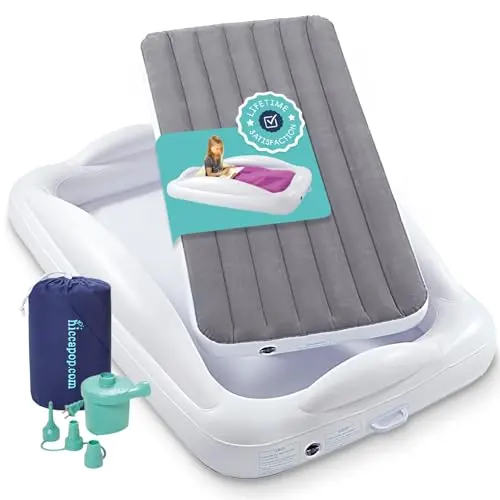
Inflatable Toddler Travel Bed – 4-Sided Bumper Protection
A four-sided inflatable toddler bed built around containment and quick setup. The bumper rails are taller and longer than typical inflatable designs, and the included electric pump gets it ready in under half a minute. It packs into an XL travel bag and works for home, Grandma’s house, camping, or vacations.
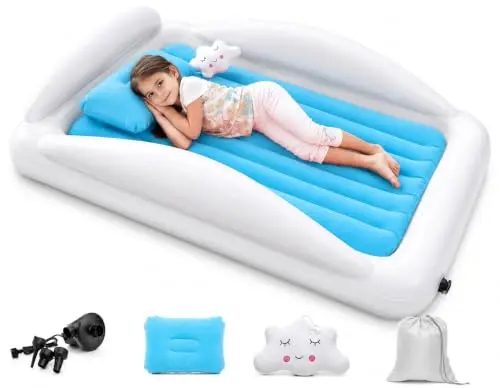
Inflatable Toddler Travel Bed – Complete Travel Kit
A complete inflatable travel bed set with three raised safety bumpers, an electric pump, carry case, pillow, patching kit, and a small stuffed animal. It is sized for toddlers from 18 months and fits standard crib sheets.
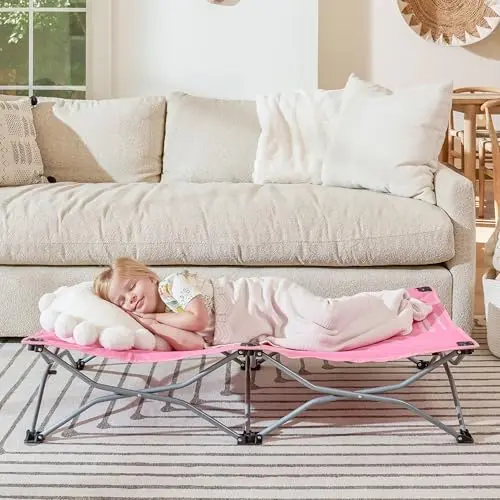
My Cot Portable Toddler Bed – Fold-and-Go Metal Cot
A folding canvas cot for toddlers ages 2 to 5, with an all-metal frame and a reinforced sleeping surface. It sets up in seconds, folds compactly, and skips inflation entirely. The 75 lb weight limit suits small children for naps, sleepovers, daycare, and camping.
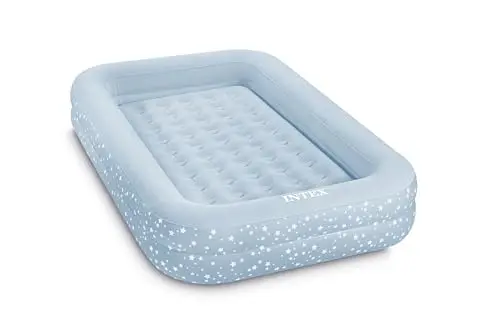
Kidz Travel Bed Set – Roomy Inflatable with Hand Pump
A roomy inflatable travel bed set for ages 3 to 6, with a removable inner mattress, star-print frame, hand pump, and carry bag. The 66 by 42-inch footprint gives kids more room to sprawl, and the removable mattress fits standard crib sheets.
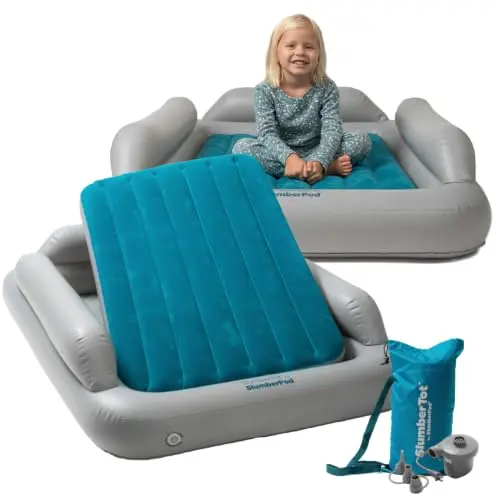
SlumberTot – Compact Inflatable Travel Bed
A compact inflatable toddler bed designed to fit inside a SlumberPod or work on its own. It uses two separate air chambers, integrated side rails, and an included electric pump, and packs into a shoulder bag that fits on a carry-on.
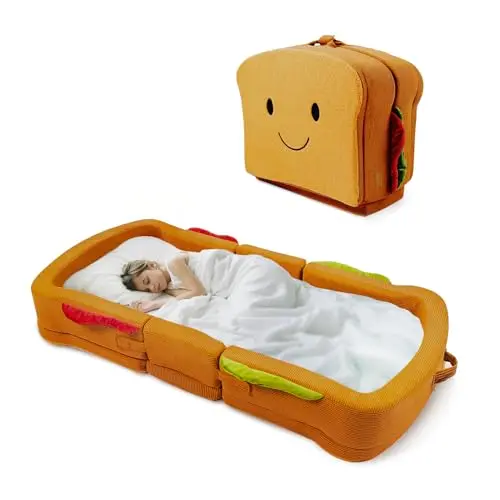
Sandwich Style Toddler Travel Bed – Foam Floor Bed with Rails
A foldable foam travel bed with a sandwich-style design, raised edges, and a washable cover. It is CPC-certified, needs no inflation, and is aimed at families who want a firmer, more bed-like sleep surface for travel or home.
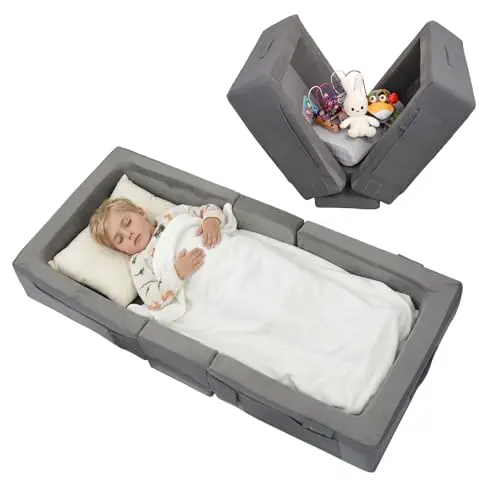
Portable Toddler Travel Bed – Foam Floor Bed with Safety Rails
A foldable foam floor bed with integrated safety rails, a washable cover, and no assembly. The 2-inch foam base is designed for kids roughly 25 to 48 months, and the compact fold makes it easy to move between home and travel.
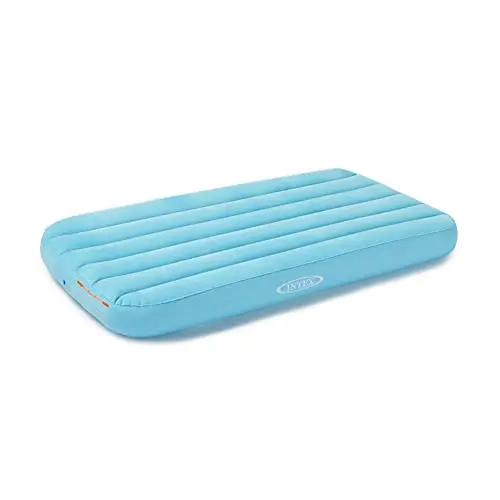
Cozy Kidz Inflatable Airbed – Lightweight Sleepover Bed
A compact inflatable airbed for kids ages 3 to 10, with a velvety soft surface, Fiber-Tech construction, and a carry bag. It is a simple, budget-friendly sleepover and travel option rather than a full bumper bed.
How We Evaluated These Toddler Travel Beds
We didn’t run these beds through a full season of hotel stays, repeated inflation cycles, or overnight leak tests. What we did: cross-referenced eight toddler travel beds from seven distinct brands across six decision axes – bumper and rail safety, setup and inflation, packed size and weight, sleep-surface support, age and weight fit, and care and durability. We triangulated published specifications, feature sets, owner feedback where available, and use-case fit for families traveling with toddlers.
The scoring framework weighted real-world fit (70%) – how well each bed handles the way toddlers actually sleep away from home – against feature differentiation (30%) – unique safety, packing, or comfort advantages that separate one model from another. We have no commercial relationship with any of the brands featured; recommendations track fit and differentiation, not brand preference. If you need the most contained inflatable, the Hiccapop is your match; if you want a complete travel kit, the Sleepah serves you better.
We also mapped each bed to representative buyer profiles: frequent flyers who need a carry-on footprint, families driving to Grandma’s who can trade pack size for comfort, and parents of toddlers who roll in their sleep and need visible boundaries. That is why a compact premium bed and a budget-friendly cot can both earn a place here without pretending to be interchangeable. Where feedback was uneven, we leaned on published specifications and the bed’s stated use case rather than filling gaps with guesswork.
How to Choose the Right Toddler Travel Beds
1. Inflatable vs. Foam vs. Cot: Which Toddler Travel Bed Fits Your Trip?
The first decision is the sleep system. Inflatable toddler travel beds pack small and often include bumper rails, but they depend on a pump and a good valve seal. Foam floor beds feel more like a real mattress and skip inflation, though they take up more storage space and usually need a foam-expansion window before first use. Folding canvas cots are the fastest to set up and the simplest to wipe clean, but they are firmer and better for naps than every-night sleep.
If you want a cot that folds flat and skips inflation entirely, the Regalo My Cot is the pick. If you need bumper containment and a compact packed size, an inflatable bed is the more practical direction.
2. Safety Rails and Bumpers: What Actually Keeps a Toddler in Bed
Bumpers are not a substitute for supervision, but they do give a toddler a physical boundary in an unfamiliar room. Look for raised side rails that stay upright after inflation, four-sided coverage if your child moves a lot, and a bed height low enough that getting in and out is easy. Foam beds use integrated rails that cannot deflate, while inflatable rails depend on separate air chambers or a well-sealed bumper ring.
If four-sided bumper coverage is non-negotiable, the Hiccapop is the pick. If you prefer a bed with no air chambers at all, a foam floor bed with raised edges is the safer bet.
3. Packed Size, Weight, and Setup Time for Real Travel
Packed size matters more than inflated dimensions when you are flying or loading a car. A bed that fits in a carry-on is a different purchase than one that lives in the trunk. Check the included pump and carry bag, and think about how long setup takes after a long day. A cot that unfolds in seconds can be less stressful than an air bed that needs a pump and a valve check.
For the smallest packed footprint, the SlumberPod SlumberTot is the pick. For car trips where comfort matters more than pack size, a roomier inflatable or foam bed makes more sense.
4. Sleep Surface and Support: Air, Foam, or Canvas
Air beds cushion well but can feel bouncy and lose firmness overnight. Foam beds provide a firmer, more bed-like surface and are a better match for kids who need more support. Canvas cots are the firmest option and work best for short naps. If your child is used to a crib mattress, a standard crib sheet fit helps the transition, so check the mattress dimensions before you buy.
5. Age, Weight, and Sheet Compatibility
Match the bed to your child’s current size, not the age range on the box alone. A weight limit is the clearest guide, but also check the inflated length and width and whether the bed fits standard crib sheets. Toddlers who are tall for their age may outgrow a compact travel bed sooner than expected. If the bed will double as a guest-room option, a roomier footprint is worth the extra pack space.
6. Care, Durability, and the Leak Risk to Watch
Travel beds take abuse: they get folded, stuffed, dragged, and occasionally jumped on. A removable washable cover is a real advantage for foam beds, while inflatables need a wipe-clean surface and careful valve care. Read feedback for seam separation and air retention issues, and keep the patch kit handy. Store the bed deflated and clean, and avoid leaving it inflated in a hot car for long periods.
Frequently Asked Questions
1. Are inflatable toddler travel beds safe for everyday sleep?
They can be safe for everyday sleep if the bed is the right size, the bumpers stay inflated, and your child is within the weight limit. The bigger issue is firmness and support: some inflatable beds feel bouncy, and a toddler who is used to a crib mattress may sleep better on a foam floor bed. Always follow the age range and keep the bed away from walls or furniture your child could roll into. For occasional travel, a well-sealed inflatable is fine; for longer stretches, consider a firmer option.
2. Hiccapop vs. Sleepah: Which inflatable toddler travel bed is better?
The Hiccapop is the stronger pick for four-sided bumper coverage and a slightly more substantial feel, while the Sleepah wins on all-in-one value because it includes a pump, pillow, patch kit, and carry case. Sleepah also has a larger footprint and a 300 lb capacity, which can suit taller toddlers. If you want the most contained inflatable, go Hiccapop; if you want one box to cover the whole setup, the Sleepah is the pick.
3. Regalo My Cot vs. Intex Kidz Travel Bed: Which is better for older toddlers?
The Regalo My Cot is the simpler, faster option: no inflation, a fold-and-go metal frame, and a firm canvas surface. The Intex Kidz Travel Bed is roomier and more bed-like, with a removable inner mattress and a 66 by 42-inch footprint, but it has a lower weight limit and depends on air retention. For a 3- to 5-year-old who needs a quick nap bed, Regalo is easier; for a preschooler who sprawls, Intex is more comfortable.
4. Can I use a toddler travel bed for camping?
Yes, but choose for the conditions. A folding cot is easiest to keep off damp ground, an inflatable bed packs smaller but needs a pump and a reliable valve, and a foam floor bed is comfortable but bulky. Check the weight limit and bring a washable cover or sheet you can clean. If the tent floor is cold, add a mat under the bed rather than relying on the bed alone.
5. Do toddler travel beds fit standard crib sheets?
Many do, but not all. Inflatable beds with a standard crib mattress footprint or a removable inner mattress are the easiest fit. Foam floor beds often use a fitted cover instead of a crib sheet, and canvas cots may need a small cot sheet or a tucked blanket. Check the inflated dimensions before buying, and avoid loose bedding for children under two.
Final Verdict
For most families, the Hiccapop is the toddler travel bed to beat. It combines four-sided bumper coverage, quick electric inflation, and a packed size that works for real trips, so it covers the widest range of travel sleep needs. If you want one box with the pump, pillow, and carry case included, the Sleepah is the all-in-one alternative. If you are packing light and want no inflation at all, the Regalo My Cot is the budget-friendly pick for naps and short stays. And if you already use a SlumberPod or fly often, the SlumberPod SlumberTot is the premium compact choice. Start with the bed that matches your child’s sleep style and your packing reality; that is the one you will actually use.
