
Best Top Opening Hardside Luggage – 2026 Reviews

It’s 11 p.m., the hotel room is the size of a closet, and your suitcase is flat on the floor because that’s the only way a clamshell opens. Anyone who travels has lived that scene. Top-opening hardside luggage exists to kill it: you stand the bag upright on the luggage rack, peel back the lid, and grab a shirt without unpacking half the trip onto a carpet you’d rather not think about.
The catch is that top opening is a design idea, not a guarantee of quality. Two things separate a good trunk-style bag from an aggravating one. First, the access geometry – how far the lid actually peels back, and whether the interior is split into sections you can reach instead of one deep cave. Second, whether the shell, zippers, and wheel hardware can survive how people pack a top-loader: heavier items up top, constant tension on the lid closure, and a bag that spends most of its life rolling upright rather than lying flat.
We compared the field across established luggage names and newer direct-to-consumer brands to work out which designs earn their place. Some of what follows is genuinely top-opening. A couple of picks are conventional clamshells included as honest reference points, because a traditional bag still wins for certain travelers. Here’s how the category shakes out in 2026.
Best Top Opening Hardside Luggage – 2026 Reviews
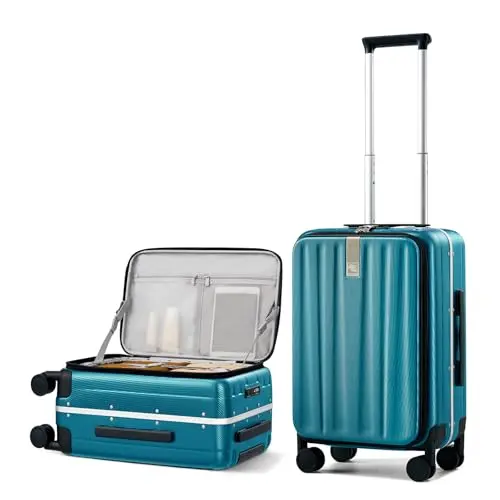
Top Opening 20-Inch – Aluminum-Frame Trunk Carry-On
The Hanke takes the trunk-style format and pairs it with a full polycarbonate shell, a press-button TSA lock, and eight spinner wheels. The top lid opens without laying the bag flat, and the interior splits into two sections so clothing stays put while you dig for a charger.
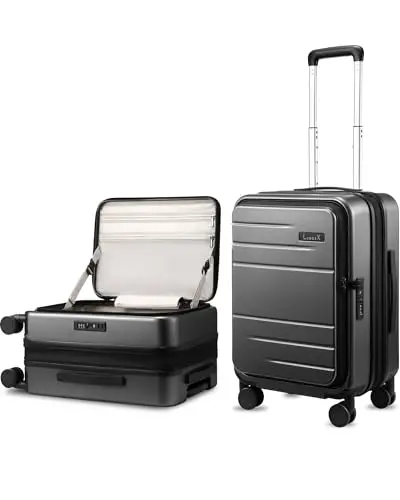
FX Top Opening 20-Inch – Expandable Trunk Carry-On
The LUGGEX opens on a 10/90 split, so a small flap at the top reveals a deep compartment instead of exposing your whole bag. It packs a polycarbonate shell, an expansion zipper, a TSA combination lock, and eight spinner wheels into the entry tier of this category.
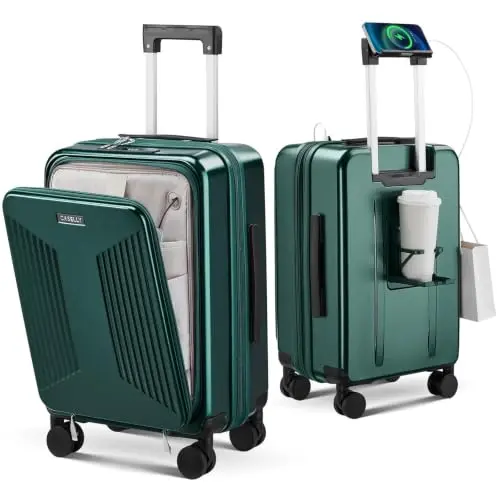
BH013 Top Opening 20-Inch – Charging Ports and Cup Holder
This is the feature-forward take on top-opening luggage: a front-top lid, a half-opening back compartment sized for a 16-inch laptop, USB-A and USB-C pass-throughs, a molded cup holder, and YKK zippers, all wrapped in a hard shell with a TSA combination lock.

KH9889 28-Inch Top Opening – Checked Trunk With Cup Holder
Top-opening design makes the most sense at checked size, and this 28-inch Hanke proves it. Capacity climbs from 96 to 109 liters with the expansion zipper open, and the lid opens from above so you never have to lay a full bag across a hotel bed.
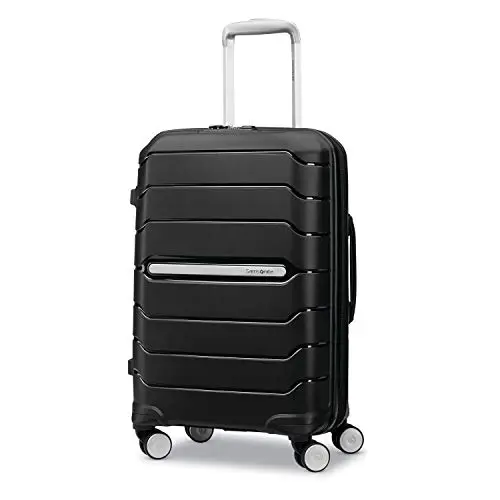
Freeform Hardside Carry-On – Lightweight Spinner With Expansion
A conventional clamshell done well: textured polypropylene shell, 34 liters of packing space, a built-in combination lock, and eight spinner wheels. It’s the lightest bag in this guide, and the reference point for anyone who doesn’t need top-down access.

7366 Hardside Carry-On – Fold-Out Cupholder Spinner
The SwissGear’s party trick is a patented fold-out cupholder that keeps a coffee secure through a long terminal walk. Behind it sits an ABS impact-resistant shell, four multi-directional spinner wheels, an expansion gusset, and a 10-year limited warranty.
How We Evaluated These Top Opening Hardside Luggage Picks
A few things we can’t tell you: how these shells look after a hundred gate-checked flights, or which zipper will give out first. What we can tell you is how the field compares on the things that decide a purchase. We cross-referenced six hardside models from five brands – four of them true top-opening designs, with two conventional clamshells included as reference points – across six decision axes: shell material, access design, capacity and expansion, wheel and handle hardware, security and locks, and warranty coverage. We triangulated published specifications against manufacturer feature claims, mapped each bag to realistic trip profiles from short business hops to multi-week family travel, and weighed aggregated owner feedback where available to catch the patterns a spec sheet hides.
Anyone can list features. Our scoring framework weighted real-world fit at 70% – how well a bag works when it’s standing upright in a cramped hotel room with a plane to catch – against feature differentiation at 30%, meaning what each design does that its rivals don’t. A clever bag that’s awkward to pack scores accordingly. So does a sturdy one whose top opening is more marketing than mechanism. We have no commercial relationship with any brand in this guide, and the ranking tracks fit and differentiation rather than brand recognition.
If you want the purest expression of the format, the Hanke top-opening carry-on is where we’d start. If budget drives the decision, the LUGGEX FX makes the strongest case at the entry tier.
How to Choose the Right Top Opening Hardside Luggage
1. What Top Opening Actually Changes About Hardside Luggage
On a clamshell, the shell splits down the middle and both halves lie open like a book. On a trunk-style bag, the lid peels back from the top – often on a 10/90 split or a half-lid – so you can reach in while the bag stands on its own four wheels. That single change is what makes stand-up access possible in a hotel room, a cruise cabin, a car trunk, or the jet bridge when you’re digging for a jacket.
The trade-off is visibility. A top-opening hardside luggage design tends to produce one deep compartment rather than two shallow ones, so you’re reaching rather than scanning. Packing cubes go from nice-to-have to near-essential. It also moves load onto the lid zipper, which is why zipper quality stops being a detail and becomes a structural concern on these bags.
2. Shell Material: Polycarbonate, ABS, and What the Labels Hide
Most options here fall into three camps: 100% polycarbonate, ABS, and ABS+PC blends. Polycarbonate flexes on impact and springs back, which is exactly what you want on a top-opening bag where the shell carries load at the closure. ABS is stiffer and cheaper but tends to crack rather than flex when it finally fails. Blends sit in the middle and are usually fine for carry-on duty, less so for checked bags that get thrown.
Ignore most of the language around texture. A diamond or matte finish genuinely hides scuffs, but it tells you nothing about impact resistance. If you want the clearest material story in this lineup, the LUGGEX FX publishes cold-weather and drop testing on its polycarbonate shell, which is more transparency than most brands offer at any tier.
3. Capacity, Expansion, and Sizing Hardside Luggage Correctly
Carry-on top-openers in this category land between roughly 34 and 41 liters. Checked trunks run from about 96 to 109 liters with the expansion open. Expansion zippers typically add an inch to an inch and a half of depth – enough for laundry and souvenirs, not enough to rescue an overpacked bag.
Measure the overall dimensions including wheels and handles, not the packing dimensions, and compare against your airline’s sizer rather than the number on the listing. A bag sold as 20 inches can measure 22 inches once the hardware is counted. If you need checked capacity with the same top-down access, the Hanke 28-inch is the one to measure against your trip length.
4. Wheels, Handles, and Zippers: The Parts That Fail First
Eight wheels versus four is a real difference on a top-opening bag, because it spends more time rolling upright. Dual-spinner setups track straighter and take pressure off the handle when you’re dragging a loaded bag across carpet. Look for a telescopic handle with multiple lock positions and minimal wobble – a rattling handle is usually the first sign of a cheap frame underneath.
Then there’s the zipper, the single most common failure point in this category. Anti-burst and explosion-proof are marketing terms, but they usually signal a coarser coil and reinforced tape, which is a genuine upgrade. YKK hardware is a known quantity you can trust. On a top-loading design specifically, the lid zipper carries constant load, so treat it as a structural component rather than a trim detail.
5. Top-Opening vs. Clamshell: Which Trip Are You Packing For?
Business trips favor a front compartment you can reach without unpacking, plus charging pass-throughs – that’s the CASELLY BH013 profile. Weekend carry-on trips reward lighter top-openers with sensible expansion. Family or long-haul checked travel is where a 28-inch trunk earns its keep.
And sometimes a clamshell is simply right. If you unpack fully at a destination and live out of drawers rather than out of the bag, a traditional split-case is lighter, cheaper, and easier to see into. Include one in your shortlist if that’s your travel style instead of forcing yourself into the trunk format.
6. Budget, Mid-Range, and Premium Top-Opening Luggage: What Changes
The entry tier has improved dramatically. You can now get a polycarbonate shell, a TSA combination lock, and eight spinner wheels without stretching. Mid-range money buys aluminum frame construction, better zipper hardware, longer warranty terms, and more thoughtful interior organization – usually the sweet spot for frequent travelers.
Premium pricing mostly buys service networks, refined hardware, and consistency. Wherever you land, spend in this order: zippers and wheels first, then shell material, then the gadget stack of ports and cup holders. The features are pleasant; the hardware is what keeps the bag out of a repair queue.
Frequently Asked Questions
1. Is top-opening hardside luggage actually easier to pack than a clamshell?
In tight spaces, yes – and that’s most of the benefit. A top-opening bag stands upright on a rack or in a car trunk and lets you reach in from above, which a clamshell physically can’t do without floor space. The trade-off is interior visibility: a deep single compartment means reaching rather than scanning, so packing cubes stop being optional. If you like laying everything out side by side when you unpack, a traditional split-case design will feel more natural.
2. What's the difference between the Hanke 20-inch top-opening carry-on and the LUGGEX FX?
Both are 20-inch top-openers, but they solve different problems. The Hanke top-opening carry-on leans on a full polycarbonate shell, an aluminum frame, eight spinner wheels, and a press-button TSA lock. It feels like the more substantial bag and weighs more because of it. The LUGGEX FX counters with an expansion zipper that takes it from roughly 36 to 41 liters, documented cold-weather drop testing, and a five-year warranty at the entry tier. Choose the Hanke for shell quality and hardware; choose the LUGGEX if expansion and long coverage matter more.
3. How does the Samsonite Freeform compare with a top-opening carry-on?
The Samsonite Freeform is a clamshell, and it’s the lighter bag at roughly 6.5 pounds, with a textured polypropylene shell that hides scratches well. What you give up is access: it needs to lie flat, and the interior is a classic two-half split. If you unpack fully at a destination, that’s a non-issue. If you’re living out of your bag across a multi-city trip, the top-opening layout is worth carrying a bit more weight for.
4. Do cup holders and USB ports on modern hardside luggage hold up?
They work, with caveats. USB and USB-C pass-throughs are just ports wired to an interior pocket – you supply the power bank, and nothing charges without one. A fold-out cup holder is genuinely handy in a terminal and is usually the first thing that starts to feel flimsy. Treat both as conveniences rather than reasons to buy, and check that the port hardware is at least accessible in case it stops working.
5. Will a 20-inch top-opening carry-on fit in every airline's overhead bin?
Most 20-inch top-openers sit close to the limit rather than comfortably under it. A bag listed at 22 x 14 x 9.5 inches with wheels included will clear some carriers and get flagged by stricter ones, so measure the overall dimensions yourself and compare against your specific airline’s sizer before you fly. If you’re loyal to one or two carriers, a slightly smaller 34-liter bag is the safer bet; if you fly a mix, stay under the strictest limit you’re likely to meet.
Final Verdict
For most travelers shopping this category, the Hanke top-opening carry-on is the pick. It nails the access design that defines top-opening luggage and backs it with a polycarbonate shell and hardware that feels built to last. If you’d rather spend less, the LUGGEX FX delivers the trunk-style opening, expansion, and a five-year warranty with very little compromise. Business travelers who want a laptop compartment and charging built in should look at the CASELLY BH013, while families packing for a week or more should step up to the Hanke 28-inch. Pick the access style first, then the size – everything else follows from there.
