
Best Travel Backpacks For Hiking – 2026 Reviews

A hiking trip has a way of exposing a bad backpack fast. The strap that felt fine in the airport starts digging in around mile four, the pack that swallowed a week of clothes suddenly sits too high on your hips, and the rain cover you left at home becomes the only thing you can think about.
Travel backpacks that double as hiking packs live in a tricky middle ground. They need to clear airline carry-on rules and still carry weight comfortably on a trail – and those two goals pull in opposite directions more often than you’d expect.
The two axes that separate a good option from a mediocre one are carry system and capacity discipline. A proper harness with a hip belt that actually transfers load matters more than any pocket layout once you’re climbing, and matching liters to trip length keeps you from hauling a rucksack on a three-hour day hike or running out of room on an overnight.
Below we’ve mapped the travel backpacks built for hiking across a wide spread of brands, from sub-one-pound packables you can stuff in a suitcase to framed load haulers for multi-day trips. Pick by how you actually hike, not by the biggest number on the spec sheet.
Best Travel Backpacks for Hiking – 2026 Reviews
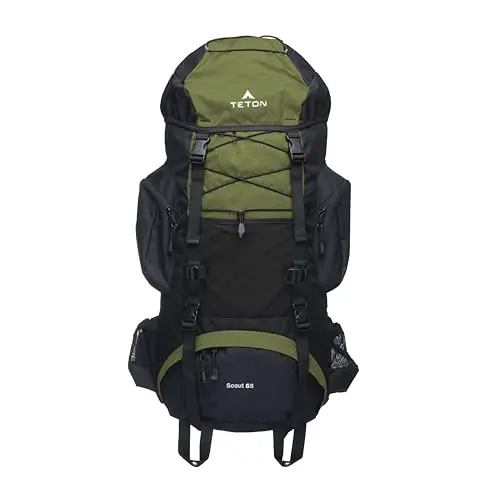
Scout 55L – Framed Comfort for Multi-Day Trips
The Scout is the only internal-frame pack in this lineup, and that single design choice changes what it can do. A multi-position torso adjustment, open-cell foam lumbar pad, and molded ventilation channels are harness hardware usually reserved for pricier packs. A dedicated sleeping bag compartment, multidirectional compression straps, and a hydration pocket round out a genuinely trip-ready build, and a rain cover comes in the box.

40L Daypack – Wet/Dry Separation and Rain Cover
A 40-liter daypack with an unusually practical feature set: a waterproof wet pocket inside the main compartment, a rain cover stashed in its own base pocket, reflective printing, trekking pole elastics, and a chest buckle that doubles as a survival whistle. Rip-stop 210D nylon and reinforced stitching handle scrapes and light rain.

Hiking Daypack – Packable 24L Backup Bag
At roughly four ounces, this nylon daypack folds into a pouch small enough to forget about until you need it. Twenty-four liters, four pockets including mesh bottle holders, and water-resistant fabric make it a genuine second bag for travel – the one you pull out at the trailhead and stuff back in your suitcase afterward.
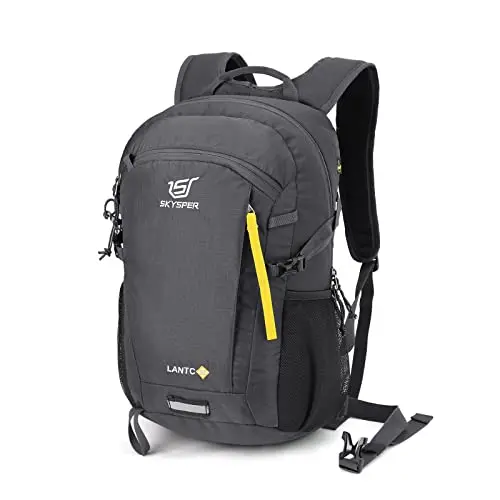
LANTC20 – Compact 20L with Anti-Theft Zips
A 20-liter daypack built for short hikes and city days, with an anti-theft zipper design, reflective accents, trekking pole fixtures, a detachable strap system, and a safety whistle. 600D polyester and 210D nylon plaid fabric with lap-knot reinforced stress points keep it durable at just over a pound.
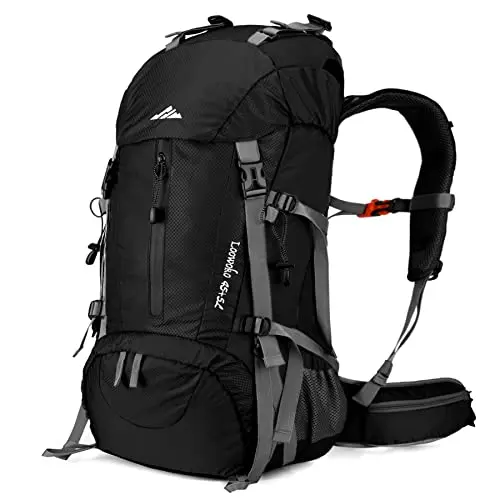
50L Hiking Backpack – Rain Cover and Compression Straps
Fifty liters with a rain cover included and a frameless harness built around widened S-curve shoulder straps and a ventilated back panel. Six external pockets, a shoe separator, and a spread of compression straps and attachment points let you lash a sleeping bag, tent, or trekking poles to the outside.
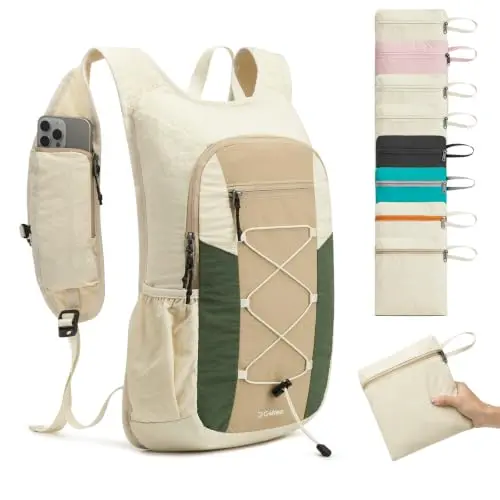
20L Packable Daypack – Strap-Mounted Phone Pocket
A foldable 20-liter that packs into its own inner pocket and weighs well under a pound. Taslan nylon resists light rain and abrasion, and the strap layout puts a zippered phone pocket on one shoulder strap and an elastic snack pocket on the other.
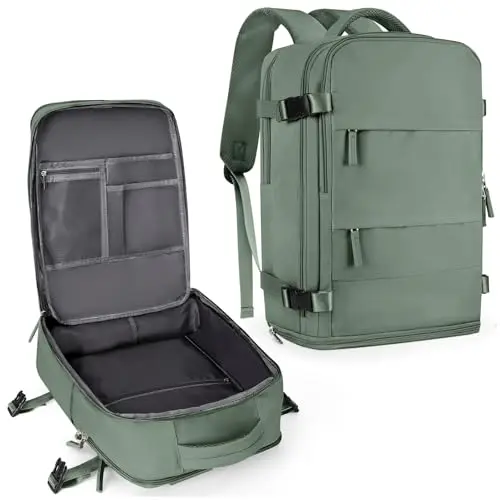
Travel Backpack 25L – Laptop Sleeve and Shoe Compartment
A 25-liter hybrid built for short trips: a padded laptop sleeve, a separate shoe compartment, and a water-resistant wet bag for damp clothes. It converts between backpack, shoulder bag, and gym-bag style carry, and fits under most airline seats.
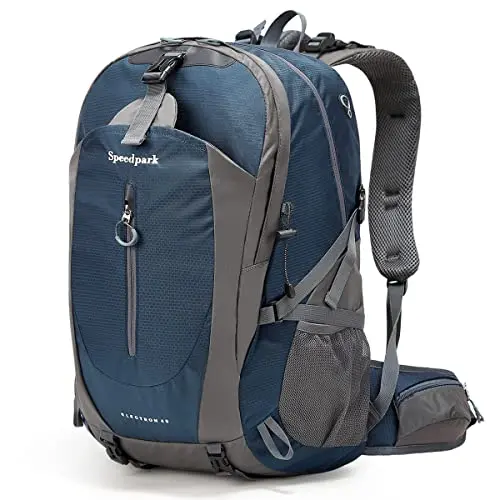
40L Hiking Backpack – Ten-Pocket Organization
A 40-liter pack with a full organizer’s worth of pockets – a main compartment, front zip pocket, internal separator and small zip pocket, plus two side pockets. Tear-resistant, water-resistant polyester with metal zippers and bar-tacked stress points, and ventilated mesh padding on the straps and back.
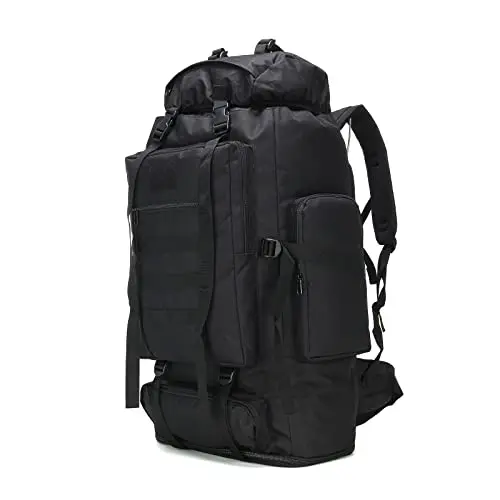
70L Molle Rucksack – Expandable External Carry
A large-capacity rucksack built on a MOLLE-compatible platform, with a drawstring main compartment, a laptop sleeve, a front zip pocket, two side pockets, and external webbing for attaching additional gear. Water-resistant 900D Oxford fabric resists tears and scratches.
How We Evaluated These Travel Backpacks for Hiking
We didn’t see these packs through a full season of trail use. What we did: cross-referenced nine travel backpack models from nine distinct brands across six decision axes – carry system and frame type, capacity and compartment layout, shell material and weather resistance, harness adjustability, included accessories like rain covers and whistles, and how each pack handles the double duty of airline travel and trail time. We triangulated published specifications, manufacturer feature lists, and aggregated owner feedback where available, then mapped each pack against representative hiker profiles: long-day hikers, multi-day backpackers, ultralight travelers, and trip-first buyers who hike occasionally.
The scoring framework weighted real-world fit (70%) – how well a pack actually carries weight on a trail while still working as a travel bag – against feature differentiation (30%) – unique design choices, safety details, and use-case specificity. We have no commercial relationship with any of the brands featured, and our ranking tracks fit and differentiation rather than brand preference. Recommendations follow the same logic for every brand in the lineup.
Where owner feedback was uneven across the lineup, we leaned on specifications and design intent rather than treating thin signals as decisive. If you want one bag for a multi-day trip, the Scout 55L is your match; if you want a pack that disappears into your luggage until you need it, the 4Monster Hiking Daypack serves you better.
How to Choose the Right Travel Backpacks for Hiking
1. Frame or Frameless: The Decision That Shapes Everything
The single biggest fork in the road is whether your pack has an internal frame. A framed pack transfers load onto your hips through a structured harness and stays comfortable when you’re carrying a tent, sleeping bag, food, and water over multiple days. A frameless pack skips that structure to save weight and pack smaller, which is the right trade on a day hike with a shell, lunch, and a liter of water.
If you’re flying with the pack as your only bag, remember that frames don’t fold. Frameless designs collapse into a suitcase or a larger travel bag, which is why packability and load transfer are usually in direct opposition.
2. Matching Capacity to Your Hiking Itinerary
Litres are a rough proxy, not a precise one. Twenty to twenty-five liters covers a day hike with layers and lunch; 40 liters is the sweet spot for an overnight or a long day with camera gear; 50 to 55 liters handles three to five days if you pack deliberately. Anything past that is expedition territory and generally exceeds carry-on limits.
Watch for packs whose usable volume runs smaller than the rating suggests – bulky padding, laptop sleeves, and shoe compartments all eat into the main compartment. If you need one bag that flies and hikes, the Scout 55L splits that difference about as well as anything here.
3. Harness and Ventilation on a Travel Backpack for Hiking
On a travel backpack for hiking, the harness is where comfort is won or lost. Look for padded, breathable shoulder straps, a chest strap you can adjust vertically, and – on anything over 35 liters – a hip belt that actually contacts your iliac crest. A belt that rides too high or too low does nothing at all.
Ventilated back panels with molded channels matter more than marketing suggests on humid climbs, and torso adjustability is worth paying for if you’re between sizes. If fit is your priority, the Maelstrom 40L Daypack pairs a breathable back panel with a chest strap that genuinely redistributes weight.
4. Materials, Weather Protection, and Packability
Denier ratings tell you about abrasion resistance: 30D nylons are ultralight but thin, while 600D polyester and 900D Oxford are noticeably tougher at a weight cost. Rip-stop weaves stop small tears from spreading into big ones. Water-resistant coatings handle drizzle; a packable rain cover is what you want for sustained rain. Several packs here ship with one included, which is worth more than it sounds when you’re caught out above treeline.
5. Pockets, Security, and Airline Compatibility
Pocket placement matters more than raw pocket count. Quick-access items belong on the outside or on a shoulder strap; wet gear needs its own compartment; a hydration sleeve should keep the hose routed without kinking. Anti-theft zipper designs and reflective detailing are small features that pay off in transit and at dusk.
If you plan to fly carry-on only, check dimensions against the strictest airline you’ll use. A 40-liter pack usually clears it; a fully loaded 55-liter may not. For a strict one-bag setup, the coowoz 25L Travel Backpack is sized to slide under the seat.
6. What Budget and Premium Travel Backpacks for Hiking Actually Buy You
Entry-level packs get you functional nylon, basic straps, and enough pockets. Mid-range adds better zippers, reinforced stress points, rain covers, and more considered harness geometry. Premium buys structured frames, multi-position torso adjustment, and lumbar padding that changes how a heavy load feels on your hips.
Spend up if you’re carrying weight over multiple days – frame and harness are where the money lands. Stay entry-level if the pack is a backup or a day-hike tool, and you’ll get most of what matters for a fraction of the outlay.
Frequently Asked Questions
1. What's the difference between the Teton Scout 55L and the Maelstrom 40L?
The Scout 55L is a framed pack – internal frame, multi-position torso adjustment, and a lumbar pad that transfers load to your hips. The Maelstrom 40L is frameless but far richer in day-to-day features: a wet/dry separator pocket, a rain cover in its own base pocket, a whistle chest buckle, and reflective printing.
Choose the Teton Scout 55L if you’re carrying a tent and sleeping bag over several days. Choose the Maelstrom for single-day hikes and travel where you want organization without the frame weight.
2. Do I need a framed backpack for hiking day trips?
For a true day hike – a shell, lunch, water, a first-aid kit – a frameless pack is lighter and cheaper and you won’t miss the structure. A frame earns its place once you’re carrying 35 liters or more of dense weight, or when you’re on your feet for most of a day. Above that, hip belt load transfer stops being a nice-to-have and becomes the difference between a good day and a sore one.
3. What's the difference between the 4Monster Hiking Daypack and the G4Free 20L Packable Daypack?
The 4Monster is the more packable of the two – it folds into a pouch the size of a wallet and weighs around four ounces, so it disappears into a suitcase. The G4Free is still foldable but adds a zippered phone pocket on the shoulder strap, a snack pocket on the other, and a front bungee cord. Both are twenty-liter-class daypacks with no hip belt.
Go with the 4Monster if minimal packed size is the whole point; pick the G4Free if you want on-the-move access without stopping.
4. Can a 40L travel backpack for hiking work as a carry-on?
Usually yes. A 40-liter frameless pack clears most carry-on limits, and even a 55-liter can work if you don’t overstuff it. The catch is frame geometry: framed packs are harder to compress and may not fit a sizer. If you’re flying strict budget carriers, a smaller 25-liter travel backpack for hiking like the coowoz 25L Travel Backpack is the safer bet – it’s designed to slide under the seat.
5. Is a packable travel backpack for hiking durable enough for real trails?
For light loads and day hikes, yes. Rip-stop nylon and reinforced stress points handle abrasion reasonably well on packed trails. What packable designs give up is structure and hip belt support, so they’re poor choices for multi-day loads. Treat them as a second bag rather than a primary one, and they’ll hold up fine.
Final Verdict
For most people, the Teton Scout 55L is the answer – it’s the only pack here with an internal frame, and that one decision makes multi-day hiking genuinely comfortable while still clearing most airline carry-on limits. If your hikes are day-length and you want organization without the weight, the Maelstrom 40L Daypack is the better daily companion, with a wet pocket and rain cover that earn their keep. Traveling light with hiking as one piece of the trip? The coowoz 25L Travel Backpack slips under an airline seat and still carries a day’s gear. And if you want a pack that lives in your suitcase until the trailhead, the 4Monster Hiking Daypack folds to wallet size and weighs almost nothing.
