
Best Travel Backpacks For Under-Seat Airplane Travel – 2026 Reviews

The moment you spot your row, the real test begins: does the bag slide under the seat in front of you without turning into a footrest? Travel backpacks live or die on that one-inch margin. A bag can look compact online and still fail the personal-item sizer because its depth, handle, or laptop sleeve bulges in the wrong place.
The second deciding factor is how the bag packs. A top-loading daypack with a laptop sleeve is fine for a commute, but an under-seat travel backpack needs a clamshell opening, a separate shoe or wet zone, and quick-access pockets that do not force you to unpack in the aisle. Capacity matters too, but only after the footprint is honest.
We looked across the market at travel backpacks built for under-seat airplane travel, then sorted them by real-world packing style, carry comfort, and how clearly each one states its airline fit. The goal is a shortlist that helps you choose the right shape for your trip, not the loudest brand name.
Best Travel Backpacks for Under-Seat Airplane Travel – 2026 Reviews
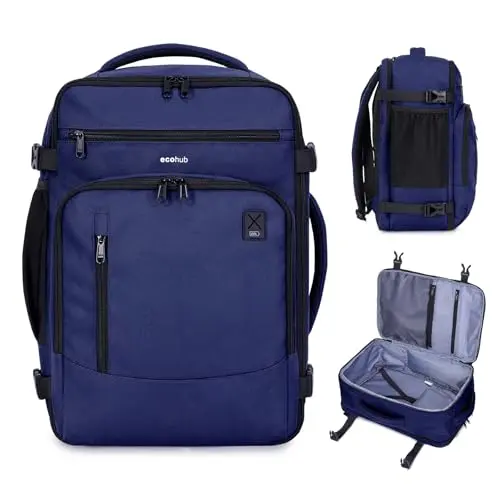
17-Inch Small Travel Backpack – Under-Seat Personal Item
A purpose-built under-seat personal item with a 17 x 10 x 9 inch footprint, 25L capacity, clamshell opening, and a padded 15.6-inch laptop compartment. The layout includes travel-specific pockets for a power bank, passport, phone, and AirTag, plus compression straps and a trolley sleeve.
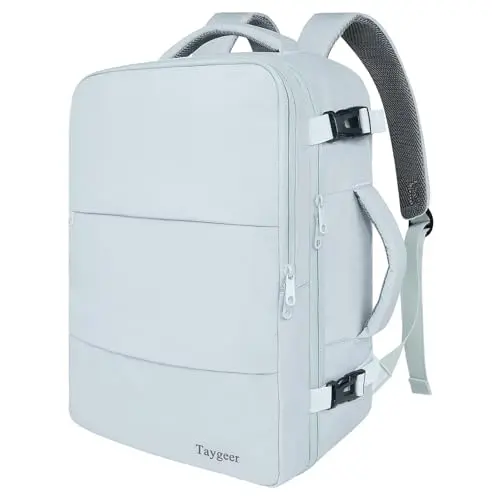
Underseat Carry On Backpack – 35L Weekender
A 35L underseat carry-on with a suitcase-style layout, a bonus shoe bag, and a wet pocket. It converts between backpack and handbag carry, includes a padded laptop compartment, and adds a trolley sleeve for rolling luggage.
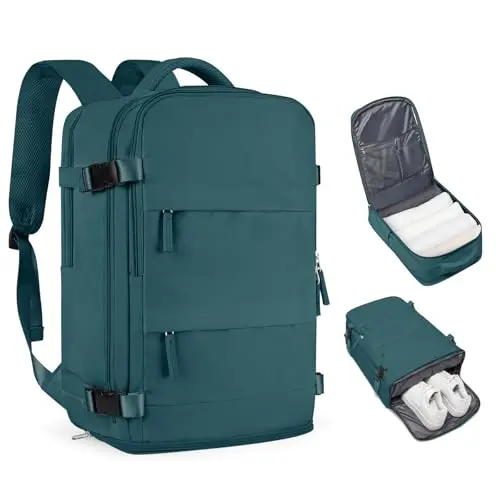
Travel Backpack – Airline-Approved Carry-On Daypack
A 25L flight-approved travel backpack with a 180-degree opening, separate shoe compartment, and wet pocket. The padded laptop section fits up to 15.6 inches, and the bag includes a trolley sleeve and ventilated back panel.
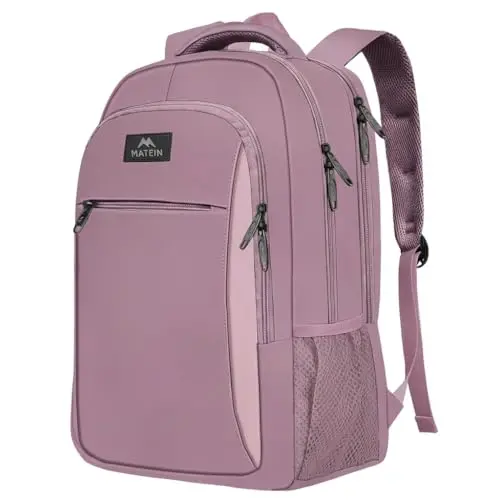
Personal Item Backpack – Slim Underseat Laptop Daypack
A slim 28L personal-item backpack with a dedicated 15.6-inch laptop compartment, anti-theft rear pocket, and luggage strap. Ventilated padding and a water-resistant shell make it a practical under-seat commuter and travel option.
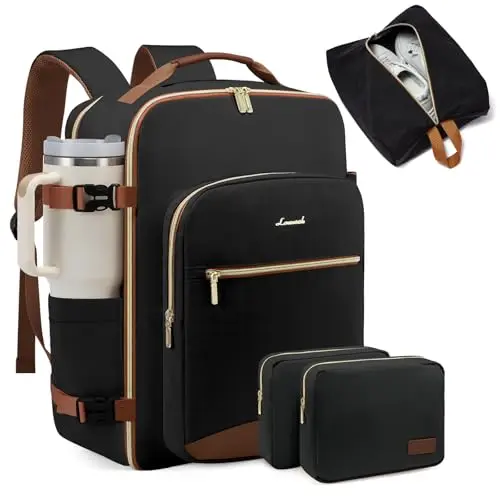
40L Large Travel Backpack – Carry-On Weekender with Packing Cubes
A 40L carry-on backpack aimed at longer weekends, with a clamshell box structure, three packing cubes, and a padded 17.3-inch laptop compartment. Side compression straps, a wet/dry pocket, and a trolley sleeve help manage a full load.
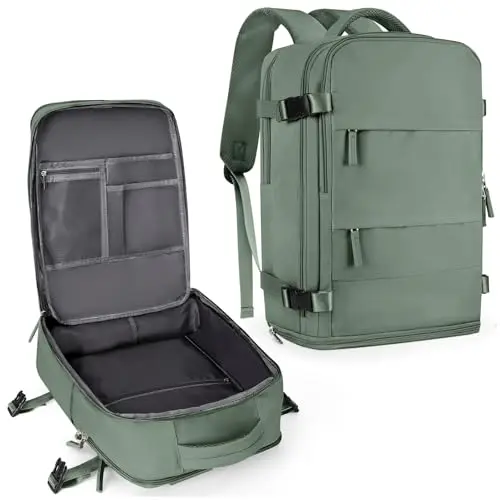
Travel Backpack – Lightweight Carry-On with Shoe Compartment
A 25L travel daypack with a wet bag, separate shoe compartment, and a padded 15.6-inch laptop sleeve. It uses water-resistant polyester, ventilated shoulder straps, and a lightweight build for short trips.
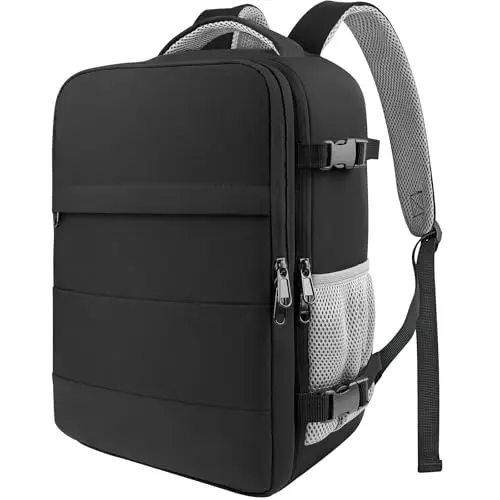
Travel Backpack – Flight-Approved Under-Seat Carry-On
A 26.5L flight-approved travel backpack with a suitcase-style main compartment, 15.6-inch laptop sleeve, and multiple quick-access pockets. It weighs about 1.2 pounds and includes a trolley sleeve and breathable back panel.
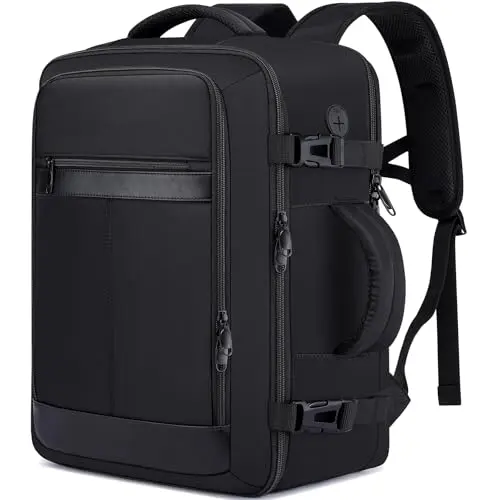
TSA Carry On Backpack – Underseat Weekender with Shoe Pouch
A 25L underseat carry-on with a clamshell main compartment, separate padded 15.6-inch laptop pocket, wet pocket, and waterproof shoe bag. It also adds a USB charging port, anti-theft rear pocket, and chest strap.
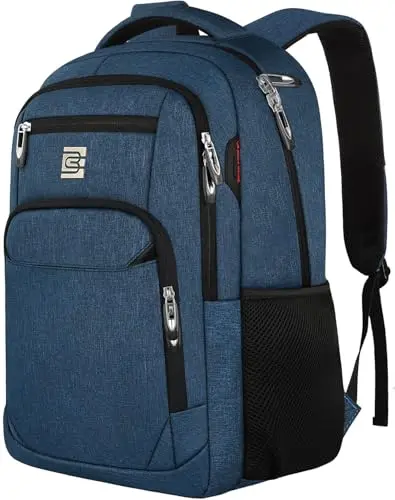
Laptop Backpack – Slim Anti-Theft Business Daypack
A 30L slim laptop backpack with a separate 15.6-inch laptop compartment, anti-theft rear pocket, and luggage strap. Water-resistant polyester, ventilated back padding, and side bottle pockets keep it practical for business travel.
How We Evaluated These Travel Backpacks for Under-Seat Airplane Travel
We didn’t board a flight with every bag or test each one in a row of airplane seats. What we did: cross-referenced nine travel backpack models from nine distinct brands across five decision axes – under-seat footprint, airline personal-item compatibility, capacity and organization, laptop protection, and carry comfort. We triangulated published specifications, feature sets, and owner feedback where available, then mapped each bag to representative traveler profiles for under-seat air travel. We audited listed dimensions against common personal-item sizers and weighed the tradeoff between clamshell packing, laptop protection, and wearable comfort. We also checked whether each bag’s stated laptop sleeve, shoe zone, and wet pocket were actually usable at the claimed size.
The scoring framework weighted real-world fit and performance (70%) – how well each travel backpack handles a personal-item trip – against feature differentiation (30%) – unique organization, materials, and use-case advantages. We have no commercial relationship with any brand featured here; recommendations track fit and differentiation, not brand preference. The aim was not to crown the biggest capacity claim, but to identify which travel backpacks make the under-seat experience less fiddly. That matters because a generous capacity number can hide a cramped real-world pack.
If you want the most purpose-built under-seat organizer, the ECOHUB 17-Inch Small Travel Backpack is the natural starting point; if you need more weekend capacity, the Taygeer Underseat Carry On Backpack is the stronger match.
How to Choose the Right Travel Backpacks for Under-Seat Airplane Travel
1. Why the Under-Seat Footprint Beats the Capacity Number
The first spec to check is not liters; it is the three-dimensional footprint. A travel backpack can call itself 30L or 35L and still fail a personal-item sizer if the depth or width is off. Look for stated dimensions close to 17 to 18 inches tall, 10 to 12 inches wide, and 7 to 9 inches deep, then verify those numbers against your airline’s current personal-item rules.
If your main route is a strict low-cost carrier, favor a bag with a clamshell opening and compression straps so it keeps its shape when partially packed. The ECOHUB 17-Inch Small Travel Backpack is the clearest example in this lineup of a bag designed around that under-seat brief.
2. How to Match a Travel Backpack to Airline Personal-Item Rules
Airline sizers vary, and a bag that fits one carrier’s personal-item box can be tight on another. Treat claimed airline compatibility as a starting point, not a guarantee. Measure the packed depth rather than the empty depth; laptop sleeves, front pockets, and shoe compartments all add bulk.
For weekend trips where you need more room, the Taygeer Underseat Carry On Backpack is a better match than a minimal daypack, provided you keep the load compressed. If you routinely fly strict carriers, stay closer to a 25L capacity and avoid overstuffing the front pocket.
3. Clamshell vs. Top-Load: Which Travel Backpack Packs Better?
A clamshell opening lays the bag flat like a suitcase, which makes clothes easier to pack and keeps smaller items visible. A top-loading daypack is faster for commuting but tends to turn into a black hole on a trip. For under-seat travel, clamshell bags usually win because you can pack in layers and pull out a jacket without unpacking everything.
Organization matters as much as the opening. Look for a separate laptop sleeve, a wet pocket, and a shoe compartment or pouch if you carry sneakers. Too many shallow pockets can add bulk without adding usable space.
4. Laptop Protection and Comfort for Under-Seat Travel Backpacks
A padded 15.6-inch laptop compartment is the practical baseline for most travelers; larger laptops need explicit size confirmation. Check for a suspended sleeve or foam padding, especially if the bag will sit on airport floors. Comfort comes down to ventilated back padding, adjustable shoulder straps, and weight.
If you want a slim daily-carry crossover, the MATEIN Personal Item Backpack keeps laptop protection and anti-theft storage compact. If you need a true packing-first bag, prioritize a clamshell shape over a commuter-friendly profile.
5. Budget, Mid-Range, and Premium Travel Backpack Tiers
The budget tier covers simple water-resistant bags with basic pockets and lighter hardware. The mid-range tier adds better organization, padded laptop protection, shoe compartments, and smoother zippers. The premium tier focuses on reinforced construction, recycled fabrics, packing cubes, and more thoughtful travel details.
Spend on the features you will actually use. A trolley sleeve matters if you pair the backpack with rolling luggage; a wet pocket matters for gym clothes or toiletries. If those details are missing, a cheaper bag can still be the right call for a short trip.
6. Common Travel Backpack Pitfalls to Avoid
Do not trust capacity alone. A 35L or 40L bag can be too deep for a strict personal-item sizer once packed. Do not ignore zipper quality, especially on bags that open wide and carry tension. And do not assume a laptop backpack is a travel backpack; many lack a clamshell opening or a separate shoe zone.
Finally, check the packed weight and the carry handles. A bag that is comfortable empty can dig into your shoulders when full, and a single top handle gets old on long airport walks.
Frequently Asked Questions
1. What is the difference between the ECOHUB 17-Inch Small Travel Backpack and the Taygeer Underseat Carry On Backpack?
The ECOHUB is the more purpose-built under-seat organizer: its 25L clamshell layout and AirTag pocket are aimed at strict personal-item travel. The Taygeer leans toward weekend capacity with its 35L main compartment and bonus shoe bag. If you pack light and want a bag that disappears under the seat, go with the ECOHUB 17-Inch Small Travel Backpack. If you need room for several outfits and shoes, the Taygeer is the better fit.
2. Is the LOVEBOOK 40L Travel Backpack actually a personal item for under-seat use?
It can work as a personal item when packed carefully, but 40L is a lot of bag. The 18 x 14 x 8 inch footprint and boxy clamshell mean overstuffing can push it past strict sizers. Treat it as an under-seat bag for longer weekends only if your airline allows a generous personal item, or plan to use it as an overhead carry-on.
3. How does the coofay Travel Backpack compare with the coowoz Travel Backpack for short trips?
The coofay has the more travel-specific layout with a 180-degree opening, shoe compartment, and wet pocket. The coowoz is lighter and simpler, with a 25L capacity and a 1.7-pound build that suits minimal packers. Choose the coofay if you want suitcase-style packing; choose the coowoz if you want a lightweight carry-on for a night or two.
4. Are 35L or 40L travel backpacks too big for under-seat use?
Not automatically, but they are less forgiving than a 25L bag. A 35L or 40L travel backpack can fit under the seat when it is not overpacked, yet the packed depth and front pocket bulk are what usually cause trouble. If you need maximum capacity, use compression straps and check your airline’s sizer before boarding.
5. Do I need a clamshell travel backpack for under-seat travel?
A clamshell opening is not mandatory, but it makes under-seat packing much easier because the bag lies flat and you can see everything at once. A top-loading daypack can work for a short overnight if you pack in pouches. For most travelers, the clamshell travel backpack is the lower-stress choice, especially when the bag is full and you need to reach a laptop or jacket.
Final Verdict
For most travelers, the ECOHUB 17-Inch Small Travel Backpack is the cleanest answer: it is sized for under-seat airplane travel, opens like a suitcase, and gives a laptop, charger, and passport a dedicated home. If you need more room for a weekend, the Taygeer Underseat Carry On Backpack adds capacity and a shoe bag without abandoning the personal-item brief. Budget-conscious flyers should look at the HOTOR Travel Backpack, which keeps weight low and packing simple. And if you regularly pack for three to five days, the LOVEBOOK 40L Large Travel Backpack is the high-capacity pick, as long as you keep it compressed and check your airline’s sizer. Match the bag to your packed depth first, and the rest of the decision gets much easier.
