
Best Travel Blankets For Airplane – 2026 Reviews

The cabin air starts blowing before the boarding door closes, and the little blanket waiting on your seat is usually a tissue with ambitions. That’s why so many travelers carry their own airplane blanket – but the wrong one can be worse than none: too bulky for your personal item, too small to cover your legs, or impossible to refold once you’re wedged into a middle seat.
The useful split in this category comes down to packability and pillow mode versus coverage and warmth. A dedicated travel blanket should fold into its own case, attach to a roller bag or backpack, and still feel substantial enough to block cabin chill. The best options don’t force you to choose between a decent wrap and a bag that fits under the seat.
We looked across major brands at airplane-friendly blankets, from budget-friendly 2-in-1 sets to a premium technical puffy, and focused on how each one actually behaves in a cabin. The goal isn’t to crown a single brand; it’s to match you with the right blanket for your carry style, flight length, and tolerance for refolding.
Best Travel Blankets for Airplane – 2026 Reviews
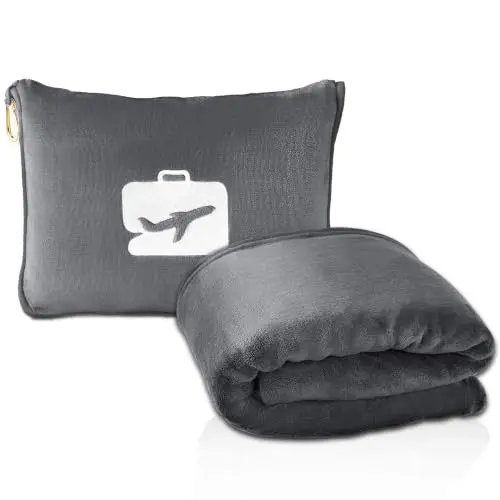
Travel Blanket and Pillow – Extra-Large 2-in-1 Comfort
The EverSnug travel blanket pairs a soft micro plush throw with a carrying case that doubles as a pillow. At 65 x 40 inches, it offers generous coverage for a plane seat, and the hand luggage sleeve plus backpack clip keep it attached to your bag in transit.
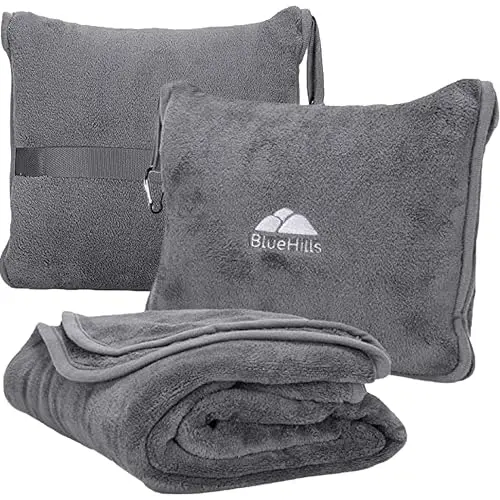
Premium Soft Travel Blanket Pillow – 2-in-1 Cabin Warmth
The BlueHills set combines a 60 x 43 micro plush blanket with a compact carrying case that becomes a pillow. A hand luggage belt and included backpack carabiner make it easy to strap onto your carry-on or bag.
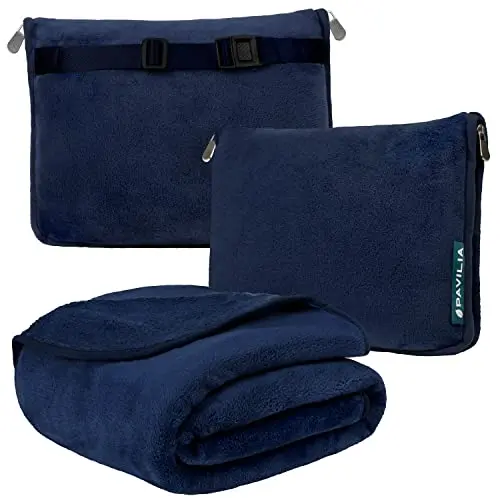
Travel Blanket Pillow – Compact Microplush Flight Set
The PAVILIA travel blanket is a 60 x 43 microfleece throw that folds into a dual-zipper pillowcase. It includes a detachable luggage strap and buckle for attaching to a suitcase, backpack, or handbag.
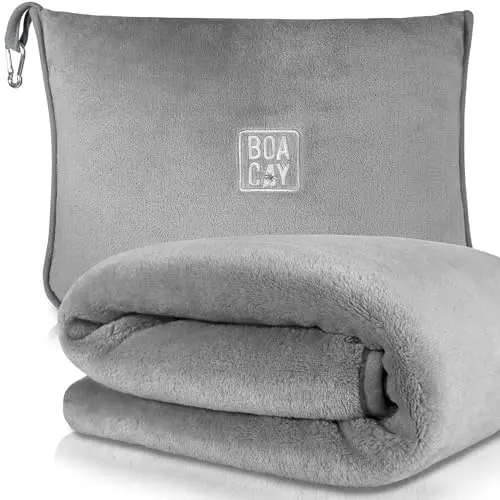
Soft & Warm Travel Blanket – Budget-Friendly 2-in-1
The BOACAY travel blanket is a 40 x 63 micro plush throw with a 2-in-1 pillowcase, luggage sleeve, and backpack clip. It is designed for long flights, road trips, and other travel use.
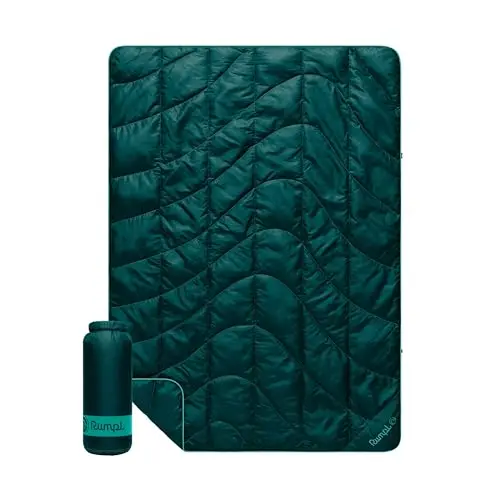
Travel Puffy – Ultra-Packable Premium Warmth
The Rumpl Travel Puffy is a 38 x 52 packable blanket with NanoLoft insulation, a recycled shell and liner, and a PFAS-free water-repellent finish. It includes a roll-top stuff sack and a Cape Clip for hands-free wear.
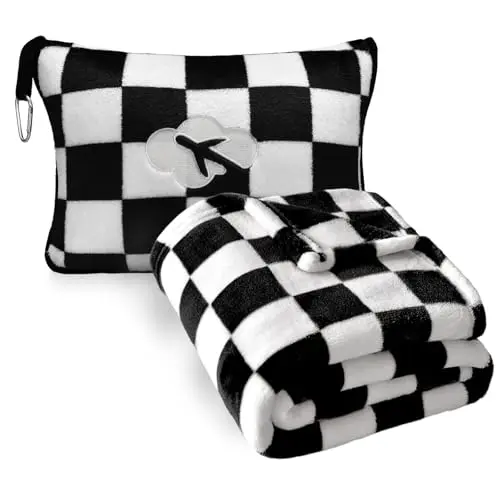
Travel Blanket and Pillow – Compact Checkered Set
The Jungle Star travel blanket combines a 40 x 65 microfleece throw with a pillowcase and carabiner. A luggage sleeve and metal clip let you attach it to a suitcase or backpack.
How We Evaluated These Travel Blankets for Airplane Use
We didn’t see these blankets through a full season of cabin travel or run lab insulation tests. What we did: cross-referenced 6 travel blanket models from 6 distinct brands across 6 decision axes – packed size, unfolded coverage, fabric warmth, pillow-mode usefulness, attachment methods, and care requirements. We triangulated published specifications, feature sets, and owner feedback where available, then mapped each option against representative airplane-travel scenarios: a short regional hop, a long international flight, and a one-bag trip with a roller or backpack. We also weighed how easy each blanket is to refold in a cramped seat, because a blanket that only fits its case on a hotel bed is a false promise in the air.
The scoring framework weighted real-world fit for airplane use (70%) – how well each blanket packs, covers, warms, and stays attached in a cabin – against feature differentiation (30%) – unique design choices like dual-zipper pillowcases, water-repellent shells, or extra-large dimensions. Where owner feedback was uneven, we leaned on published specs and the physical design rather than filling gaps with guesswork. We have no commercial relationship with any of the brands featured; recommendations track fit and differentiation, not brand preference. If you want the most complete mix of coverage and pillow convenience, the EverSnug Travel Blanket and Pillow is the pick; if you prefer a lighter, simple 2-in-1, the BlueHills Travel Blanket Pillow is the alternative.
How to Choose the Right Travel Blankets for Airplane Use
1. What Matters Most in a Travel Blanket for Airplane Use
The best airplane blanket is a balance of packed size, unfolded coverage, and warmth without bulk. A blanket that packs tiny but leaves your shoulders exposed is less useful than one that covers your torso and legs without swallowing the seat. Look for a packable case that doubles as a pillow, because cabin storage is limited and a loose blanket is easy to drop or forget.
Attachment matters too. A luggage sleeve or backpack clip keeps the blanket accessible without digging through a carry-on. For airplane use, the sweet spot is usually a blanket in the 40 x 60 to 65 x 40 range, but the shape matters as much as the number: a wider blanket wraps better, while a longer one covers legs.
2. Packability, Pillow Mode, and Cabin Bag Realities
Packability is where travel blankets separate from ordinary throws. A dedicated airplane blanket should fold into its own case and slide into a personal item or clip to the outside of a bag. Pillow-mode cases add value because they give you a place to rest your head and keep the blanket contained between uses.
If you want the easiest packable design, the Rumpl Travel Puffy packs into a very small stuff sack and uses a roll-top closure. If you prefer a plush pillowcase and a more traditional blanket feel, the EverSnug Travel Blanket and Pillow is the more comfortable route. Just be honest about how much space you have: a compact stuff sack is only useful if you’ll actually refold the blanket in a cramped seat.
3. Coverage and Warmth for Airplane Cabins
Cabin air can be chilly, but a heavy blanket is a burden in a carry-on. The better approach is a lightweight microfleece or micro plush that traps warmth without feeling oppressive. GSM and fabric weight can give you a clue, but the weave and finish matter just as much: a dense microfleece feels warmer than a thin, lofty fleece of the same size.
Coverage is personal. Taller travelers should prioritize length, while cold-natured travelers may prefer a wider wrap. A 60 x 43 blanket is a common travel size because it covers the body without overwhelming a seat; an extra-large 65 x 40 blanket adds shoulder room. If you run hot, a lighter breathable micro plush is easier to drape and remove.
4. Luggage Sleeves, Backpack Clips, and Hands-Free Boarding
The best travel blanket is the one you don’t have to think about at the gate. A hand luggage sleeve slides over a roller handle and keeps the blanket upright, while a backpack clip or carabiner secures it to a soft bag. Some cases use a detachable strap and buckle instead of a sleeve, which can be more adjustable but takes an extra step to attach.
If you switch between a roller bag and a backpack, look for a model with both a sleeve and a clip. The BlueHills Travel Blanket Pillow includes a hand luggage belt and a backpack carabiner, which covers both carry styles without extra accessories. For a budget-friendly option with the same core features, the BOACAY Travel Blanket is worth a look.
5. Fabric, Care, and Long-Term Wear for Travel Blankets
Most travel blankets are polyester or microfleece, which is machine washable and quick to dry. Check the care label: some are machine wash and tumble dry low, while others prefer hand washing or line drying. A shed-resistant fleece is worth prioritizing, especially if you’ll use the blanket as a pillow against your face.
Neat stitching and a durable zipper matter more than vague claims about softness. A case that zips smoothly and a blanket that survives repeated folding will last longer than one with a plush hand but a flimsy pouch. If you travel often, treat the case as part of the product, not an afterthought.
6. How to Choose the Right Travel Blanket for Airplane Trips
Start with your carry style. If you use a roller bag, a luggage sleeve is the fastest attachment. If you carry a backpack, a carabiner or clip is more useful. Then decide whether you want a pillowcase-style 2-in-1 or a technical packable blanket. The first feels softer and more familiar; the second packs smaller and handles damp seats better.
Finally, match the blanket to your flight length. Short hops need less coverage and may favor the smallest packed size. Long flights reward a roomier blanket and a case that works as a pillow. There’s no single best travel blanket for every airplane trip, but the right combination of coverage, packability, and attachment will cover most cabins well.
Frequently Asked Questions
1. What's the difference between the EverSnug Travel Blanket and the BlueHills Travel Blanket Pillow?
The EverSnug leans toward extra-large coverage at 65 x 40 inches, with a soft micro plush feel and a pillowcase that works well for leaning. The BlueHills is slightly smaller at 60 x 43 inches and pairs its micro plush blanket with a hand luggage belt and backpack carabiner. In practice, choose the EverSnug if you want more wrap and a roomier pillow; choose the BlueHills if you want a lighter, simpler 2-in-1 with dual attachment options.
2. Is a travel blanket allowed on airplanes?
In general, a packable travel blanket is treated like a personal item or clothing accessory, but airline policies vary. The safest approach is to keep it attached to your carry-on with a luggage sleeve or clip, and be ready to stow it during takeoff and landing if crew asks. A 2-in-1 pillowcase makes that easier because the blanket stays contained. Check your airline’s carry-on rules before relying on a blanket as a separate item.
3. How do PAVILIA and BOACAY travel blankets compare?
PAVILIA uses a 260 GSM microfleece and a dual-zipper pillowcase with a detachable luggage strap, giving it a slightly denser feel and a more adjustable attachment. BOACAY is the budget-friendly pick with a 40 x 63 blanket, a luggage sleeve, and a backpack clip. If you want a plusher hand and don’t mind a compact size, PAVILIA is the better fit; if you want the lowest-cost route to the core travel features, the BOACAY Travel Blanket is the practical choice.
4. Do you need a travel blanket with a pillowcase for airplane trips?
A pillowcase is not mandatory, but it is the feature that makes a travel blanket genuinely convenient in a cabin. It keeps the blanket compact and contained, gives you a place to rest your head, and prevents the blanket from spilling onto the floor. If you already carry a neck pillow or use the airline’s blanket, a simple packable throw may be enough. For most airplane travelers, though, a 2-in-1 design earns its space.
5. Is the Rumpl Travel Puffy worth it for flights?
The Rumpl is the premium, technical option in this lineup. Its NanoLoft insulation packs into a 4 x 10 stuff sack, and the PFAS-free water-repellent finish handles damp seats better than fleece. It is smaller at 38 x 52 inches and feels more like a puffy jacket than a plush throw, so it suits travelers who prioritize packability and weather resistance over sprawling coverage. If those tradeoffs match your trips, it is worth the premium; if you want a soft, roomy cabin wrap, choose a fleece 2-in-1 instead.
Final Verdict
For most airplane travelers, the EverSnug Travel Blanket and Pillow is the easiest recommendation. It gives you extra-large coverage, a genuinely soft micro plush feel, and a pillowcase that works with a luggage sleeve or backpack clip. That combination covers the full flight experience, not just the blanket itself. If you want to spend less, the BOACAY Travel Blanket delivers the core 2-in-1 features at a budget-friendly tier. If you prefer a lighter, simpler design with a hand luggage belt, the BlueHills Travel Blanket Pillow is a strong alternative. And if packability matters more than plushness, the Rumpl Travel Puffy is the premium technical pick for travelers who want a tiny packed size and weather-resistant insulation. Start with your carry style and flight length, and the right travel blanket for airplane trips becomes obvious.
