
Best Travel Coffee Grinders – 2026 Reviews

A hotel-room kettle, a campsite stove, a rented apartment with a drip machine but no grinder – travel has a way of exposing how much you rely on fresh grounds. The best travel coffee grinder isn’t just the smallest one. It’s the one that fits your brewing method, packs without spilling, and asks for as little fuss as possible at 6 a.m. in an unfamiliar kitchen.
The two big divides are manual versus cordless electric and burr versus blade. Manual grinders save you from battery anxiety; cordless electrics save you from cranking. Burr grinders give you more consistent grounds for pour-over and espresso, while blade models are smaller and cheaper but harder to dial in. Capacity matters too, especially if you’re brewing for two.
We compared the market with those travel-specific tradeoffs in mind, weighing packability, grind consistency, power source, capacity, and cleaning. This guide is built to help you choose by trip style, not by brand loyalty.
Best Travel Coffee Grinders – 2026 Reviews
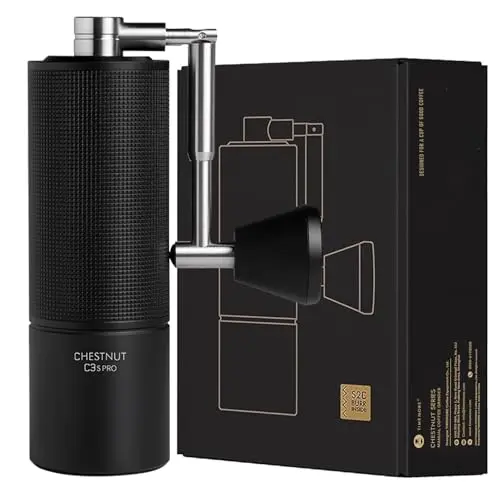
Chestnut C3S Pro – Foldable Manual Travel Grinder
A manual travel grinder with an all-metal aluminum body, a foldable crank, and an S2C conical burr. It packs down small and offers 36 settings for espresso through French press.

CM-002 – USB-C Cordless Burr Grinder
A compact cordless burr grinder with USB-C charging, 80 grind settings, and a 15g single-dose hopper. It’s built for one fresh cup in a hotel room, office, or small kitchen.
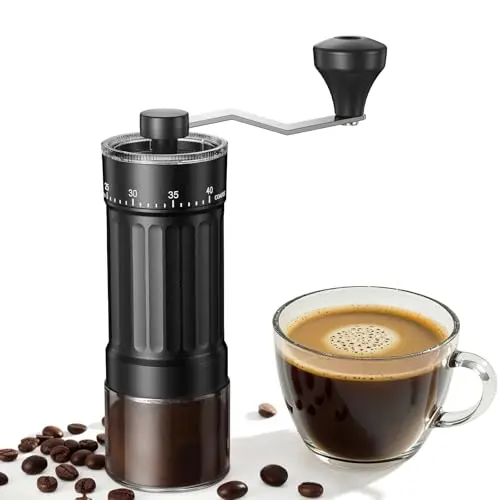
MCG-01 – Mini Manual with External Settings
A mini manual grinder with 40 external settings, ceramic conical burrs, and a 30g capacity. It’s light enough for a daypack and simple enough to clean without tools.

LB-T07 – Rechargeable Travel Burr Grinder
A cordless burr grinder with 38 settings, a 110ml hopper, and USB charging. It’s aimed at RV, camping, and office use where an outlet isn’t always handy.

ACG-107 – Compact Plug-In Grinder
A compact plug-in grinder with 304 stainless steel blades, a 40g capacity, and a clear locking lid. It’s a small, affordable option for hotel rooms and rental kitchens with an outlet.
How We Evaluated These Travel Coffee Grinders
We didn’t see these grinders through a full season of travel or run controlled grind-size lab tests. What we did: cross-referenced five travel coffee grinders from five distinct brands across five decision axes – portability and packability, grind consistency, power source, capacity, and ease of cleaning. We triangulated published specifications, feature sets, owner feedback where available, and use-case fit for travelers who brew in hotel rooms, campsites, and small apartments. We also mapped each grinder against common trip profiles, from a single overnight bag to a week-long road trip with multiple coffee drinkers. We kept the lineup tight so each pick has a distinct travel role, not just a longer spec sheet.
The scoring framework weighted real-world travel fit (70%) – how well each grinder handles packing, setup, and daily brewing away from home – against feature differentiation (30%) – burr design, adjustment range, battery or manual operation, and included accessories. We have no commercial relationship with any brand here; recommendations track fit and differentiation, not brand preference. If you want a battery-free grinder that disappears into a backpack, the TIMEMORE Chestnut C3S Pro is the clear match. If you’d rather press a button and skip the cranking, the FORLIM CM-002 is the cordless pick. Either way, the goal is the same: fresh grounds without turning your trip into a gear project.
How to Choose the Right Travel Coffee Grinders
1. What Makes a Coffee Grinder Genuinely Travel-Ready
The first test is packability: does the grinder fit in a backpack pocket or suitcase corner without loose parts? A foldable handle, a locking lid, and a compact body matter more on the road than they do at home. The second test is lid security; a grinder that spills beans in transit is a grinder you’ll stop carrying. The third is power source. Manual grinders never need an outlet, while cordless electrics need charging discipline. Weight matters too, but a few extra ounces are worth it if the build feels solid and the grind is consistent.
2. Manual vs. Cordless Electric Travel Coffee Grinders
A manual burr grinder is the most reliable travel companion because there’s no battery to charge and no cord to lose. It’s quieter, lighter in most cases, and easier to use off-grid. The tradeoff is effort: you’ll spend a minute or two cranking for each cup. A cordless electric model is faster and easier, especially for early mornings, but it adds battery anxiety and charging gear. If you want zero battery management, the TIMEMORE Chestnut C3S Pro is the manual pick. If convenience wins, the FORLIM CM-002 is the cordless pick.
3. Burr vs. Blade: Why Grind Consistency Matters on the Road
A conical burr crushes beans between two shaped surfaces, which gives you a more uniform particle size and fewer fines than a spinning blade. That consistency matters for extraction: uneven grounds can make a cup taste bitter and muddy at the same time. A blade grinder is cheaper and smaller, but it chops unevenly and is harder to dial in for pour-over or espresso. For travel, a burr grinder is usually worth the extra space if you care about brew quality.
4. Capacity, Packability, and Cleaning for Travel Coffee Grinders
Single-dose grinders in the 15g to 25g range suit one or two cups and keep beans fresh, while larger capacity hoppers reduce refills on longer trips. Think about your routine: a solo traveler brewing one mug doesn’t need a 110ml hopper, but a couple sharing a French press will. Cleaning is the other practical axis. A brush and removable parts make a grinder easier to keep fresh, and most portable models should be hand-washed or wiped dry rather than dunked. If you want a larger hopper for RV trips, the LEBURRY LB-T07 is the roomier cordless option.
5. Budget, Mid-Range, and Premium Travel Coffee Grinders
Budget travel grinders usually mean manual models with ceramic or steel burrs and basic adjustment. They can brew well if you’re willing to crank. Mid-range options add nicer burrs, more settings, or cordless convenience. Premium travel grinders bring tighter tolerances, better materials, and more precise adjustment, which matters if you brew espresso away from home. You don’t need the most expensive grinder to make good travel coffee; you need one that matches your brewing method and your willingness to charge or crank. If value is the priority, the CEVING MCG-01 is the budget pick.
Frequently Asked Questions
1. Are manual travel coffee grinders better than cordless electric models?
Neither is universally better; it depends on how you travel. Manual grinders are lighter, quieter, and never need charging, which makes them the safer choice for camping and backpacking. Cordless electric models are faster and easier for hotel rooms and office desks, but they add battery life management and charging gear. If you want reliable grind consistency without thinking about power, the TIMEMORE Chestnut C3S Pro is the manual pick for most travelers.
2. What's the difference between the TIMEMORE Chestnut C3S Pro and the FORLIM CM-002?
The biggest difference is manual operation versus USB-C charging. The TIMEMORE is a hand grinder with a foldable crank, a 25g capacity, and 36 settings; it’s built for battery-free reliability. The FORLIM is a cordless electric with a 15g single-dose hopper and 80 settings, so it’s faster for one-cup mornings but needs charging. The TIMEMORE has the edge in capacity and long-term simplicity, while the FORLIM wins on adjustment range and push-button convenience. Choose the FORLIM CM-002 if you want electric ease on the road.
3. How does the LEBURRY LB-T07 compare with the CEVING MCG-01?
The LEBURRY is a rechargeable battery grinder with 38 settings and a 110ml hopper, so it’s faster and roomier for RV or car camping. The CEVING is a manual grinder with a ceramic burr, 40 external settings, and a 30g capacity; it’s lighter and never needs charging. The LEBURRY has more capacity and convenience, while the CEVING is simpler and more packable. Expect more manual effort from the CEVING, but also no battery to manage.
4. Can a compact plug-in grinder like the Aroma ACG-107 work for travel?
Yes, if your travel includes a kitchenette, hotel room, or rental with an outlet. The Aroma is a plug-in power grinder with a 40g capacity and a clear lid, so it’s useful for hotel-room brewing and small-batch spice grinding. It’s not the right choice for camping or off-grid trips, and as a blade grinder it won’t match a burr model for consistency. Treat its capacity as one or two cups, not a full pot for a group.
Final Verdict
For most travelers, the TIMEMORE Chestnut C3S Pro is the answer – it pairs a packable all-metal body and foldable handle with a burr set that handles espresso through French press, and it never asks you to find an outlet. If you’d rather skip the manual cranking, the FORLIM CM-002 is the cordless pick, with USB-C charging and a wide adjustment range for one-cup brewing. And if budget is the priority, the CEVING MCG-01 gets you external grind settings and a ceramic burr for a very approachable price. Choose by trip style: manual for off-grid reliability, cordless for hotel-room convenience, budget manual for simple one-cup mornings. Any of these three will beat pre-ground coffee on the road.
