
Best Travel Cribs For Newborns – 2026 Reviews

A newborn’s sleep routine is fragile enough at home. Add a hotel room, a grandparent’s spare bedroom, or a vacation rental, and the whole setup can feel unfamiliar fast. That is why the right travel crib matters: it gives your baby a consistent, safe-feeling spot without asking you to haul a full nursery.
The useful divide in this category is not brand loyalty. It is whether you want a bassinet-level sleep surface for the first few months, a playard that can pull double duty as a changing station and toddler enclosure, or a compact bed that folds like a briefcase. Setup speed, mattress support, breathability, and how the whole thing packs into a trunk separate the genuinely travel-friendly options from the ones that only look portable.
We looked across the market at travel cribs, playards, and portable bassinets built for newborns, then compared how each one handles real trips, small spaces, and the handoff between home and away. The goal is not to crown one brand. It is to match you with the right form factor for your newborn and your travel style.
Best Travel Cribs for Newborns – 2026 Reviews

On the Go Pack 'n Play – Full-Size Bassinet for Travel
A travel playard built around a full-size infant bassinet that folds with the frame, so newborn sleep stays simple on overnight trips. The push-button fold and folding feet make packing up less of a wrestling match.
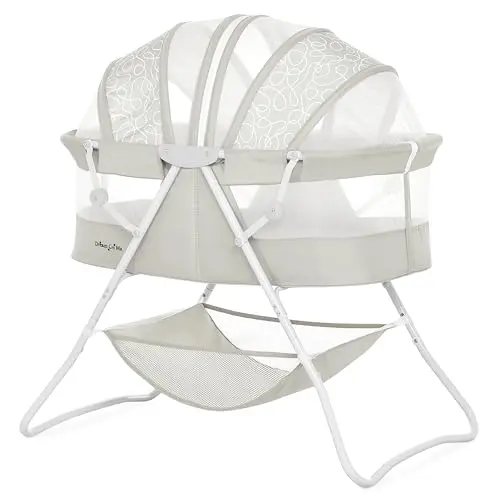
Karley Portable Bassinet – Lightweight Newborn Sleep
A lightweight portable bassinet with a quick-fold aluminum frame, double mesh canopy, and included mattress pad. It is built for newborns who need a familiar sleep spot at home or on short trips.
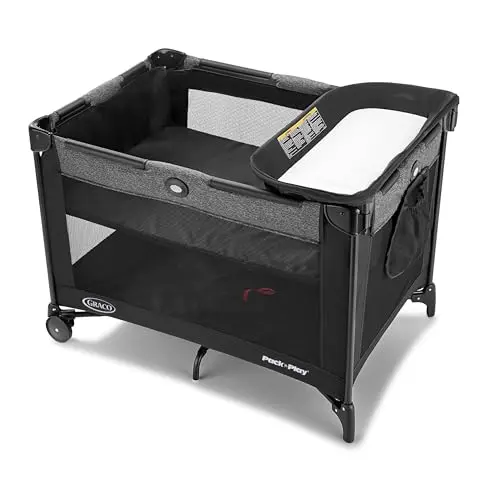
Simple Solutions Pack 'n Play – All-in-One Travel Playard
An all-in-one travel playard with a full-size bassinet, integrated diaper changer, and toddler playard mode. The compact fold and push-button setup make it a practical choice for longer visits.
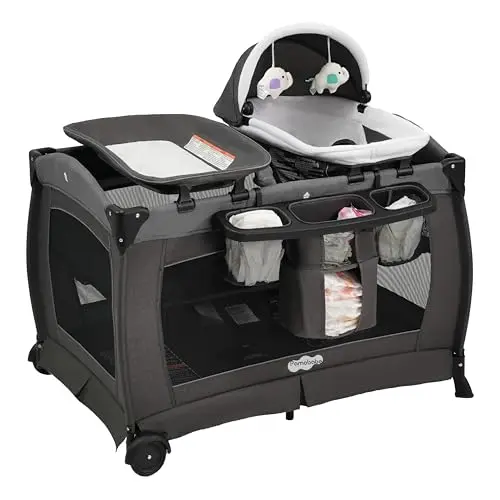
4-in-1 Pack and Play – Bassinet, Changer, and Playard
A modular travel playard that combines a newborn bassinet, insert bassinet, changing table, and playard in one frame. It is aimed at parents who want one setup to cover visits, naps, and diaper changes.
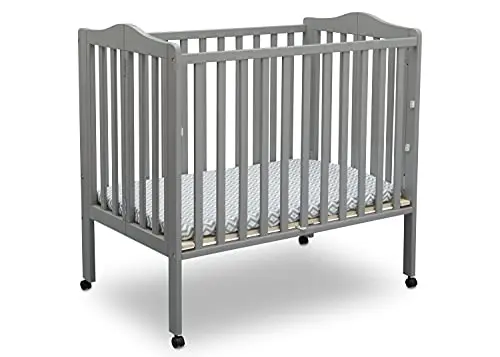
Folding Portable Mini Crib – Real Crib Feel That Packs Flat
A folding wood mini crib with casters, a two-position mattress height, and an included 1.5-inch mattress. It is a better fit for a second room or long visit than for constant air travel.
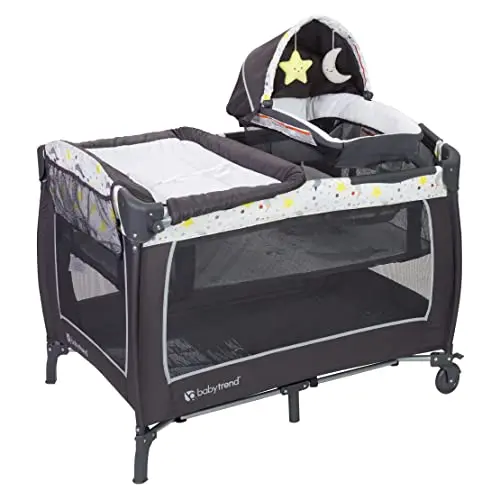
Lil' Snooze Deluxe II – Napper, Bassinet, and Changer Combo
A nursery center with a removable bassinet, napper with canopy, flip-away changing table, and compact fold. It is designed for newborns through the early toddler months.
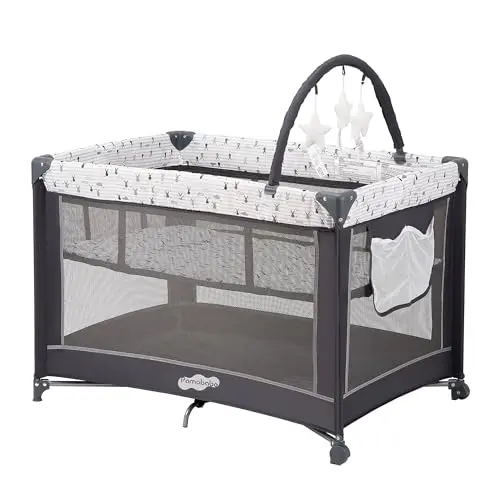
Pack and Play with Bassinet – Simple Newborn Travel Setup
A pack-and-play style travel playard with a removable bassinet, breathable mesh sides, and a seven-point support base. It is a straightforward newborn-to-toddler option for shorter trips.
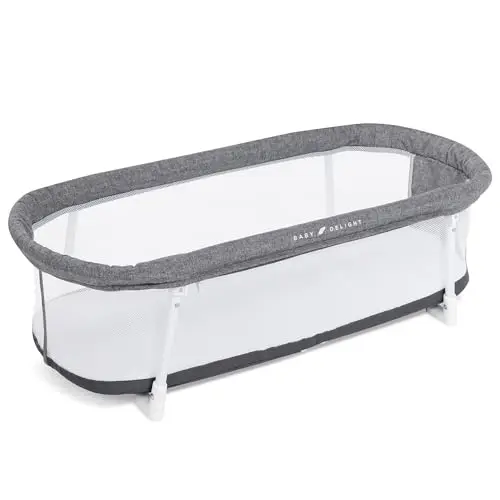
Snuggle Nest Bassinet – Briefcase-Style Portable Bed
A briefcase-style portable bassinet bed with mesh walls, a washable cover, and a tool-free fold. It is sized for newborns and young infants up to about five months.
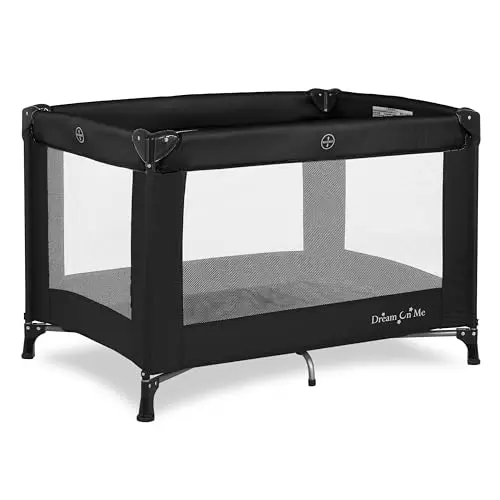
Nest Portable Playard – Budget-Friendly Travel Enclosure
A budget-friendly portable playard with full mesh sides, a quick-fold frame, and a removable mattress pad. It creates a simple supervised play or short-nap space at home or on the go.
How We Evaluated These Travel Cribs for Newborns
We didn’t road-test these cribs through a full season of hotel stays or run timed assembly trials. What we did: cross-referenced 9 travel crib and portable sleep models from 6 distinct brands across 5 decision axes – newborn sleep suitability, bassinet vs. playard function, fold and portability, mattress support and breathability, and cleaning and day-to-day use. We triangulated published specifications, feature sets, and aggregated feedback where available, then mapped each option against representative newborn travel scenarios such as grandparent visits, hotel stays, and small-space second setups. We also weighed how clearly each manufacturer defines sleep modes, because a travel crib is only as good as the instructions that tell you which mode is safe for a newborn.
The scoring framework weighted real-world fit for newborn travel (70%) – how well each crib delivers a practical sleep or play space away from home – against feature differentiation (30%) – the bassinet design, changing attachments, canopy, wheels, and other details that separate one model from another. We have no commercial relationship with any of the brands featured; recommendations track fit and differentiation, not brand preference. If you want the most complete newborn travel playard, the On the Go Pack ‘n Play is the strongest starting point; if you want a lighter bassinet-first setup, the Karley Portable Bassinet is the better match.
How to Choose the Right Travel Cribs for Newborns
1. What Newborns Actually Need in a Travel Crib
For a newborn, the sleep surface and firmness matter more than extra features. A travel crib should offer a flat, firm sleep surface with breathable sides, and it should be used exactly as the manufacturer specifies. Bassinet attachments are designed for the early months; playard floors are lower and better for older babies who can sit or stand. If you are traveling with a brand-new baby, look for a bassinet-level sleep option rather than assuming every playard floor is newborn-friendly. Mesh panels help with airflow and let you keep an eye on your baby without leaning all the way in.
2. Bassinet vs. Playard in Newborn Travel Cribs
A portable bassinet is usually lighter and faster to set up, but it is outgrown sooner. A playard with a bassinet insert gives you a higher sleep level now and a larger enclosure later. The tradeoff is weight, bulk, and more parts. If your trips are mostly short and you want the simplest possible setup, a bassinet-style travel bed can be enough. If you need diaper changes, naps, and a toddler play space in one, an all-in-one playard earns its space. For a newborn-focused bassinet with a fast fold, the Karley Portable Bassinet is the pick; for a full-size bassinet that stays attached to the playard, the On the Go Pack ‘n Play is the stronger match.
3. Portability and Setup for Newborn Travel
The fold matters as much as the footprint. A crib that folds flat but weighs as much as a piece of furniture is not truly travel-ready. Look for a one-piece fold, a push-button or quick-release lock, and a carry bag that actually fits the folded frame. Wheels help at home but do not replace a light carry. Set it up once before your trip so you know how the locks engage and how the bassinet seats. If you want a compact playard that sets up without tools, the Nest Portable Playard is a budget-friendly pick.
4. Mattress Support and Breathability
A thin pad is common in travel cribs, but newborns need a firm, flat surface with no gaps around the edges. Check that the mattress pad fits snugly and that the bassinet insert is fully locked before use. Mesh side panels are not just a comfort feature; they support airflow and visibility. If the included pad feels minimal, add only a manufacturer-approved fitted sheet rather than a thick aftermarket mattress that can create a soft spot. Wipe-clean fabrics are helpful, but removable and washable covers are better for spit-up and diaper leaks.
5. Cleaning, Storage, and Day-to-Day Use
Travel cribs live in a strange middle ground between furniture and gear. You want wipe-clean surfaces for quick turnarounds, plus a cover that can be removed after a mess. A storage basket or pouch is more useful than it sounds when you are changing a diaper in a dim room. Check how the crib stores when folded: a flat fold is easier to slide under a bed, while a standing fold takes less floor space. No-tool assembly matters if you will move the crib between rooms or relatives’ houses.
6. Pricing Tiers and What You Get
Budget travel cribs usually give you a basic playard, mesh sides, and a simple pad. Mid-range options add bassinet inserts, canopies, wheels, or a changing station. Premium travel cribs tend to focus on sturdier frames, better mattress support, and more polished folding hardware. The right tier depends on how often you travel and whether the crib will double as a second sleep space at home. A newborn-only bassinet can be the smarter buy if you want light weight and a fast fold; a convertible playard makes more sense if you want to use it past the first few months.
Frequently Asked Questions
1. What's the difference between the Graco On the Go and the Dream On Me Karley for newborn travel?
The On the Go Pack ‘n Play is a playard with a full-size infant bassinet that folds with the frame. It gives you a familiar playard footprint and room to transition into toddler use. The Karley Portable Bassinet is lighter, folds smaller, and adds a double mesh canopy for outdoor visits or bug-prone rooms. It is a newborn-only sleep space rather than a long-term playard. For most newborn travel with a car and a need for a full bassinet, the On the Go Pack ‘n Play is the more versatile pick; for quick trips and tight spaces, the Karley is easier to carry.
2. Is the Pamo Babe 4-in-1 worth it over the Graco Simple Solutions?
They solve the same problem in different ways. The Pamo Babe 4-in-1 leans into a modular bassinet and changing station, with a lower price tier and a compact carry fold. The Graco Simple Solutions has a more established push-button fold, an integrated diaper changer, and a full-size bassinet with a toddler playard mode. If you want the most features for the money, the Pamo Babe is tempting. If you want the easier fold and a more proven playard frame, the Graco is the safer call. For an all-in-one setup that keeps changes and sleep in one place, the Simple Solutions Pack ‘n Play is the pick.
3. Can a newborn sleep in a travel crib overnight?
Yes, if the manufacturer says the specific mode is approved for sleep and you follow the setup exactly. A bassinet attachment is usually the newborn sleep mode; a playard floor is for older babies. The sleep surface should be flat and firm, with a snug-fitting sheet and no pillows, blankets, or aftermarket mattresses. Mesh sides help with airflow and visibility. If you are unsure whether a product is approved for overnight sleep, use it only for supervised play until you confirm the manufacturer’s guidance.
4. How long can a newborn use a travel crib?
It depends on the mode. A portable bassinet is typically outgrown within the first few months or when a baby hits the weight or development limit. A playard with a bassinet insert can last longer because the bassinet comes out and the lower playard takes over. A convertible playard may last into the toddler years. Always stop using a bassinet once your baby can roll, sit, or push up to the point that the manufacturer says to transition. The weight and height limits are the real expiration date, not the calendar.
5. Do I need a bassinet attachment or is a playard floor enough for a newborn?
For a newborn, a bassinet attachment is usually the better fit because it puts the sleep surface higher and keeps the baby more contained. A playard floor is lower, harder on your back, and generally intended for older babies. That said, some playards are approved for newborn sleep on the floor if the pad is firm and flat. Check the manufacturer’s sleep guidance rather than assuming. If you plan to travel often in the first months, a dedicated bassinet mode is worth the extra setup.
Final Verdict
For most newborns and most trips, the On the Go Pack ‘n Play is the answer. It gives you a full-size bassinet, a quick push-button fold, and a frame that transitions to a playard without making you carry a second piece of gear. If your priority is a true newborn sleep space that folds like a briefcase, the Karley Portable Bassinet is the lighter, faster option. For a budget-friendly supervised play space, the Nest Portable Playard covers the basics. And if you want an all-in-one setup with a changing station, the 4-in-1 Pack and Play is the most feature-heavy pick. Match the form factor to your travel style, and you will get more use out of the crib with less friction.
