
Best Travel Electric Toothbrushes – 2026 Reviews

Every toiletry bag has a limit, and a charging dock is usually what blows it. You either pack the base and gamble on an outlet near the hotel sink, or you leave the electric brush home and spend a week with whatever the front desk hands out.
The brushes that actually earn a permanent spot in your bag tend to win on two things: they can survive a trip without their charger, and they don’t demand much space. Battery life gets all the attention, but packability is what you notice at 6 a.m. in a rented bathroom with no counter space.
So we went across the market rather than down one brand’s catalog. That means rechargeable sonics with month-long runtimes, budget handles that ship with a pile of heads and a case, and simple battery-powered brushes you can resupply at any corner shop. All three approaches can be the right answer – it depends on how long you’re gone and how much you’re willing to carry.
Best Travel Electric Toothbrushes – 2026 Reviews
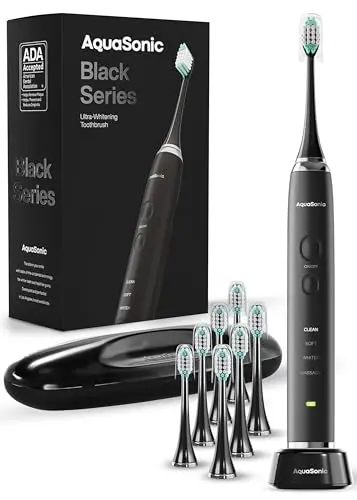
Black Series – Full Travel Kit With Hard Case
A travel kit rather than just a toothbrush: a slim sonic handle, a hard-shell case with room for two heads, and eight DuPont brush heads so refills never become a trip-planning problem. Four modes, a two-minute smart timer, and an IPX7 waterproof body cover the daily basics.
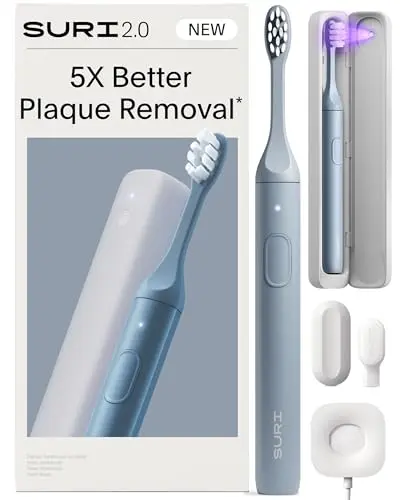
Pro Sonic – UV-Cleaning Case and Month-Long Battery
A premium sonic brush built around the trip: a USB-C rechargeable aluminium handle that runs more than a month per charge, plus a travel case with a UV-C light that cleans the brush head in about a minute and tops up the handle when plugged in.
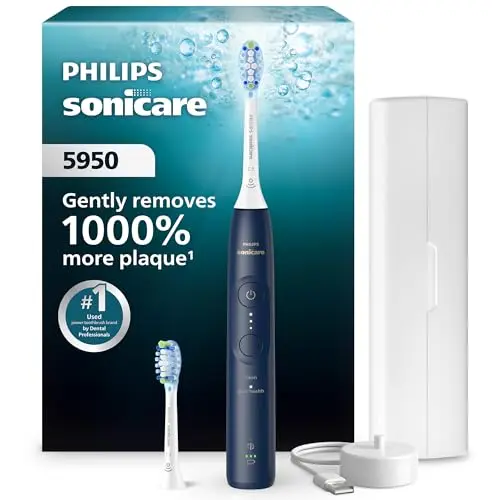
Sonicare 5950 – Long Battery With Gum Protection
A higher-end Sonicare tuned for gum comfort: a pressure sensor with haptic feedback, Clean and Gum Health modes with adjustable intensity, C3 two-in-one brush heads, and a 21-day battery with a travel case in the box.
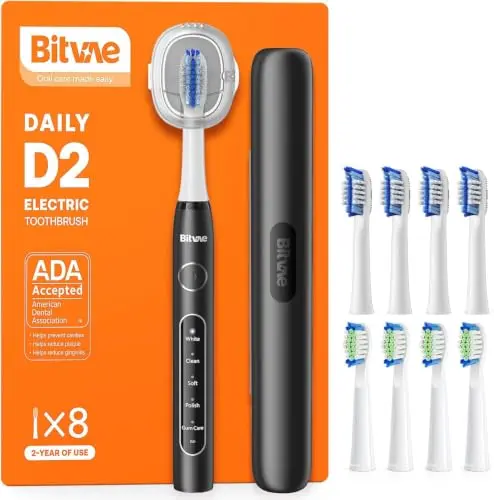
D2 – 60-Day Battery With Eight Heads
Built for the long haul: a 60-day battery, eight replacement heads, and a case that doubles as a holder and cover. Five modes, a two-minute timer with 30-second quadrant prompts, and IPX7 waterproofing.
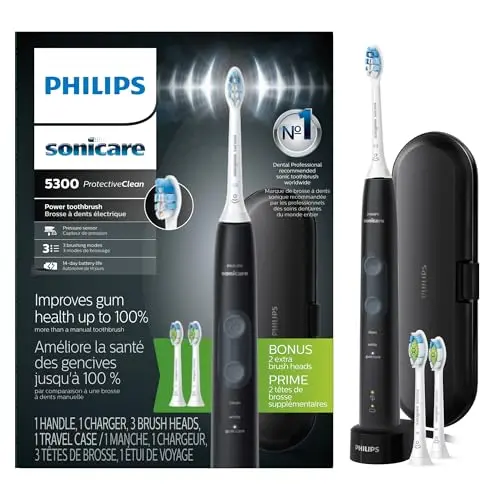
Sonicare 5300 – Pressure Sensor in a Travel Case
A mid-range Sonicare with the feature that matters most for gums – a visual pressure sensor – plus Clean, White, and Gum Care modes, a 14-day battery, three brush heads, and a travel case.
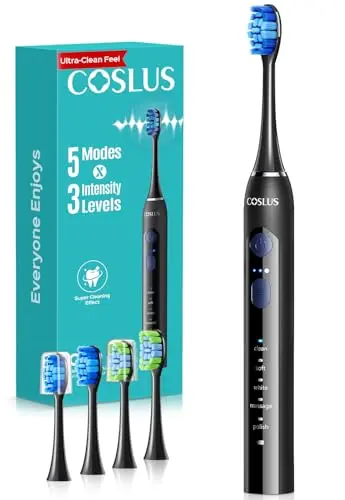
C30 – Compact Handle, No Bulky Case
A compact handle with a magnetic levitation motor, five modes across three intensity levels, two bristle firmness options, and a battery rated from 30 to 150 days depending on the mode you use.
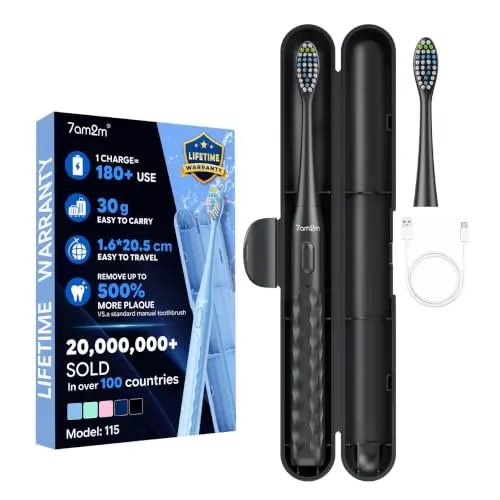
Sonic Travel – Ultralight With 90-Day Charge
A slim, light sonic brush with a travel case, two soft heads, USB-C charging, and a rated 90 days per charge. IPX7 waterproof with a two-minute timer and 30-second quadrant prompts.

High Power – Eight Heads for the Whole Family
A bundle-first brush: eight heads, five modes, a charging base, and a travel case, with a battery rated for roughly 30 days of brushing.

Pulsar Pro-Health Expert Clean – No Charger Required
A battery-powered pulsar brush rather than a rechargeable one: no base, no cable, no charging routine. Vibrating nylon bristles help break up plaque, and the two-pack format means a spare can live permanently in your bag.

3D White Action – AA Power, Compact Handle
A compact AA-powered brush with a rotating action cup head that hugs each tooth and holds toothpaste against the surface. Replaceable heads keep it going, and the included battery means it works straight out of the pack.
How We Evaluated These Travel Electric Toothbrushes
We didn’t run lab battery-drain tests or measure brush vibration with instruments. What we did: cross-referenced 10 electric toothbrush models from 10 distinct brands across six decision axes – power source, real-world battery life, travel case or cover, handle size and weight, brushing modes, and long-term reliability signals. We triangulated published specifications, packed-format details, and owner feedback where available, then mapped each handle against how people actually travel: a weekend carry-on, a two-week vacation, a gym bag, or a shared family bathroom.
The scoring framework weighted real-world travel fit (70%) – whether the thing actually solves the charging-and-packing problem – against feature differentiation (30%) – pressure sensors, UV cases, head bundles, and anything else that separates one handle from the next. The best case is a brush you can charge over USB-C and then forget about for weeks. We have no commercial relationship with any of these brands; recommendations track fit and differentiation, not brand preference.
Two practical notes. Replacement heads are the hidden cost in this category, so a brush that ships with eight heads gets credit a bare handle doesn’t. And if your priority is a full kit with a hard case and a month of runtime, the Black Series is the match; if you’d rather have a UV-cleaning case and a pressure sensor in a premium handle, the Pro Sonic fits better.
How to Choose the Right Travel Electric Toothbrush
1. What Makes an Electric Toothbrush Genuinely Travel-Friendly
Travel-friendly gets used loosely. In practice it comes down to three things: whether the brush can survive a trip without its charger, how much space it eats in a bag, and whether it forgives a cramped hotel sink. A handle with four weeks of runtime and a USB-C port travels very differently from one that needs a proprietary base.
The second filter is packability. A hard-shell case protects the handle but adds bulk; a brush head cap keeps things small but leaves the handle exposed. Neither is wrong – it depends on whether your bag gets thrown in a hold or tucked under the seat in front of you.
2. Battery Life and Charging: The Real Dealbreaker for a Travel Electric Toothbrush
Most battery claims assume two minutes twice a day on a standard mode. That’s a fair baseline, but stronger modes drain faster – the COSLUS handle, for instance, is rated anywhere from 30 to 150 days depending on which mode you use.
Charging method matters as much as runtime. USB-C means one cable for your phone and your brush. A charging base means another brick in the bag. And standard AA or AAA batteries are the ultimate insurance, since you can resupply at any corner shop. If you’re away for weeks at a stretch, the D2 and its 60-day rating are built for exactly that.
3. Travel Case vs. Brush Head Cap: How Much Bulk Will You Carry?
This is the most personal trade-off in the category. A full case with room for spare heads is the right call if you check a bag or travel with family – some cases even double as a standing holder. A cap suits carry-on-only travelers who resent every cubic inch.
Worth checking whether the case is included or sold separately, since that’s where the real cost difference hides. Some brushes here ship with a case and heads in the box; others expect you to buy both.
4. Brush Head Size and Bristle Softness Away From Home
A smaller head reaches the back molars more easily, and that matters more when you’re brushing in a strange bathroom without your usual mirror angle. Owners of the more compact Oral-B handle often note the head is too large for smaller mouths, which is worth weighing if that’s you.
Bristle softness is the other variable. Soft bristles are gentler on gums that are already irritated from travel, dry cabin air, or a change in routine. Some handles ship with two firmness options in one box, so you can switch mid-trip if your gums start complaining.
5. Replacement Heads and Running Costs: The Quiet Budget Trap
A handle price is only half the story. Replacement heads are where the long-term cost lives, and proprietary heads from the big brands tend to run more than value-brand equivalents. A brush that ships with eight heads can cover a couple of years of brushing before you buy anything else.
Check compatibility before you commit: some handles take only their own heads, while the Oral-B 3D White Action accepts Deep Clean, Anti-Microbial, and 3D White Action heads. That flexibility is worth more than it sounds when you’re restocking between trips.
6. Battery-Powered or Rechargeable: Which Travel Electric Toothbrush Suits Your Trip?
Rechargeable handles deliver the better clean and the deeper feature set – pressure sensors, timers, multiple modes. They also assume you’ll be somewhere with a socket long enough to charge. For anything longer than a week, a month-plus battery makes that assumption a non-issue.
Battery-powered brushes flip the trade-off. They’re lighter, cheaper, and immune to dead outlets, which is why the Pulsar Pro-Health Expert Clean still earns a place for short trips and backup duty. The clean is a step below a sonic handle and the vibration isn’t for everyone, but there’s nothing to charge and nothing to forget.
Frequently Asked Questions
1. What's the difference between the Aquasonic Black Series and the SURI Pro Sonic?
They solve the same problem differently. The Black Series is a kit: eight brush heads, a hard-shell case with room for two heads, four modes, and around four weeks of runtime off a wireless base. It’s the pick if you want to open a box and be done.
The Pro Sonic is the premium build: an aluminium handle, USB-C charging, a pressure sensor, and a UV-C case that cleans the head in about a minute. You’re paying for engineering and materials, not head count.
2. Bitvae D2 vs 7AM2M Sonic Travel: which budget travel toothbrush is better?
Both are value picks with a case in the box, but they lean different ways. The D2 brings eight heads and a 60-day battery, plus ADA acceptance, so it’s the stronger long-trip and low-maintenance choice.
The Sonic Travel is lighter, charges over USB-C, and is rated for 90 days per charge, which makes it the easier one to toss in a carry-on and forget about. Reliability reports are mixed on both, so treat either as a value play rather than a decade-long purchase.
3. Are travel electric toothbrushes actually smaller than regular ones?
Not always. Plenty of them are full-size handles sold with a case, and the case is doing most of the travel work. Where you genuinely save space is in handle diameter and in the packaging choice – a brush head cap instead of a bulky case.
If portability is the priority, the C30 is the most packable rechargeable in this lineup: a slim handle, a head cap, and a battery rated from 30 to 150 days. If you’d rather protect the handle, take a case and accept the bulk.
4. How long does a travel electric toothbrush battery actually last?
Anywhere from about two weeks to several months, depending on the handle and the mode. Manufacturers assume two minutes twice a day, usually on the standard setting – run a higher intensity level or a whitening mode and expect a shorter run.
For reference, the Sonicare 5300 is rated around 14 days, the Sonicare 5950 around 21, and long-haul handles like the Bitvae D2 and 7AM2M are rated for 60 to 90 days. If your trip runs longer than the rating, pack the cable.
5. Do you need a travel case, or is a brush head cap enough?
For carry-on travel, a brush head cap is usually enough – it keeps bristles off hotel counters without eating space. For checked luggage, family trips, or anything where the bag gets compressed, a hard-shell case earns its bulk by protecting the handle and holding spare heads.
A middle option worth knowing: the Bitvae case doubles as a standing holder, so it does double duty on a bathroom shelf instead of sitting in a drawer between trips.
Final Verdict
For most travelers, the Black Series is the answer – a hard-shell case, four weeks of runtime, and eight heads in the box cover the three things that actually go wrong on a trip.
If you want the best-engineered handle and don’t mind the premium tier, the Pro Sonic and its UV-cleaning case are a genuine upgrade. On a tight budget, the Sonic Travel gets you USB-C charging, a case, and months of runtime for less than a dinner out.
Match the brush to your trip length and your tolerance for charging, and you’ll stop thinking about your toothbrush entirely – which is the whole point.
