
Best Travel Fans For Sleeping – 2026 Reviews

It’s 11 p.m. in a rental you booked on short notice. The window opens two inches, there’s no ceiling fan, and the AC unit by the window sounds like a lawnmower starting up every twenty minutes. That’s usually the moment people start shopping for a fan they can throw in a bag.
The trouble is that most fans sold as portable are optimized for the wrong thing. For sleeping, two specs decide whether you’ll actually use the thing: how quiet it is on the setting you’d leave running all night, and whether the battery lasts until morning. Airflow numbers, blade counts, and LED displays are secondary to those two.
We compared the current crop across brands and price tiers, from palm-sized battery fans to folding units that double as camping lanterns. Some are built for a hotel nightstand, one clamps to a headboard, and one is a corded whisper that never needs charging. Below is what each is genuinely good at, and who should skip it.
Best Travel Fans for Sleeping – 2026 Reviews
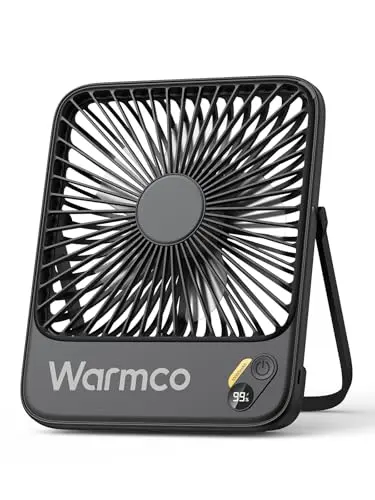
D3 Portable Travel Fan – Slim, Quiet All-Night Cooling
A 10,000mAh travel fan built around overnight use: Warmco rates the D3 for up to 24 hours on low and roughly 10 on high, with a brushless motor rated under 40dB on speed one. The 7-inch-wide frame is only 1.61 inches deep and weighs just under a pound, so it slides into a backpack or a carry-on. A foldable stand tilts the airflow where you want it, and the LED readout shows live battery percentage and speed.
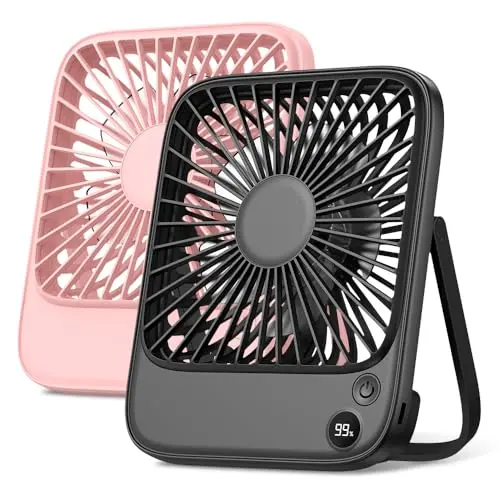
K65 2-Pack – Two Quiet Fans for Two Nightstands
Two 6-inch rechargeable fans in one box, each with a 5,000mAh battery rated for up to 16 hours on low or roughly 6 on high. Both run under 40dB on speed one, which puts them squarely in sleep and shared-room territory. The frame is 1.6 inches thin with a foldable stand, the LED display tracks battery percentage and current speed, and a recessed button helps keep them from switching on inside a bag. USB-C cables and a two-year warranty are included.
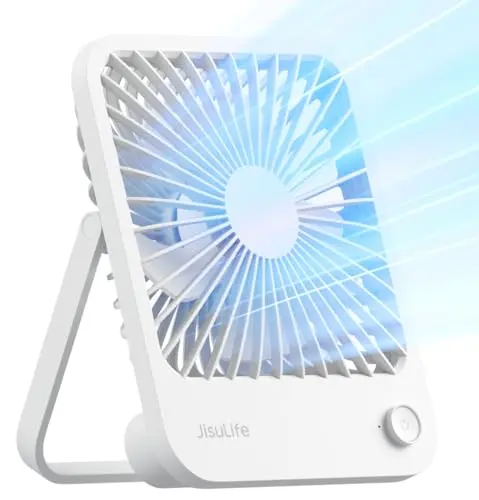
FA26 Foldable Desk Fan – Ultra-Compact Night Cooling
A 4,500mAh rechargeable fan that runs up to 13 hours and folds 180 degrees so it can stand on a nightstand or hang from a hook. The brushless motor is rated under 40dB, and the square-shaped housing is designed to gather airflow from all sides. It weighs around 216 grams and measures roughly 1.4 inches deep, so it disappears into a tote or a carry-on pocket. Four speeds include a natural-wind mode.
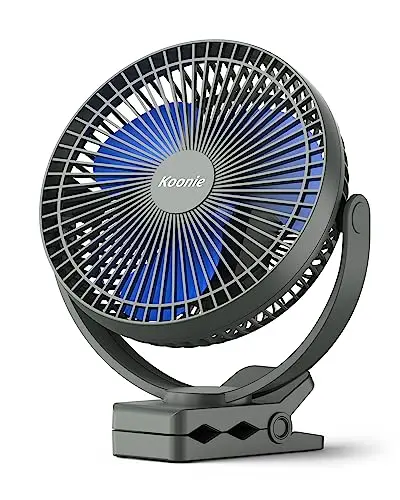
8-Inch Clip-On Fan – Clamps Where You Sleep
A 10,000mAh fan that does double duty as a clamp and a tabletop unit. The 3-inch clamp grips headboards, bed frames, treadmill rails, and stroller bars, while the head rotates 360 degrees in both directions so you can aim it without moving the base. Koonie rates runtime at up to 24 hours and noise around 35dB, with four settings including an energy-saving mode. USB-C fast charging tops it up in roughly six hours.

S-F16B Personal Fan – Whisper-Quiet Budget Pick
A 4,000mAh rechargeable fan rated under 35dB – among the lowest noise figures in this lineup – with four speeds and up to 23 hours of running time on the gentlest setting. It weighs about 9.3 ounces, folds flat via a bracket, and runs either on battery or plugged into USB. The fan frame detaches for cleaning, and the battery doubles as emergency phone charging. A 180-day manufacturer warranty is included.
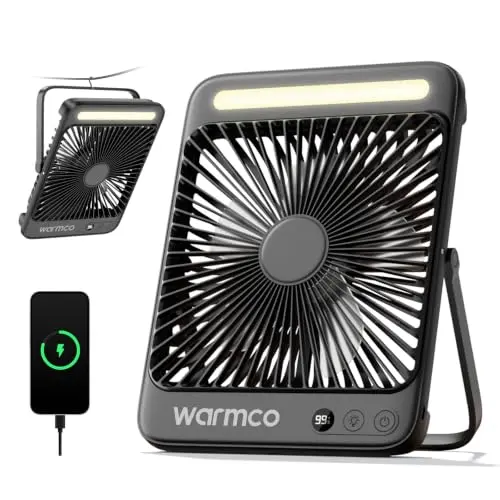
D4 Camping Fan – Long-Runtime Lantern Combo
A 20,000mAh rechargeable fan rated for up to 48 hours on low or 15 on high, making it the endurance pick of the lineup. The 8-inch frame is 1.77 inches thick and weighs 1.72 pounds, with a foldable stand and an integrated hook for hanging. Warmco pairs the fan with a built-in LED lantern and a digital display, and the USB-C port doubles as a 5V/2.4A output for charging a phone in a pinch.
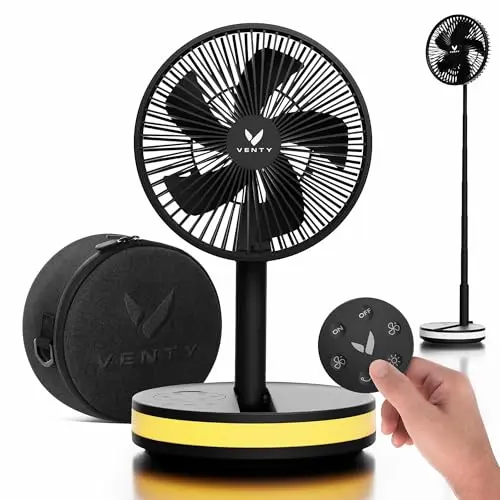
Venty Portable Fan – Oscillating Tower With Remote
A foldable, telescoping fan that extends into a floor-standing tower and collapses for travel. It oscillates 120 degrees, rotates 180, and runs a 16,000mAh battery rated up to 48 hours on the lowest setting – that same battery can top up a phone over USB-C. Three levels of warm LED light and a detachable remote round out the feature set, and it weighs 2.6 pounds. A carry case and two charging cables are included.
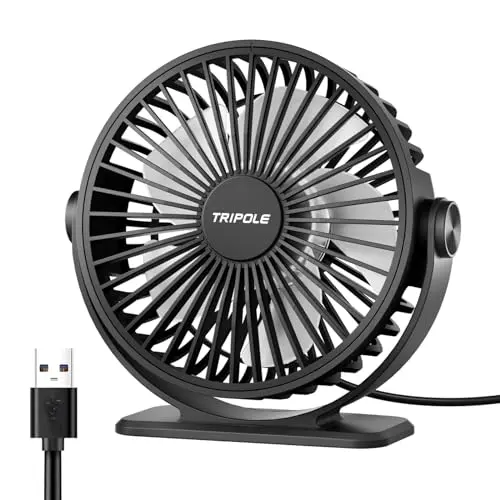
KW37 USB Desk Fan – Plugs In, Barely Whispers
A corded USB fan that runs off any 5V adapter, laptop port, or power bank. At 25dB it’s the quietest unit in this roundup, and the head rotates 360 degrees for precise aim. The 4.5-inch frame sits on a wide, silicone-padded base that damps vibration, and the 4.9-foot cable reaches from a nightstand to a distant outlet. The fan cover detaches for cleaning.
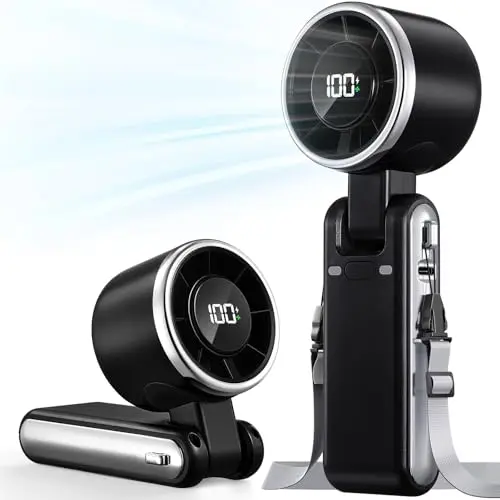
S40 Handheld Turbo Fan – Handheld, Neck, or Desk
A 4,000mAh handheld fan with a seven-blade turbo impeller rated up to 9 m/s and five speed settings. It folds 180 degrees into a desk fan and includes a lanyard for neck carry, so it covers handheld, wearable, and stationary use. Bearwind rates runtime at up to 12 hours on the low settings, with a full charge in about three hours over USB-C. At 0.42 pounds and 6.7 inches, it fits a pocket or a purse.
How We Evaluated These Travel Fans
We didn’t run lab sound-pressure measurements or bench battery-drain tests. What we did: cross-referenced 9 travel-friendly fan models from 8 brands across six decision axes – rated noise, battery capacity and claimed runtime, packed size and weight, airflow design, mounting and placement options, and controls that hold up in a dark room. We audited spec sheets for claims that don’t survive a second look, cross-checked runtime figures against the speed setting they’re quoted at, triangulated published specifications with feature lists, and weighed owner feedback where available. We also pressure-tested the portability claims themselves – a fan only qualifies as travel gear if it actually folds, clamps, or slides flat. Then we mapped every option against four sleep scenarios: a hotel nightstand, a cruise cabin shelf, a shared dorm room, and a tent.
The scoring framework weighted overnight fit (70%) – how quietly and reliably a fan delivers from lights-out to alarm – against feature differentiation (30%) – the placement, charging, and control advantages that separate one model from the next. We have no commercial relationship with any brand here; recommendations track fit and differentiation, not brand preference. A fan that’s excellent in a tent but too loud on a hotel nightstand doesn’t get credit for the wrong job. If you want the least fuss, the Warmco D3 is the pick; if you’d rather have two fans already charged and packed, the TOPK K65 covers that.
How to Choose the Right Travel Fan for Sleeping
1. Why Quiet Matters More Than Airflow for Sleeping
Noise is the spec that decides whether a travel fan earns its place in your bag. Manufacturers quote dB at the lowest setting, which is fair – that’s the one you’ll actually leave running from bedtime to alarm. A fan rated under 35dB sits around the level of a quiet room. 40dB starts to register as a presence, and 45dB is a soft hum you’ll hear every time the AC cycles off.
Here’s the part that gets lost: a fan that moves a lot of air at high speed is useless overnight if you have to turn it down to sleep. Low-setting performance is what you’re buying. If you want both a genuinely quiet floor and enough runtime that you stop checking, the Warmco D3 is our reference point – a sub-40dB brushless motor paired with an honest battery readout.
2. How Much Battery Runtime Do You Actually Need Overnight?
Eight hours is the floor for a sleep fan, and most of this lineup clears it on low. The number that matters is low-setting runtime, because that’s the mode you’ll use – high-speed figures are usually a fraction of it and rarely relevant overnight.
Two design choices change the math. A 10,000mAh cell rated around a full day on low buys you a second night without charging, which is the difference between a reliable travel habit and a nightly outlet hunt. USB-C input lets one cable and one adapter cover your fan and your phone, and power-bank output – found on the larger Warmco and Venty units – turns the fan into backup power instead of a battery you have to remember to top up.
3. What Travel Fan Size and Weight Means for Your Bag
Thin beats small. A fan that’s 1.5 to 1.8 inches deep slides into a laptop sleeve or a flat carry-on pocket, while a round-based fan with the same blade size eats awkward volume. Weight matters less than shape for most travelers, but anything past about 1.5 pounds starts competing with things you’d rather bring.
The other half of travel-friendliness is placement flexibility. A foldable stand lets a fan sit on a nightstand, a shelf, or a suitcase lid, and a hanging hook or clamp covers rooms where the only free surface is the headboard. Buy for the worst room you’ll sleep in, not the best one.
4. Placement Options for Sleeping in an Unfamiliar Room
Hotel rooms and cruise cabins are hostile to fans: glass-topped nightstands, tight shelf space, one outlet behind the bed. That’s why clamp and hook designs earn their keep. A clip fan grips a headboard frame and aims down at the pillow without occupying a surface. A hook design hangs from a tent loop or a curtain rod and keeps the floor clear.
If you usually land in rooms with a usable nightstand, a flat stand with an adjustable tilt is the simpler answer. If you don’t, the Koonie clip-on is the one we’d pack: the 3-inch clamp grips bed frames, and the 360-degree head lets you aim it off a wall instead of straight at your face.
5. USB-C, Power Banks, and Charging a Travel Fan on the Road
Almost every rechargeable fan here charges over USB-C, which is the right answer for travel: one cable, one adapter, and a standard 5V/2A phone charger usually does the job. A few units need a source that can actually deliver current – a weak airline seat outlet or an old adapter will leave a fan trickling rather than charging.
Cable length matters for the corded options. A 4.9-foot cable reaches from a nightstand to an outlet behind the bed; a short one leaves the fan on the floor. And check the switch design: a recessed or locked button prevents a fan from running itself flat inside a packed bag, which is the most common way a travel fan dies before you ever use it.
6. Warmco D3 vs TOPK K65: Which Travel Fan Fits Your Sleep Setup?
These two come up in the same conversation because they solve the same problem from opposite directions. The D3 is one fan with a 10,000mAh battery, a 7-inch blade span, a live battery readout, and a slim 1.6-inch body – the better choice if you want the most airflow per ounce and you’re packing for one.
The K65 is two 6-inch fans at 5,000mAh each, both under 40dB on low, backed by a two-year warranty. That’s the smarter buy if you travel as a pair, if you want a spare permanently packed, or if two sleepers need airflow in one room. It gives up blade span and per-fan runtime, and gains redundancy.
Our call: for maximum airflow from a single compact fan, take the D3. Traveling with a partner, or want a charged backup always in the bag? The TOPK K65 two-pack is the sensible one.
Frequently Asked Questions
1. What's the difference between the Warmco D3 and the TOPK K65?
The short version: one fan with more airflow and a bigger battery versus two smaller fans. The D3 has a 10,000mAh battery, a 7-inch blade span, and a body only 1.61 inches thick, which is why it moves more air per unit. The K65 splits that into two 6-inch fans at 5,000mAh apiece and adds a two-year warranty, so a single failure doesn’t end your trip.
Pick the D3 if you sleep alone and want the strongest fan you can still pack flat. Pick the K65 if two people share a room, or if you want one fan living in a suitcase permanently.
2. Koonie clip-on vs JISULIFE FA26 – which is better for hotel sleeping?
It depends on the furniture. The Koonie’s clamp wins in rooms with a headboard or bed frame and no free table space, and its 10,000mAh battery stretches across several nights on low. The FA26 wins on packing: around 216 grams and folding 180 degrees, so it hangs from a hook or sits on a narrow shelf.
If quiet is the deciding factor, both are rated under 40dB on their low settings, so the tiebreakers are placement and long-term durability. The Koonie carries more long-term reliability risk; the JISULIFE is the lighter, simpler object.
3. How quiet does a travel fan need to be for sleeping?
Quieter than most product pages imply. Aim for a fan rated at or below 35dB on its lowest setting if you’re a light sleeper, and treat 40dB as the practical ceiling for most people. Anything around 45dB is audible between air-conditioning cycles and will wake some sleepers.
Also check which speed the rating is measured at. A fan rated quiet on speed one can be loud on speed three, so the real question is whether the low setting moves enough air to be useful – that’s what separates a fan you use every night from one that stays in the bag.
4. Are travel fans actually allowed on cruises and in carry-on bags?
Generally yes. Rechargeable battery fans with built-in lithium cells are commonly carried in hand luggage, though airline rules on spare and installed batteries vary – check your carrier before you fly. Cruise lines tend to be more concerned with cabin space and power draw than the fan itself, and small cordless units with a footprint under about 8 inches rarely cause issues.
What does get flagged is anything resembling a heating element or a device with an exposed blade, so a standard enclosed desk fan is the safe shape. The TOPK K65 two-pack is a popular pick for exactly this reason: two slim fans pack into one cabin bag with room to spare.
5. Can a USB-powered fan work overnight without a battery?
Yes, as long as you have a 5V USB source that stays on. A corded fan like the TriPole runs indefinitely from a wall adapter, a laptop, or a power bank, which is why it’s a strong option for hotel rooms even though it can’t leave the cable. The catch is a draw of about 0.8A – some weak adapters and older seat-back outlets can’t sustain speed three.
If your plans include tents or long transfers, a battery fan is the safer choice. If you’re mostly in hotel rooms and want the quietest possible night, the corded route is hard to beat.
Final Verdict
For most travelers, the Warmco D3 is the fan to buy. It runs a full night at under 40dB, tells you exactly how much battery is left, and slides flat into a carry-on – three things that matter more at 2 a.m. than any spec-sheet headline. If you travel as a pair or want a spare already packed, the TOPK K65 two-pack gets you two quiet fans for less than one premium unit. If your rooms never have a free surface, the Koonie clip-on clamps to the headboard and aims where you need it. And if silence is all you care about and there’s an outlet nearby, the entry-level Otlonpe S-F16B is hard to argue with.
