
Best Ultra Thin Bath Mats – 2026 Reviews

You know the scene: you step out of the shower, the bath mat is soft and thick, and then the bathroom door catches it halfway through the swing. Or the mat bunches against the vanity, leaving a wet patch where you actually stand. An ultra thin bath mat is the fix, but only if it’s built for real bathroom traffic rather than just being a thin piece of fabric with a label.
The first thing to separate a good ultra thin bath mat from a mediocre one is clearance without compromise. It needs to sit low enough to clear a door, a walker, or a tight vanity gap, while still staying flat instead of curling at the edges. The second is grip and moisture control: a thin mat that slides on wet tile or stays damp is worse than a thicker mat that stays put.
We looked across brands at the low-profile options that actually solve those problems, comparing thickness, backing materials, surface feel, drying behavior, and care requirements. The goal isn’t to find the thinnest mat on paper. It’s to find the one that fits your bathroom’s real constraints and still feels reasonable underfoot.
Best Ultra Thin Bath Mats – 2026 Reviews
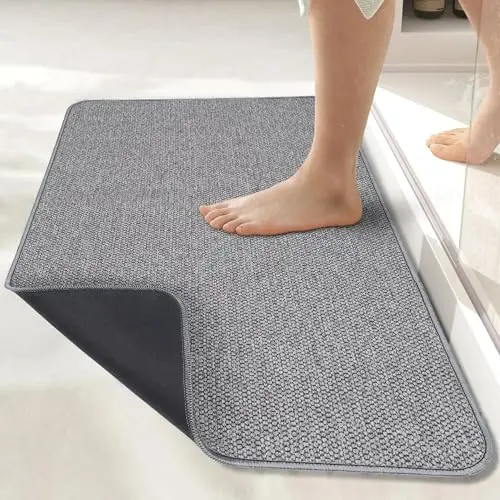
DMG27 – Ultra-Thin Door-Friendly Mat
The Bosap DMG27 is built around a genuinely low 0.2-inch profile and a natural rubber backing, so it can sit under a door without bunching. The terry cloth surface is designed to absorb drips quickly, and the 17×27 size works well in front of a tub, shower, or single sink.
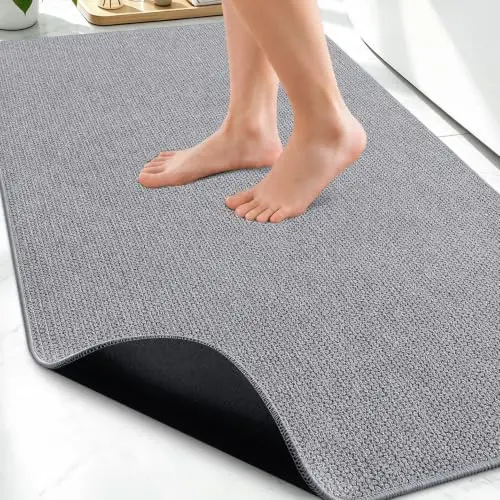
YSDD040 – Low-Profile Microfiber Mat
The Smiry YSDD040 keeps a 0.25-inch profile while offering a roomier 30×20 footprint. The microfiber surface is designed to soak up moisture and dry quickly, and the rubber backing helps it stay flat on bathroom tile. It’s a good fit for double sinks, larger shower exits, or anyone who wants more coverage without a thick pile.
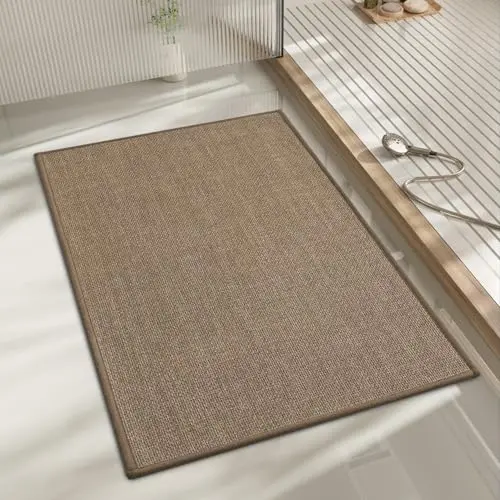
Ultra-Thin Bathroom Rug – Quick-Dry Suede Surface
The chakme bath mat is a compact 24×17 option with a 0.33-inch thickness and a hairless suede-like surface that resists trapping lint and hair. The rubber backing is designed to grip smooth floors, and the low-profile build suits tight bathroom layouts or a spot beside the tub.

BLDX White 16×24 – Thin Chenille Comfort
The TYUU BLDX is a low-pile chenille mat with a natural rubber backing and a 16×24 footprint. It’s built to be thinner than a traditional plush bath rug while keeping a softer, cushioned feel underfoot, and it’s machine washable for regular bathroom use.
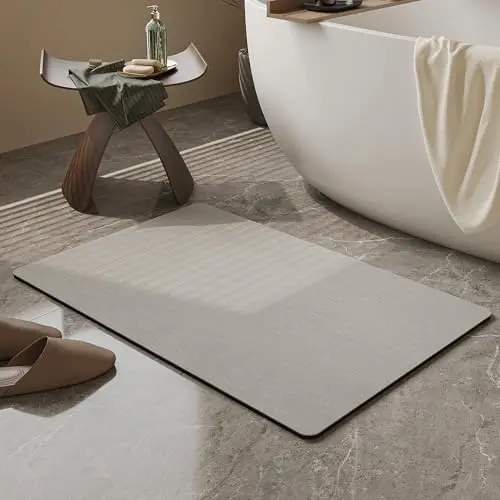
Bath Rug Light Grey – Ultra-Thin Clearance Fit
The Mecko bath mat is the thinnest option in this group at 0.16 inches, with a faux suede surface and a rubber backing. It’s designed for tight door gaps, small bathroom floors, and anyone who needs a mat that almost disappears underfoot. The 16×24 size is compact and easy to place in front of a tub, shower, or sink.
How We Evaluated These Ultra Thin Bath Mats
We didn’t run controlled absorption trials or put these mats through months of wash cycles. What we did: cross-referenced 5 ultra thin bath mat models from 5 distinct brands across 5 decision axes – thickness and door clearance, backing grip, absorbency, drying speed, and care requirements. We triangulated published specifications, owner feedback where available, and use-case fit for bathrooms where a standard plush mat gets caught, bunched, or pushed aside.
We mapped listed thickness against the practical question that matters here: will the mat clear a swinging door and still stay flat? We also audited surface materials and backing types, because a low-profile mat is only useful if it grips a damp tile floor and dries between showers. Where owner feedback was available, we weighed recurring notes on curling, slipping, shrinkage, and wash care as buyer-awareness signals rather than as a scoreboard.
The scoring framework weighted real-world fit and performance (70%) – how well each mat stays low, grips the floor, and handles everyday wet-foot traffic – against feature differentiation (30%) – surface material, size options, and maintenance quirks. We have no commercial relationship with any of the brands here; recommendations track fit and differentiation, not brand preference. If you want the most balanced door-friendly pick, the Bosap DMG27 is the place to start. If you need a wider footprint for a double-vanity bathroom, the Smiry YSDD040 makes more sense.
How to Choose the Right Ultra Thin Bath Mats
1. Why Ultra Thin Bath Mats Solve a Different Problem
Most bath mats are designed around cushion first. An ultra thin bath mat flips that priority: the goal is to sit low enough that a door can swing over it, a walker or wheelchair can roll across it, or a small bathroom doesn’t feel choked by pile. That doesn’t automatically make it less comfortable – the best ultra thin bath mats use a dense, low-pile surface that feels soft without adding height.
The tradeoff is that thinness exposes construction quality. A mat that is simply a slice of fabric with a weak backing will slide, curl, or feel clammy. A good one pairs a low profile with a rubber backing and a surface that spreads water rather than letting it puddle.
2. Thickness and Door Clearance: What to Measure Before Buying
Start with your actual gap, not the mat’s marketing label. A mat listed at 0.2 inches or 0.25 inches is usually a safer bet under a standard interior door than one at 0.4 inches or more, but door height, flooring, and the mat’s backing all affect clearance. Measure from the floor to the bottom of the door, then leave a little breathing room for the mat to compress underfoot.
If clearance is the hard constraint, lean toward a model with a flexible rubber back and a low, dense surface. The Bosap DMG27 is the most balanced example in this lineup, while the Mecko bath mat goes even thinner for tight spots. Just don’t assume every mat labeled ultra thin will clear every door; the backing edge and how the mat lies flat matter as much as the listed thickness.
3. Backing Grip Matters More Than Pile Height
On tile or stone, a low-profile mat can still become a slip hazard if the backing doesn’t grip. Rubber and textured TPR backings are the ones to look for; a smooth cloth back will skate when the floor is wet. Keep the floor dry underneath before you set the mat down, because trapped moisture can reduce grip even on a good backing.
Absorbency and grip are linked in practice. A mat that soaks up water quickly keeps the floor drier, which gives the backing less moisture to fight. That’s why the strongest ultra thin bath mats combine a quick-drying surface with a high-traction back instead of relying on one feature alone.
4. Absorbency, Drying, and Surface Feel
Material choice changes the feel more than the thickness. Terry cloth feels towel-like and familiar; microfiber and faux suede surfaces tend to feel smoother and dry faster; chenille adds softness but usually brings more pile. None of those is automatically better – it depends on whether you want a plush step or a barely-there mat that disappears underfoot.
Drying speed matters in a bathroom with poor airflow. A thin mat with a breathable surface can dry faster than a thick cotton mat, but a low-profile mat with a non-breathable backing can trap moisture if it’s not hung or draped properly. Look for care instructions that match your routine, especially if you prefer machine washing.
5. Size, Care, and Long-Term Maintenance for Ultra Thin Bath Mats
Measure the landing zone, not just the door. A 16×24 mat fits a tight single-sink bathroom, while a 30×20 mat gives more coverage in front of a double vanity or a walk-in shower. Keep the mat’s edges away from door swing paths if the fit is close.
Care is where low-profile mats separate. Some are machine washable, some are hand-wash only, and some need air drying to protect the backing. Avoid high heat and bleach unless the label says otherwise; both can shorten the life of rubber backing and cause edges to curl. A quick shake or rinse between washes helps if the surface traps hair or dust.
Frequently Asked Questions
1. Are ultra thin bath mats actually absorbent?
Yes, but the surface material matters more than the thickness. A dense terry, microfiber, or suede-like surface can pull water off your feet quickly even when the mat is only a fraction of an inch thick. The key is whether the mat spreads moisture across its surface and lets it evaporate; a thin mat with a sealed, non-breathable top can feel damp longer. Look for quick-dry fabric, a low-pile surface, and care instructions that let you wash and air it properly.
2. What's the difference between the Bosap ultra thin bath mat and the Mecko bath mat?
The Bosap mat is the more balanced option: a 0.2-inch profile, terry cloth surface, and natural rubber backing make it a strong all-around fit for a standard bathroom door. The Mecko mat goes thinner at 0.16 inches and uses a faux suede surface, so it’s the better choice when clearance is the absolute priority. The tradeoff is that the Mecko’s surface can show water marks and needs gentler care. If you want the safer everyday pick, the Bosap DMG27 is the one I’d start with.
3. How does the Smiry ultra thin bath mat compare with the chakme bath mat?
The Smiry mat is wider at 30×20 inches and uses a microfiber surface with a rubber backing, making it a better fit for a larger bathroom or a double-vanity area. The chakme mat is more compact at 24×17 inches and has a hairless suede-like surface that’s easy to wipe or rinse. Neither is plush, but the Smiry gives more coverage while the chakme feels more streamlined in a tight bathroom.
4. Do ultra thin bath mats stay put on tile floors?
They can, but the backing is the deciding factor. A rubber or textured TPR backing grips tile far better than a smooth cloth back, especially when the floor is dry underneath. Keep the mat flat, avoid letting water pool under it, and choose a size that doesn’t bunch against a door or vanity. If you need the thinnest option that still has a rubber back, the Mecko bath mat is the one to check.
5. Can you machine wash an ultra thin bath mat?
Often yes, but not always. Some low-profile mats are machine washable on cold, while others are hand-wash only or need air drying to protect the backing. Check the care label before buying, especially if the mat has a rubber back; high heat and bleach can cause edge curling, backing damage, and fading. A gentle cycle with mild detergent and low-heat drying is the safest default when the label allows it.
Final Verdict
For most bathrooms, the Bosap DMG27 is the easiest ultra thin bath mat to recommend. It pairs a 0.2-inch profile with a terry cloth surface and a natural rubber backing, so it clears a door without feeling like a paper towel underfoot. If you have a wider vanity or want more floor coverage, the Smiry YSDD040 gives you a larger 30×20 footprint with a low-profile microfiber surface. And if your door gap is the real problem, the Mecko bath mat is the thinnest pick here at 0.16 inches, though it asks for gentler care. For a compact bathroom with a simple rinse-and-go routine, the chakme bath mat is a sensible streamlined alternative. Start with the Bosap unless a specific clearance or size issue points you elsewhere.
