
Best Ultralight Backpacking Pillows – 2026 Reviews

Three in the morning, a mile above treeline, and the thing under your head has turned into a crinkling plastic balloon – or slid off the pad entirely and wedged itself against the tent wall. Almost everyone who backpacks long enough goes through a pillow phase. First you stuff a fleece into a sack. Then you buy something inflatable. Then you get picky.
The pickiness is almost always about weight. There’s a real spread in this category – the lightest options here sit under three ounces, the comfort-first picks run past a pound – and that gap is a genuine decision, not a rounding error. Under about five ounces, you’re comparing air pillows by valve design, baffling, and face fabric. Past eight ounces, you’ve stopped buying an ultralight pillow and started buying a different kind of sleep system.
So this guide leans on the featherweight end first: what each pillow actually weighs, how small it packs, whether the valve behaves in the dark, and whether it stays where you put it. We kept a couple of heavier, comfort-first options in the mix too, because not every trip is a thru-hike and knowing the tradeoff is half the decision. Here’s how the current market shakes out across brands.
Best Ultralight Backpacking Pillows – 2026 Reviews
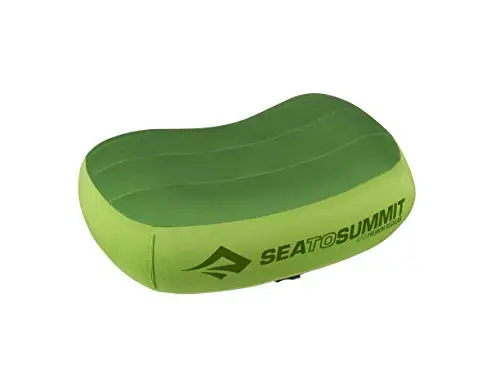
Aeros Premium – Featherweight Comfort That Holds Its Shape
A curved air pillow with a soft brushed knit face and a multi-function mini valve. It packs to roughly the size of a small fist and is the lightest pillow in this lineup at just under three ounces.
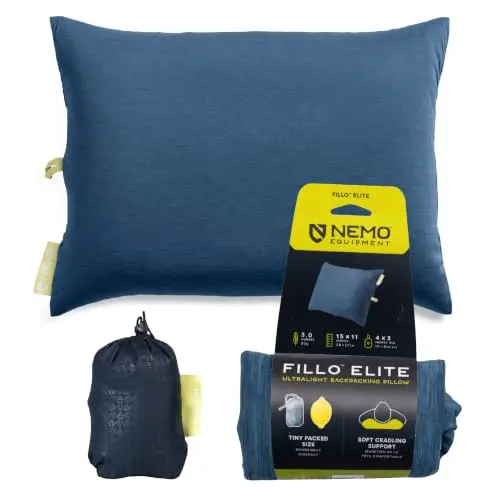
Fillo Elite – Recycled Fill on a Baffled Air Cell
A hybrid that pairs a 3-inch I-beam air cell with a thin layer of recycled Zerofiber insulation, so it reads as padded rather than balloon-like. It’s the lightest hybrid in the roundup, and the cover unzips for washing.
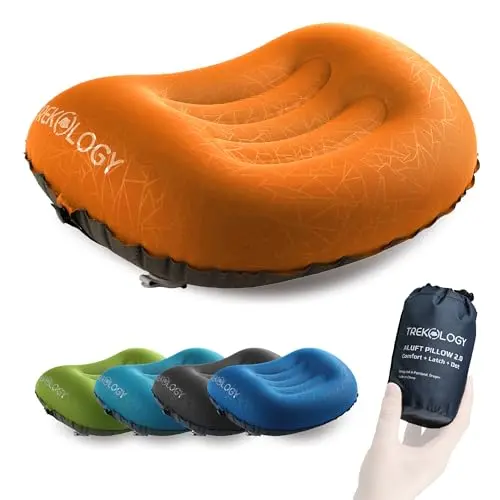
Aluft 2.0 – Soda-Can Size With Grip That Actually Works
An inflatable that folds down smaller than a soda can and weighs under four ounces. The back panel is covered in rubber grip dots and there’s a latch strap for tying it to a pad – the two details that separate it from generic air pillows.
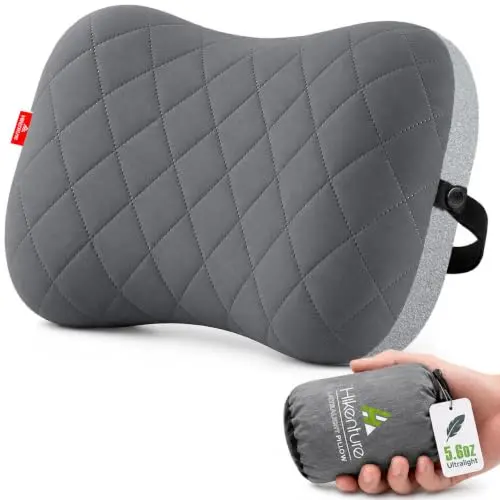
Camping Pillow with Removable Cover – Separate Bladder, Washable Face
A pillow that separates the two things that usually fail: the air chamber and the face fabric. The bladder is a standalone thickened TPU layer, and the breathable cover zips off for washing.
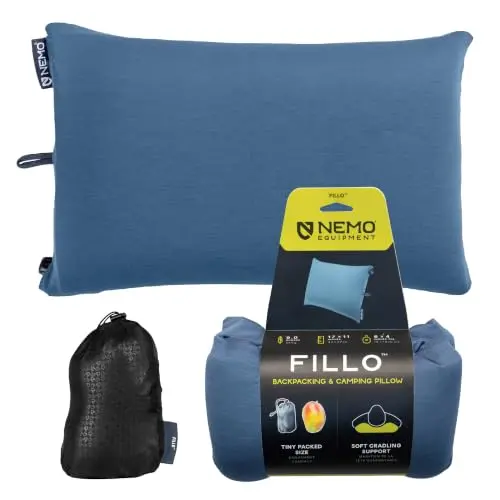
Fillo – Foam Padding for Trips Where Weight Is Flexible
The heavier sibling of the Fillo Elite: same baffled 3-inch air cell, but with a thick foam layer on top for a softer, more yielding feel. It’s the closest thing in the roundup to a bed pillow.
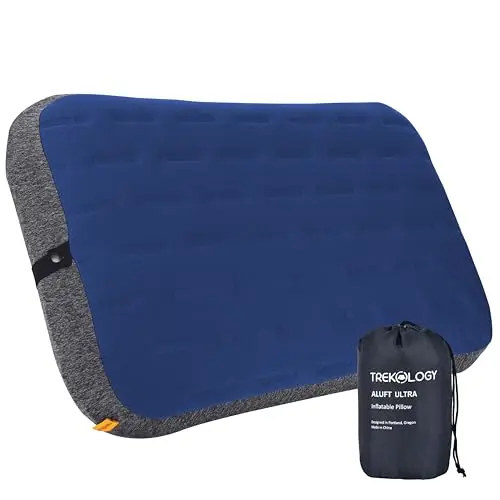
Aluft Ultra – Full-Size Surface for Side Sleepers
A larger inflatable – 24 by 15 inches and 4.5 inches thick – aimed at sleepers who roll around and wake up with their head on the tent floor. It has a removable, washable cover and a detachable strap for tying it to a pad.
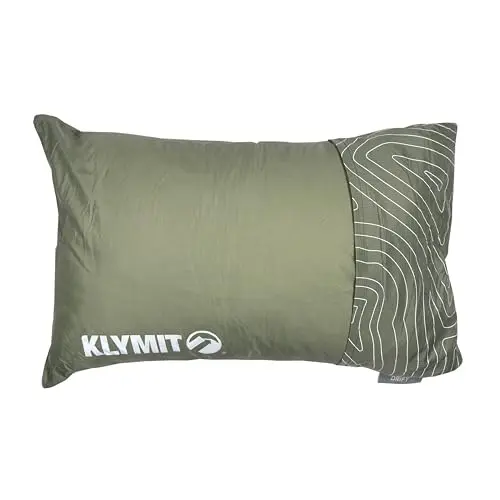
Drift – Shredded Memory Foam That Packs Down Small
A genuine pillow rather than an air bladder – shredded memory foam inside a jersey cotton liner, wrapped in a removable 70D ripstop shell. It compresses into its own bag with a strap and sleeps much closer to a bed pillow.
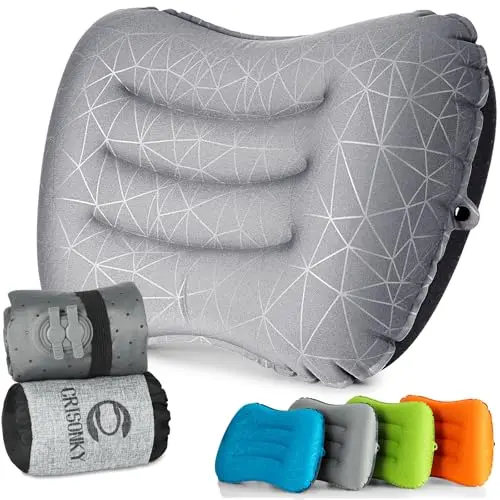
Ultralight Inflatable Travel Pillow – Entry-Level Air Comfort
A simple, very light air pillow that folds into a soda-can-sized pouch. Silicone dots on the back add grip, a dual valve handles inflation and deflation, and it fills in a few breaths.
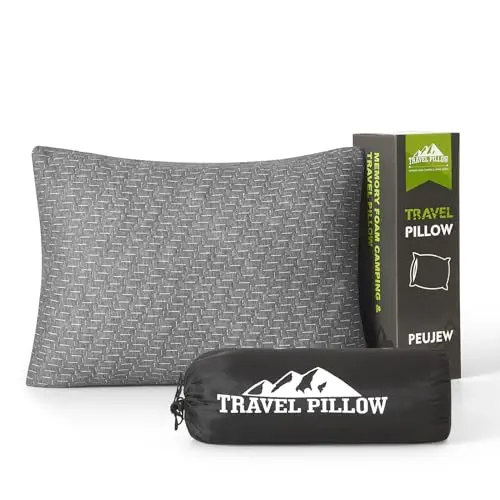
Shredded Memory Foam Pillow – Compressible Foam for Cabin and Car
A compressible shredded-foam pillow aimed at travel as much as camping. The microfiber cover unzips and machine-washes, and it comes with a bag for strapping to luggage or stashing in a car.
How We Evaluated These Ultralight Backpacking Pillows
We didn’t see these pillows through a full season of trail nights. What we did: cross-referenced 9 backpacking pillow models from 7 distinct brands across 6 decision axes – packed weight, packed volume, comfort and neck support, valve behavior, cover care, and pad attachment. We triangulated published specifications, aggregated owner feedback where available, and mapped every option to three realistic buyer profiles: the gram-counting thru-hiker, the weekend camper, and the side sleeper willing to trade ounces for support.
The scoring framework weighted real-world fit (70%) – whether a pillow actually delivers usable sleep at its stated weight – against feature differentiation (30%) – valve design, baffling, face fabric, cover serviceability, and attachment systems that separate one option from the next. We have no commercial relationship with any brand here; recommendations track fit and differentiation, not brand preference. If you want the safest all-around call, the Aeros Premium is the one we’d hand most backpackers; if you’d rather spend your weight budget on plushness, the Fillo Elite is the alternative.
One thing we deliberately ignored: the word ‘ultralight’ on the packaging. Several pillows in this category market themselves that way while sitting well above the weight of the genuinely light options, so every claim was checked against the spec sheet rather than the label. Where owner feedback was thin, we leaned on published dimensions and materials instead of filling space with guesswork.
How to Choose the Right Ultralight Backpacking Pillow
1. What Actually Counts as Ultralight for a Backpacking Pillow
‘Ultralight’ gets used loosely in this category. The working threshold we used: a pillow is genuinely ultralight when it lands under about five ounces and compresses to fist size or smaller. That band covers the pure-air pillows and the lightest hybrid, and nothing in it will make you resent your pack at 6 a.m.
From five to nine ounces you’re in compromise territory – usually a hybrid with some fill, or a larger air chamber. Above about twelve ounces you’ve left ultralight behind and bought a comfort item, which is a completely valid choice on a base-camp trip or a short hike-in. The honest question isn’t ‘is this light?’ but ‘is this the right number of ounces for the sleep I’m buying?’ If you’re chasing the lowest number that still works, the Aeros Premium is the reference point at just under three ounces.
2. Air Cell, Foam, or Both: Matching the Fill to Your Sleep Style
Pure air pillows are the lightest and pack smallest, and they’re fully adjustable – bleed air out and the pillow softens, add air and it firms up. The tradeoff is a balloon feel: your head sits on top of the chamber rather than settling into it. Baffles fix most of that, dividing the chamber into channels so the pillow holds a flatter, more head-shaped profile.
Hybrids add a fill layer over the air cell. Recycled synthetic fill keeps weight near three ounces while killing most of the balloon feel. Shredded memory foam is the most home-like and the heaviest, and it only makes sense if the pillow is a priority over pack weight. If shoulder-side pressure is what wakes you up, the Fillo is the pick.
3. Valves and Baffles: The Parts That Decide Whether You Sleep
The valve is the most underrated component of any inflatable pillow. A micro-adjust valve lets you bleed air in small amounts, which is how you actually find your pressure. A shared one-way inflation port holds air between breaths so you’re not fighting the pillow while filling it. A plain plug works, but the control is coarser.
Baffling matters just as much. A pillow with no internal structure turns into a sphere under your head no matter how good the valve is, and a sphere rolls. Look for I-beam or channel construction if the pillow claims any kind of ergonomic shape.
4. How Packed Size Changes the Backpacking Pillow You Can Carry
Weight gets the attention, but packed volume is what determines whether a pillow actually comes with you. In a frameless or ultralight pack, a soda-can-sized stuff sack slots into a side pocket or the lid; a water-bottle-sized one starts competing with your quilt for the same real estate.
Check the packed dimensions, not the inflated ones, and think about where the pillow will live. Anything that packs to roughly five by two inches is effectively free space. Anything that packs to a cylinder bigger than your cook pot needs a plan.
5. Keeping a Backpacking Pillow From Sliding Off the Pad
The most common real-world gripe about inflatable pillows isn’t comfort – it’s waking up with the pillow wedged against the tent wall. Three fixes show up in this lineup: grip dots molded onto the back, a detachable strap that loops around the pad, and patch-based systems like Sea to Summit’s PillowLock that adhere to the mat.
If your pillow has none of those, a stuff sack underneath or a buff wrapped around the pad does most of the job. It’s worth deciding which system you’re in before you buy, because a pillow that migrates is a pillow you stop bringing.
6. Budget, Mid-Range, and Premium Backpacking Pillows: What the Money Buys
Entry-level pillows get you the format – inflate, adjust, pack down – with thinner bladders and simpler valves. That’s a fine place to start if you’re not sure inflatables suit you. Step up a tier and you’re buying better valve hardware, more durable bladder construction, and usually a removable cover. If that’s the sweet spot you’re after, the Aluft 2.0 is the pick.
Premium money buys fabric quality, weight savings, and warranty length. Lifetime defect coverage changes the math on a piece of gear you’ll use for years. Mid-range options like the Klymit Drift and the Hikenture take a different route – cover serviceability and a longer guarantee instead of gram-shaving.
Frequently Asked Questions
1. Are ultralight backpacking pillows actually comfortable enough to sleep on?
For most people, yes – with an adjustment period. The jump from a stuff sack to a real air pillow is bigger than the jump from a good air pillow to a hybrid. What you give up below five ounces is surface plushness, not support: a baffled air cell holds your neck in a neutral line about as well as foam does, it just feels firmer and less forgiving.
Side sleepers and anyone with neck issues tend to be the ones who notice the difference and drift toward a foam-topped hybrid. Back sleepers usually adapt within a night or two.
2. What's the difference between the Sea to Summit Aeros Premium and the NEMO Fillo Elite?
Both land in the same weight class and both are premium pillows, but they solve comfort differently. The Aeros Premium is a pure air pillow with a brushed knit face – lighter, simpler, and the better choice if you want minimum weight without a balloon feel. The Fillo Elite adds a thin layer of recycled Zerofiber fill over its air cell, which reads as softer and more pillow-like under the head, at the cost of a fraction of an ounce and a bigger outlay.
Pick the Aeros Premium for gram-counting and simplicity; pick the Fillo Elite if you want padding without abandoning the ultralight brief.
3. Trekology Aluft 2.0 or Hikenture – which is the better value?
They’re both air pillows, but they prioritize different things. The Aluft 2.0 is the lighter and more compact of the two, with grip dots and a latch strap aimed squarely at keeping it on the pad. The Hikenture trades a couple of ounces for a standalone bladder and a removable washable cover, which is the better call on long trips where hygiene and leak resistance matter more than the scale.
Weekend trips and gram-counting favor the Aluft 2.0; weeks spent living out of a tent favor the Hikenture.
4. Should side sleepers pick a foam-topped pillow like the NEMO Fillo?
Not necessarily, but it’s the safer bet. Side sleeping puts a point load on the pillow, and an air-only design tends to bottom out under the shoulder-side of your head unless you inflate it quite firm. A foam or fiber layer spreads that load across a wider area.
The trade is weight. The Fillo runs a little over nine ounces, while the Fillo Elite gets you most of the padding feel at a third of that. If you’re a side sleeper who also counts grams, the Elite is the compromise most people land on.
5. Can you machine-wash an ultralight backpacking pillow?
Partially. The air bladder itself should be hand-washed and air-dried – never put a TPU chamber in a machine. What you can launder is the cover, and that’s a genuine differentiator: the Fillo and Fillo Elite, the Klymit Drift, the Hikenture, and the Trekology Aluft Ultra all have removable covers that go in the wash.
With a fixed-cover pillow, wipe the face with a damp cloth and mild soap, then let it dry fully before packing it away.
Final Verdict
For most backpackers, the Aeros Premium is the answer. It’s the lightest pillow in the roundup, it doesn’t feel like a balloon, and the valve lets you tune it in the dark – which is exactly what an ultralight pillow needs to do. If you want padding over your air cell without giving up the ultralight brief, the Fillo Elite is the upgrade you’ll actually feel.
Counting grams and pennies? The Aluft 2.0 delivers most of the function for a fraction of the outlay, with grip dots that keep it where you left it. And if your trips are base-camp shaped and you’re done pretending 19 ounces matters, the Drift sleeps closer to your bed pillow than anything inflatable here.
