
Best Ultralight Sleeping Bag Liners – 2026 Reviews

An ultralight sleeping bag liner is one of those pieces that either disappears into your pack or becomes dead weight you resent by day three. The difference usually comes down to two things: packed weight and whether the fabric actually feels good against your skin after a long day.
Most liners look similar in photos. In practice, the best ultralight options balance a sub-pound pack weight with enough room to move, a washable fabric, and a stuff sack small enough to live in a lid pocket. Silk, polyester, and fleece all behave differently, and the right choice depends on whether you’re chasing grams, hotel hygiene, or a little extra warmth.
Our guide surveys the market across brands and focuses on how each liner handles real travel and trail use, not just spec-sheet claims. You’ll see where the true featherweights sit, which liners make compromises for comfort, and which ones are better treated as warmth boosters rather than ultralight picks.
Best Ultralight Sleeping Bag Liners – 2026 Reviews

ZY20 – Featherweight Sleep Sack for Fast Packing
A true featherweight liner for backpackers who count every ounce. The ZY20 uses a thin matte nylon fabric and packs down to a pocketable size, making it a strong choice as a summer sleep sack or a protective inner layer.

81142 XL Traveler – Silk Comfort for Hotel and Camp
A premium silk liner for travelers who want a smooth, temperature-regulating sleep surface in hotels, hostels, and camps. The XL cut adds room, and the built-in pillow pocket keeps bedding organized.
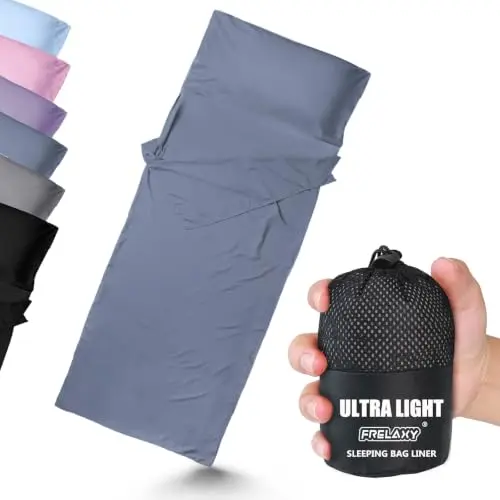
Ultralight Travel Sheet – Compact Sleep Sack with Pillow Sleeve
A compact polyester liner that balances low weight with a more livable shape. It includes a pillow sleeve, comes in three sizes, and packs small enough for a backpack or carry-on.

TOSB Travel Liner – Roomy Sleep Sack for Taller Campers
A roomy rectangular liner with a soft cotton-poly blend and a generous cut for taller sleepers. It works as a travel sheet, a summer sleep sack, or a light layer inside a sleeping bag.
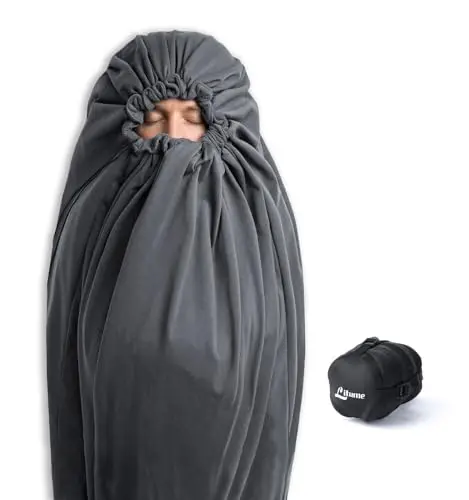
E629-76-J – Mummy Fleece Liner for Cold Nights
A mummy-style fleece liner built to add warmth to a sleeping bag on cold nights. The drawstring hood and foot box help trap heat, and it compresses into an included stuff sack.
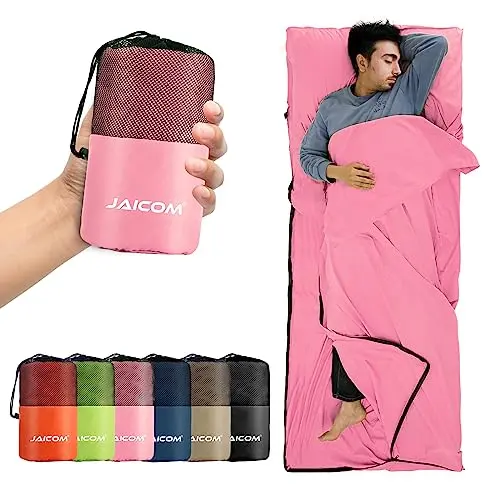
JCMGZD03 – Zippered Travel Sheet with Pillow Pocket
A zippered travel sheet that opens wide for ventilation and doubles as a larger sheet when fully unzipped. It includes a back pillow compartment and packs into a compact mesh bag.
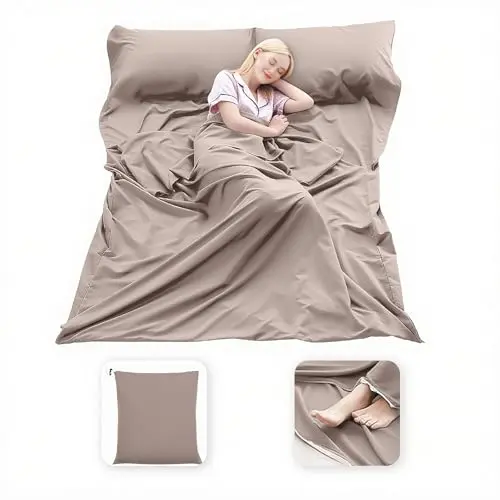
1230 – Two-Person Sleep Sack for Couples
A two-person sleep sack for couples and shared beds, with top buckles for easy entry and a bottom zipper for ventilation. It packs into a compact pouch despite the double size.
How We Evaluated These Ultralight Sleeping Bag Liners
We didn’t see these liners through a full season of trail use or measure packed volume in a lab. What we did: cross-referenced 7 sleeping bag liner models from 7 distinct brands across 5 decision axes – packed weight, fabric and breathability, fit and size, packability, and warmth-to-weight balance. We triangulated published specifications, feature sets, owner feedback where available, and use-case fit for backpackers, hotel travelers, and cold-weather campers. We also mapped each liner’s stated dimensions and closure style against the way people actually sleep: solo in a hostel bunk, inside a mummy bag, or under a quilt on a summer trip. We compared how each option would perform for a weekend hostel stay, a summer backpacking trip, and a cold-weather boost inside a mummy bag.
The scoring framework weighted real-world fit for ultralight travel (70%) – how well each liner disappears into a pack while still sleeping comfortably – against feature differentiation (30%) – unique details like pillow pockets, mummy hoods, zippered foot vents, and multi-size options. We weighed packability against comfort, because the lightest liner is useless if it feels clammy or restrictive after a long day. We have no commercial relationship with the brands featured; recommendations track fit and differentiation, not brand preference. If your priority is the smallest packed weight, the Naturehike ZY20 is the clear starting point. If you want a silk feel for hotel and hostel nights, the BROWINT 81142 is the better match.
How to Choose the Right Ultralight Sleeping Bag Liners
1. What Ultralight Really Means in a Sleeping Bag Liner
In this category, ultralight is not a vague compliment – it’s a packed-weight claim. A genuine ultralight sleeping bag liner usually lands in the single-digit-ounce range, packs to roughly soda-can size, and uses a thin woven fabric rather than fleece or brushed cotton. If a liner weighs over a pound, it can still be useful, but it belongs in the warmth-boost or car-camping conversation, not the fast-and-light one.
Watch for liners that call themselves ultralight but list a heavy fabric weight or a bulky stuff sack. The better spec to check is packed weight, not unfolded size. If you want a sub-7-ounce option with a pillow sleeve, the Frelaxy Ultralight Travel Sheet is a sensible benchmark.
2. Fabric and Breathability: Silk, Polyester, and Fleece Liners
Silk liners feel smooth, regulate temperature well, and pack small, but they cost more and need gentler care. Polyester microfiber is the value workhorse: durable, quick-drying, and usually machine washable. Fleece adds warmth and a soft hand, but it’s heavier and bulkier, so it makes more sense as a cold-weather booster than a pure ultralight pick.
Breathability matters most in warm rooms and summer bags. A tightly woven nylon or polyester liner can feel cool at first but clammy if it doesn’t let moisture move. Silk has the edge in feel for many travelers, while polyester is easier to wash and dry on the road.
3. Fit and Size: Why a Sleeping Bag Liner Should Feel Roomy
A liner that’s too narrow will twist around you and bunch at the knees. Look at length and width together, not just the maximum height recommendation. Side sleepers and taller campers usually do better with a wider cut or an XL version. A pillow pocket is a small feature that makes a big difference in hostel bunks and hotel rooms.
If you’re tall or restless, the Tough Outdoors TOSB Travel Liner is worth a look for its 85-inch length and 37-inch width. Just note that the roomy cut comes with more fabric to manage when you’re getting in and out.
4. Packability and Packed Volume for Backpacking
Packed volume matters as much as grams. A liner that compresses to the size of a soda can can live in a lid pocket; one that fills a stuff sack the size of a football will fight for space. Check the stowed dimensions and whether the included sack has a compression strap or attachment hook.
For fast packing, the Naturehike ZY20 is the easiest to justify because it packs down to a genuinely pocketable size and weighs very little. If you need more room or a pillow sleeve, step up to a slightly heavier polyester liner and accept the volume tradeoff.
5. Warmth Boost vs. Standalone Summer Sleeping
Most liners are not sleeping bags. A thin polyester or silk liner adds a few degrees of comfort and a clean barrier between you and shared bedding, but it won’t turn a summer bag into a winter bag. Fleece and mummy-style liners can add more warmth – Litume claims up to 27F / 15C of boost – but they also add weight and bulk.
Use a liner as a standalone summer sleep sack when nights are warm, or as a protective inner layer to keep body oils off your sleeping bag. If cold sleeping is your main concern, choose a fleece mummy liner and treat the weight as part of the system.
6. Care and Durability: What to Check Before You Buy
Machine washability is a real convenience for travel. Look for quick-drying fabric, reinforced seams, and clear care instructions. Silk liners usually need cool water and air drying, while polyester liners can often go in a machine on a gentle cycle. Zippers and drawstrings are the first failure points, so check closure hardware and seam construction before you commit.
A liner is a wear item. If you sleep in one nightly, expect the fabric to thin over time. The best value comes from a liner that’s easy to wash, dries fast, and doesn’t cost so much that you baby it.
Frequently Asked Questions
1. Are all ultralight sleeping bag liners actually ultralight?
No. Ultralight is often used loosely. A liner in the 4-to-8-ounce range is genuinely ultralight for this category; once you get near a pound or more, you’re carrying a warmth booster or a roomy travel sheet, not a fast-and-light liner. Check the packed weight and stowed size before you buy, and treat fleece liners as a different tool.
2. What's the difference between the Naturehike ZY20 and the Frelaxy Ultralight Travel Sheet?
The Naturehike ZY20 is the more extreme ultralight pick: a 4.5-ounce nylon liner that packs to pocket size and prioritizes minimum weight above all else. The Frelaxy Ultralight Travel Sheet is a bit heavier at 6.4 ounces, but it adds a pillow sleeve and comes in three sizes, which makes it more forgiving for travelers who want a little more comfort. If you’re counting every gram, go with the Naturehike ZY20; if you want a more livable ultralight liner, the Frelaxy is the easier recommendation.
3. Is the BROWINT silk liner worth it over a polyester sleeping bag liner?
It depends on what you value. The BROWINT 81142 uses 100% mulberry silk, which feels smoother against skin, regulates temperature well, and packs small. Polyester liners are usually cheaper, more durable in rough use, and easier to machine wash without worry. If hotel and hostel comfort is the priority, the BROWINT 81142 is the premium pick; if you want a beater liner for camping and repeated washing, polyester makes more sense.
4. How does the Litume fleece mummy liner compare with the Tough Outdoors travel liner?
They solve different problems. The Litume E629-76-J is a mummy-shaped fleece liner with a drawstring hood and a claimed 27F / 15C warmth boost, so it’s the better choice for cold nights or extending a summer bag. The Tough Outdoors TOSB is a roomy rectangular liner with a softer cotton-poly blend and a more generous cut, which suits tall sleepers and hotel travel better. Neither is the lightest option here, so pick based on warmth versus room.
5. How do I wash an ultralight sleeping bag liner?
Follow the care label first. Most polyester liners can go in a machine on a gentle cycle and tumble dry low; silk liners usually need cool water and air drying. Use a mild detergent, skip fabric softener, and make sure the liner is fully dry before stuffing it back in its sack. A clean liner protects your sleeping bag and keeps shared bedding from feeling like a gamble.
Final Verdict
For most buyers, the Naturehike ZY20 is the answer – it’s the liner that best delivers on the ultralight promise without asking you to baby it. It packs tiny, washes easily, and works as a summer sleep sack or a protective inner layer. If you want a more livable shape with a pillow sleeve and three size options, the Frelaxy Ultralight Travel Sheet is the value-minded alternative. Hotel and hostel travelers who want silk against their skin should step up to the BROWINT 81142. And if cold nights are the real concern, the Litume E629-76-J is the purpose-built warmth booster, even though it gives up the ultralight crown.
