
Best Under Counter Ice Makers – 2026 Reviews

A bag of gas-station ice melting in the sink is a familiar party problem. An under-counter ice maker fixes it, but only if the machine actually fits your cabinet, drain setup, and daily ice habit.
Under-counter ice makers are not just smaller freestanding machines. The good ones are front-venting, sized for standard counter openings, and designed around gravity drainage or a proper water line. The mediocre ones force you to choose between a bin that runs out mid-party and an install that fights your plumbing.
We looked across brands at the models that make sense for home bars, cafes, and busy kitchens, then separated them by output, storage, installation, and maintenance. The goal is simple: help you pick the right under-counter ice maker for your space, not the one with the longest feature list.
Best Under Counter Ice Makers – 2026 Reviews
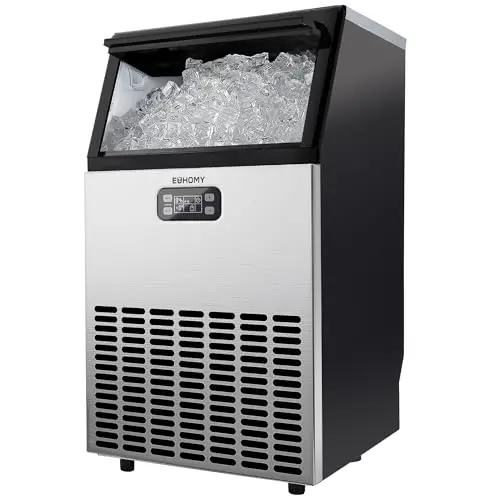
IM-02 – 100-lb Output with 33-lb Storage
A high-capacity under-counter machine aimed at homes that host often or small commercial settings. It combines a 100-lb daily output with a 33-lb bin and ETL certification for both household and commercial use.
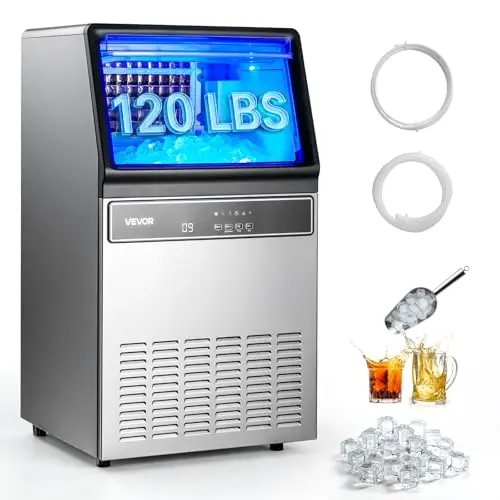
IMC9000F-CB – High-Output with 48-Hour Timer
A high-output under-counter model for busy households and small venues. It pushes daily production higher than most competitors while keeping a 33-lb maximum bin and a 48-hour timer.
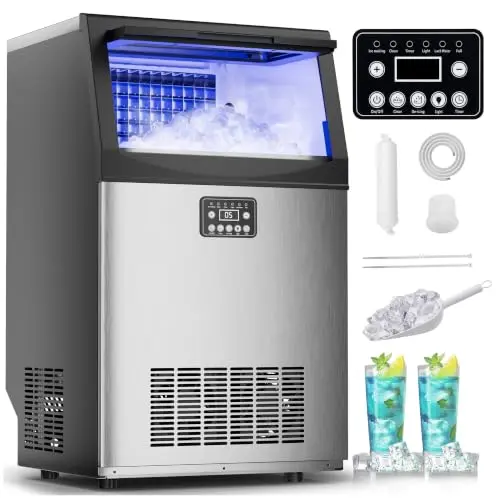
MM-ZB360 – 110-lb Output with Water Filter
A value-focused under-counter ice maker with a 110-lb daily output, a 33-lb bin, and an included water filter. It is set up for home bars, cafes, and other small-volume commercial spaces.

0987-001-C1 – 50-Cube Batches with Water Filter
A feature-rich under-counter machine with 110-lb daily output, a 33-lb bin, and a water filtration system. It is aimed at buyers who want customized cubes and easy maintenance.
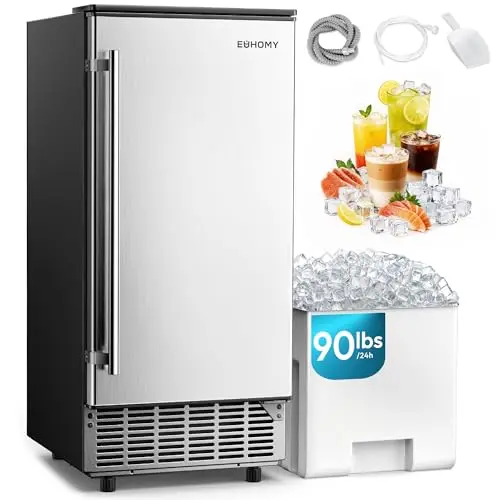
CIM002-0618 – Compact Built-In with Reversible Door
A compact built-in under-counter ice maker with a 90-lb daily output, 24-lb bin, and reversible door. It is designed for standard-height kitchen and bar counters.
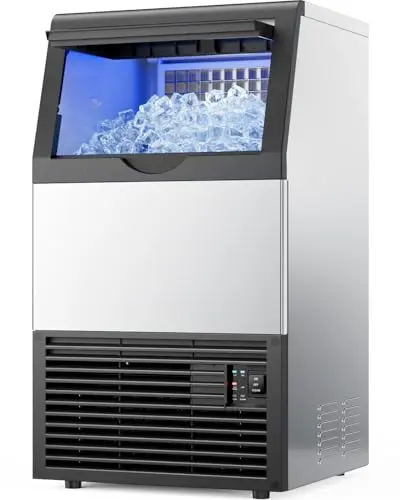
CIM-360F – Front-Venting Under-Counter Build
A front-venting under-counter ice maker with 100-lb daily output and an expandable 18-33 lb storage bin. It is built for home bars, offices, and light commercial use.

CIIM360 – Fast 36-Cube Batches
An under-counter and freestanding ice maker with 110-lb daily output, 36-cube batches, and one-touch self-cleaning. It is aimed at home bars and small commercial spaces.
How We Evaluated These Under Counter Ice Makers
We didn’t run a controlled kitchen lab test or measure decibel output with a meter. What we did: cross-referenced 7 under-counter ice maker models from 6 distinct brands across 5 decision axes – daily ice production, usable storage capacity, installation and drainage requirements, ice-thickness control, and cleaning and maintenance. We triangulated published specifications, included accessories, owner feedback where available, and use-case fit for home bars, cafes, and busy kitchens. Where feedback was uneven, we treated it as a caution flag rather than a verdict.
We also paid close attention to the less glamorous stuff: whether the machine is truly front-venting, how the drain line has to be routed, and whether the bin is a storage compartment or a freezer. Those details decide whether an under-counter ice maker works in your cabinet or becomes a return. We mapped each model to buyer profiles – compact built-in, high-volume host, budget-conscious home bar – and weighed the tradeoffs between output, footprint, and maintenance.
The scoring framework weighted real-world fit (70%) – how well each machine matches its stated use case and installation profile – against feature differentiation (30%) – unique technical advantages and use-case specificity. We have no commercial relationship with any of the brands featured; recommendations track fit and differentiation, not brand preference. If you need maximum daily output, the VEVOR IMC9000F-CB is the specialist; if you want the best all-round balance, the EUHOMY IM-02 is the place to start.
How to Choose the Right Under Counter Ice Maker
1. What Makes an Ice Maker Truly Under-Counter?
An under-counter ice maker has to do more than fit under a shelf. The useful ones are front-venting, so air can circulate in a cabinet, and sized for a standard-height counter rather than a random freestanding footprint. Check width, depth, height, and door swing before you buy; a machine that technically fits but cannot open is not a fit.
Built-in models usually need a gravity drain or a drain line routed below the machine. Freestanding models can sometimes slide under a counter, but they may vent from the back or side, which traps heat and can shorten the machine’s life. If your opening is tight, the EUHOMY CIM002-0618 is the most compact built-in pick in this group.
2. Daily Ice Production and Storage Capacity
Ignore the big production number for a second and think about your actual peak. Daily output tells you how much ice the machine can make over 24 hours; the storage bin tells you how much is ready when guests arrive. A high-output machine with a small bin can still run dry during a party, while a large bin with modest output may be enough for a quiet home bar.
Most under-counter bins in this category are storage compartments, not freezers, so ice will melt over time. Match peak-hour demand to both numbers, not just the flashy daily rating. For the highest daily output here, the VEVOR IMC9000F-CB is the pick.
3. Drainage, Water Supply, and Installation Fit
Drainage is where under-counter ice makers get real. Many units use gravity drainage and require a floor drain or a drain hose positioned lower than the machine. If you cannot route that line with a downward slope, the machine may not drain properly. A proper water supply connection is the other half of the install.
Plan for the machine to sit 24 hours upright before first use so the refrigerant settles. Also confirm whether a drain pump is included; most of these models do not include one. If you want a value-oriented model with a water filter included, the Mountman MM-ZB360 is the pick.
4. Ice Thickness, Cube Clarity, and Drink Fit
Ice-thickness control is more useful than it sounds. Thin cubes work well for smoothies, iced coffee, and seafood display; thicker cubes last longer in whiskey or cocktails. Many machines let you adjust the freezing time to change cube size, so you are not stuck with one style.
Clear cubes are mostly about freezing speed and water quality, not marketing. A machine with a water filter and a controllable cycle has a better shot at clean-tasting ice. If you mainly serve cocktails and spirits, prioritize thicker cube settings and a bin that keeps ice cold between cycles.
5. Cleaning, Filtration, and Long-Term Maintenance
A self-cleaning cycle is a convenience, not a substitute for regular upkeep. Run it on the schedule your manual recommends, and plan to wipe down the bin and door seal. A water filtration system helps with taste and scale, especially in hard-water areas.
Stainless steel bodies are easier to wipe down and better suited to humid bar environments than painted finishes. Check whether the filter is replaceable and whether the machine has a removable water tank or drain hose for deeper cleaning. Maintenance access should be part of your buying decision, not an afterthought.
6. How Much Ice Maker Do You Actually Need?
For a home bar or occasional entertaining, a machine with a 90- to 100-lb daily output and a 24- to 33-lb bin is usually plenty. For a small cafe or busy office, aim higher on both daily production and storage, and confirm the drain setup before you commit. Size the machine to your busiest day, not your average day, but do not buy a commercial-grade workhorse if a compact built-in suits your cabinet.
Frequently Asked Questions
1. What's the difference between the EUHOMY IM-02 and the VEVOR IMC9000F-CB?
The EUHOMY IM-02 is the more balanced all-rounder: 100-lb daily output, a 33-lb storage bin, and ETL certification for both home and commercial use. The VEVOR IMC9000F-CB leans harder into volume with 120-lb daily output and a 48-hour timer, but it also draws more power at 450 watts.
Choose the EUHOMY if you want one machine that fits a busy home bar or light commercial setting without overthinking the install. Choose the VEVOR if maximum daily production and event scheduling are the priority.
2. How does the Mountman MM-ZB360 compare with the Nanori 0987-001-C1?
Both are 110-lb output machines with 33-lb bins, but they emphasize different things. The Mountman MM-ZB360 includes a water filter and sits in a more budget-friendly tier. The Nanori 0987-001-C1 goes further on customization with 50-cube batches and 10 thickness levels, and it also includes water filtration.
The Nanori’s 19-inch width is the catch: measure your cabinet opening before choosing it. For a tighter budget or a simpler feature set, the Mountman is the easier call; for finer control over cube size, the Nanori is the better fit.
3. Are all under-counter ice makers actually built-in?
No. Some are true built-in machines designed for cabinet installation, while others are freestanding units that can also slide under a counter if the ventilation and drain setup allow it. The key is front venting and enough clearance for heat to escape.
Check the door swing, too. A reversible door helps in tight layouts, and a model with a front-venting design is less likely to overheat in an enclosed cabinet. If the listing does not clearly say built-in or under-counter compatible, treat it as a freestanding machine first.
4. Do under-counter ice makers need a drain pump?
Most models in this category use gravity drainage and do not include a drain pump. That means you need a floor drain or a drain hose routed lower than the machine. If the drain line runs uphill or sits level, water can back up and the machine may stop working.
Confirm the drain requirement before buying, especially for a built-in cabinet. A unit that needs a pump but does not include one is a different install project than a simple gravity-drain setup.
5. How long does it take to get the first batch of ice?
Most machines here produce a first batch in roughly 7 to 20 minutes, depending on the model and the ice thickness setting. Thinner cubes finish faster; thicker cubes take longer but last better in drinks.
The first batch may not be the best-tasting or clearest ice, so run a cleaning cycle and discard the first few rounds. After that, the storage bin keeps ready ice on hand between cycles. Adjust ice thickness to match how you use the machine rather than leaving it on the default setting.
Final Verdict
For most buyers, the EUHOMY IM-02 is the answer. It pairs a 100-lb daily output with a 33-lb bin, ETL commercial and home certification, and an easy LCD interface, so it fits both a busy home bar and a light commercial setting. If you need the highest output, the VEVOR IMC9000F-CB pushes 120 lbs per day and adds a 48-hour timer. If budget is the priority, the Mountman MM-ZB360 delivers 110 lbs, a 33-lb bin, and a water filter for less. And if you are fitting a compact built-in cabinet, the EUHOMY CIM002-0618 has the smallest bin but the cleanest 15-inch built-in layout. Pick by your daily ice volume and drain setup, not by the longest feature list.
