
Best Under Pillow Speakers For Sleeping – 2026 Reviews

The trouble with bedtime audio isn’t finding something to listen to. It’s finding a way to listen that doesn’t involve earbuds pressing into your ear or a phone speaker blaring across the room. Under-pillow speakers solve that by tucking a thin driver near your head, but the difference between a restful setup and a frustrating one comes down to placement, volume, and how the thing is powered.
For sleeping, the best under-pillow speaker is the one you can forget about. It needs a low-profile body that won’t create a lump under your cheek, enough volume to stay audible through fabric without leaking across the bed, and controls you can manage half-asleep. A timer or built-in white noise helps, but only if the speaker sounds natural at low volume.
This guide surveys the category across brands and approaches-wired, Bluetooth, bone conduction, and white-noise-first designs-so you can match a speaker to your pillow, your phone habits, and the way you actually fall asleep. We’ll flag where each pick makes sense and where a simpler option is smarter.
Best Under Pillow Speakers for Sleeping – 2026 Reviews
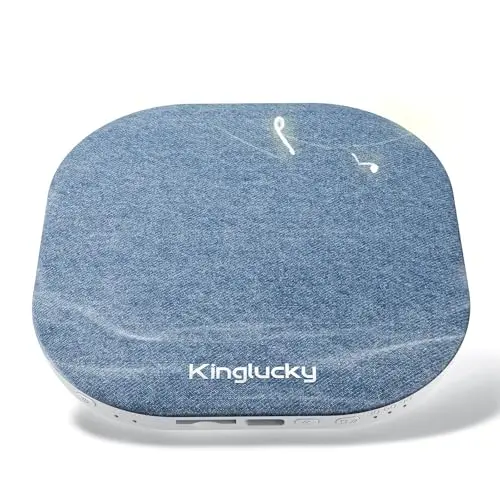
F50 – Under-Pillow White Noise and Bluetooth
The Kinglucky F50 is a slim under-pillow speaker built for low-volume bedtime listening. It streams over Bluetooth, plays built-in white noise, ocean, and rain sounds without a phone, and accepts a TF/microSD card for offline audio. A 30/60/90-minute sleep timer shuts it down after you drift off.
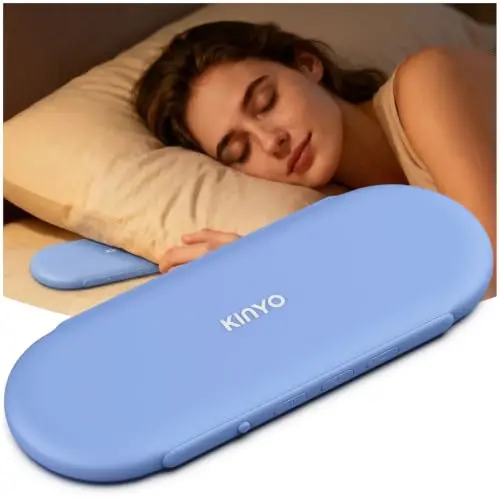
X60 – Bone Conduction Under-Pillow Audio
The Kinglucky X60 is a bone-conduction under-pillow speaker with Bluetooth streaming, a TF card slot, and three built-in sleep sounds. Its slim body is designed to sit under a pillow, while the 30/60/90-minute timer and long battery rating make it a strong travel companion.
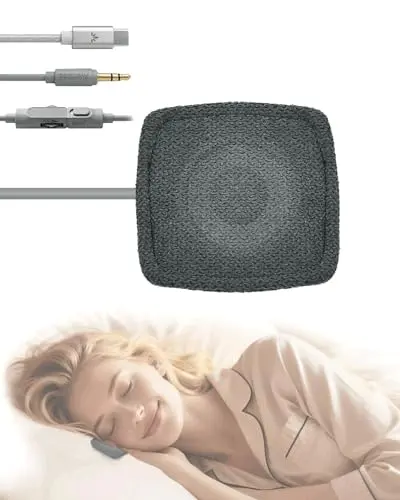
Slumber Mini – Wired, Wear-Free Sleep Audio
The Avantree Slumber Mini is a wired pillow speaker designed for people who dislike wearing headphones to bed. It uses a single soft, thin speaker, includes in-line volume control, and connects through USB-C or a 3.5mm aux cable without needing a charge.
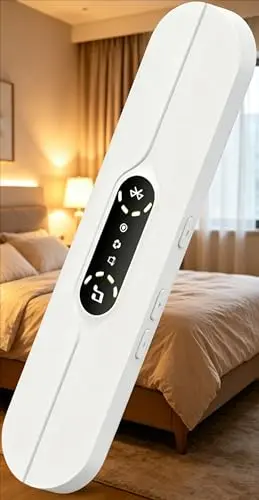
Sleep Bar – Bone Conduction with Built-In Sounds
The PMNQY Sleep Bar is a bone-conduction under-pillow speaker with ten built-in soothing sounds, Bluetooth streaming, TF card support, and an LED display. It’s designed to sit flat under a pillow and includes a timed shutdown for overnight listening.

Under-Pillow Speaker – Budget Bluetooth Sleep Audio
The ZylYve Under-Pillow Speaker is a budget-friendly Bluetooth sleep speaker with a slim 12mm body, built-in white noise, and a 30/60/90-minute timer. It’s designed for side sleepers who want private audio without earbuds.
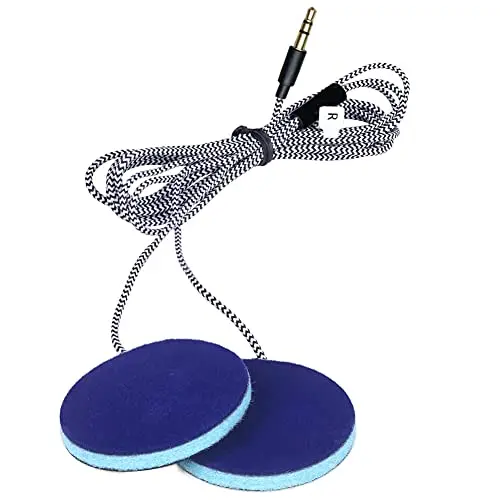
Ultra-Thin Pillow Speakers – Wired Headband Replacement
The MMUSS Ultra-Thin Pillow Speakers are wired replacement speakers designed to slip into a pillowcase or headband. They use a 3.5mm plug, a braided cable, and very thin 3mm drivers for low-profile bedtime listening.
How We Evaluated These Under Pillow Speakers
We didn’t conduct overnight sleep trials or measure decibel leakage in a lab. What we did: cross-referenced 6 under-pillow speaker models from 5 distinct brands across six decision axes – profile thickness and comfort, sleep-friendly volume and sound containment, power and connectivity, built-in sound options, timer controls, and owner-feedback reliability. We triangulated published specifications, feature sets, and owner feedback where available, then mapped each model to representative bedtime routines: side sleepers, couples sharing a bed, podcast listeners, and people who want white noise without a phone. A speaker that sounds impressive at arm’s length can be too loud through a pillow, and one that’s too quiet becomes useless after the first week, so placement tolerance carried real weight. We also weighed how each model handles low-volume speech, because a bedtime speaker lives or dies on intelligibility rather than bass. Placement tolerance and timer behavior matter more here than raw wattage. The scoring framework weighted real-world sleep fit (70%) – how well each speaker disappears under a pillow while staying audible – against feature differentiation (30%) – unique playback modes, timers, and power flexibility. We have no commercial relationship with any of the brands featured; recommendations track fit and differentiation, not brand preference. If you want the smoothest all-around bedtime setup, the Kinglucky F50 is your match; if you want the most playback flexibility, the Kinglucky X60 serves you better.
How to Choose the Right Under-Pillow Speaker for Sleeping
1. Why Under-Pillow Speakers Make Sense for Sleeping
A good under-pillow speaker keeps audio private without putting anything inside your ear. That matters for side sleepers, people with sensitive ears, and couples who don’t want a phone podcast echoing around the bedroom. The tradeoff is that sound has to travel through fabric, so placement tolerance matters more than raw power.
If you mostly listen to podcasts or audiobooks, a simple wired model can be enough. If you want white noise without dragging your phone into bed, look for built-in sounds and a sleep timer. The Avantree Slumber Mini is the pick for a no-charging wired setup, while phone-free white noise is where models like the Kinglucky F50 pull ahead.
2. Thickness, Pillow Depth, and Side-Sleeper Comfort
The flatter the speaker, the less likely you are to feel it through the pillow. Ultra-thin designs around a few millimeters are easier to hide, but pillow depth changes everything: a thick memory-foam pillow may mute the speaker, while a thin pillow can make it feel firmer. Side sleepers should prioritize a soft, flat body and avoid anything with a raised control pod near the face.
Placement is part of the product. Start near the edge of the pillow, then shift it closer to your ear until voices are clear at low volume. If you want a model built around that flat, wear-free feel, the ZylYve Under-Pillow Speaker is a budget-friendly starting point, though its shorter battery life makes it less ideal for all-night use.
3. Sleep-Friendly Volume, Leakage, and Bone Conduction
Loudness is not the goal. A good bedtime speaker delivers sleep-friendly volume that stays intelligible through fabric without becoming a bedside radio. Sound leakage is the other half of the equation: bone conduction designs can keep audio more contained, but they also depend heavily on where the contact point sits under the pillow.
Bone conduction is not automatically better for everyone. Some listeners find it clearer for spoken word, while others prefer a traditional thin speaker for music. If you want bone conduction with extra playback modes, the Kinglucky X60 is the most feature-rich option here; if you want a quieter, simpler feel, a wired speaker is less fussy.
4. Wired vs. Bluetooth Under-Pillow Speakers for Sleeping
Wired connection means no charging routine and no pairing at bedtime. It also limits cable clutter and keeps things simple if you already sleep near a phone or radio. The downside is that you’re tethered, and a stiff cable can tug at the pillow.
Bluetooth gives you more freedom and works well for audiobooks, meditation apps, and streaming. Battery life and auto-off features become important, because a speaker that dies mid-podcast or stays on until morning defeats the purpose. For most sleeping setups, Bluetooth is the more flexible choice-just check the charging routine and timer before you commit.
5. White Noise, Timers, and Offline Playback
Built-in white noise is a genuine convenience if you don’t want your phone in the bedroom. Ocean, rain, and fan-like sounds can mask snoring or street noise without a streaming app. A sleep timer is just as important: 30, 60, and 90-minute settings let you drift off without leaving audio running all night.
Offline playback through a TF card is useful for travel, rental stays, or anyone trying to reduce screen time. It’s not essential, but it adds flexibility when Wi-Fi or Bluetooth is unreliable. The Kinglucky F50 covers both built-in sounds and card playback in a straightforward package.
Frequently Asked Questions
1. What's the difference between the Kinglucky F50 and the Avantree Slumber Mini?
The Kinglucky F50 is a wireless, white-noise-first speaker with Bluetooth streaming, built-in sleep sounds, a TF/microSD card slot, and a 30/60/90-minute timer. The Avantree Slumber Mini is a wired, single-speaker design with in-line volume control and no charging routine. The F50 is better if you want phone-free sound options and more playback flexibility; the Avantree is the calmer choice if you already have a bedside audio source and want a simple wired setup. For most sleepers, the Kinglucky F50 is the more versatile pick.
2. How does the Kinglucky X60 compare with the PMNQY Sleep Bar?
Both lean on bone conduction and built-in sound libraries, but they take different angles. The Kinglucky X60 adds Bluetooth playback, a TF card option, three sleep sounds, and a longer battery rating, making it the more travel-friendly package. The PMNQY Sleep Bar emphasizes ten built-in sounds and an LED status display, which helps if you like visible confirmation that the timer is set. Neither is a party speaker; both are tuned for low-volume bedtime listening.
3. Do under-pillow speakers work for side sleepers who hate earbuds?
Yes, but placement matters. The best results come from a flat, thin body tucked near the edge of the pillow, where it can stay close to your ear without creating pressure. Side sleepers should avoid anything with a bulky control pod or a stiff cable near the cheek. If you want a wear-free feel with no charging, the Avantree Slumber Mini is the most straightforward pick; if you want built-in sounds and a timer, a wireless model like the Kinglucky F50 is more flexible.
4. Can I use an under-pillow speaker for white noise without my phone?
Yes. Several models include built-in sleep sounds, and some add TF card playback for your own downloaded audio. That means you can set a sleep timer and drift off without streaming, notifications, or a phone glowing on the nightstand. The tradeoff is that built-in libraries are fixed; if you need a specific podcast or album, Bluetooth or card playback is the better route.
Final Verdict
For most sleepers, the Kinglucky F50 is the under-pillow speaker to beat. It combines built-in white noise, Bluetooth streaming, offline card playback, and a real 30/60/90-minute timer without making bedtime feel like a tech project. If you want more playback flexibility and longer battery life, the Kinglucky X60 adds bone conduction and extra sound modes. If you’d rather avoid charging altogether, the Avantree Slumber Mini is the simple wired pick-just expect gentle, mono sound that’s tuned for speech and quiet listening. And if you want the lowest-cost reliable entry point, the ZylYve Under-Pillow Speaker covers the basics with a slim profile and a timer. Start with the F50 for the best balance, then move to the X60 for features, the Avantree for wired simplicity, or the ZylYve for budget-friendly basics.
