
Best Vacuum Coffee Makers – 2026 Reviews

A vacuum coffee maker earns its keep on the mornings when you don’t want to babysit a warming plate. The appeal is simple: brew a good cup, keep it hot without scorching it, and move on. The tricky part is that ‘vacuum’ can mean two different things in this category.
Here, we’re focused on vacuum insulation – double-wall vessels and sealed carafes that slow heat loss – rather than siphon-style vacuum pots. That splits the market into travel presses you brew and drink from, thermal-carafe drip brewers for full pots, and manual presses that trade heat retention for portability and cup control.
The best choice comes down to two axes: how long you need coffee to stay hot, and whether you’re brewing one cup or a batch. Everything else – capacity, cleaning, filters – follows from those two decisions. This guide compares the strongest cross-brand options so you can pick the right vacuum coffee maker for your routine, not the loudest label.
Best Vacuum Coffee Makers – 2026 Reviews

Travel Press – Vacuum-Insulated Brew-and-Go
The Bodum Travel Press is a French press built into a vacuum-insulated travel mug. Add coarse grounds and hot water, seal the lid, steep, then press and drink from the same container. Double-wall stainless construction is designed to hold heat or cold for several hours, and the silicone grip helps when you’re carrying it out the door.
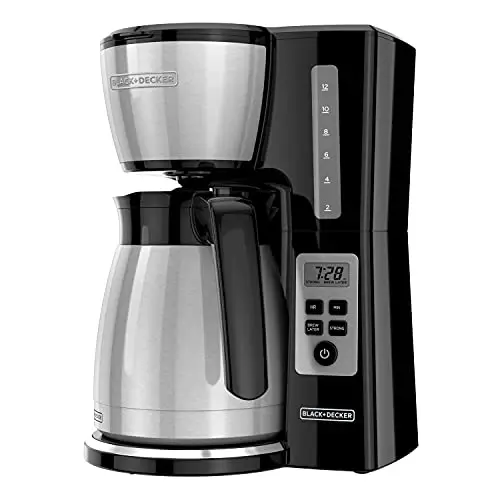
CM2046S – Vacuum-Sealed Thermal Carafe
The BLACK+DECKER CM2046S is a 12-cup programmable drip brewer built around a four-layer vacuum-sealed thermal carafe. It uses Vortex showerhead saturation, offers a brew-strength selector, and skips the warming plate in favor of double-wall heat retention. The 24-hour auto-brew and auto-shutoff make it a set-it-and-forget-it option for batch brewing.
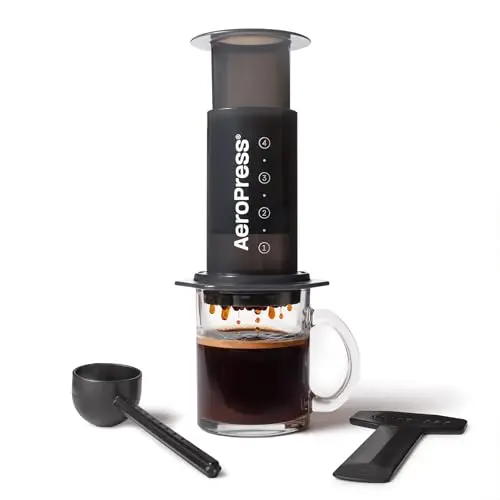
Original – Portable Manual Press
The AeroPress Original is a compact manual brewer that uses air pressure and a paper micro-filter to make a clean, low-bitterness cup in about two minutes. It’s a different approach from a vacuum-insulated press: portable and shatterproof, with full control over grind, water temperature, and steep time. The set includes the chamber, plunger, scoop, and paper filters.
How We Evaluated These Vacuum Coffee Makers
We didn’t run controlled heat-retention tests or simulate months of daily travel. What we did: cross-referenced 3 vacuum coffee maker models from 3 distinct brands across 5 decision axes – insulation and heat retention, brewing method, capacity, portability, and cleaning routine. We triangulated published specifications, feature sets, and owner feedback where available, then mapped each option against representative buyer profiles: commuters who carry one cup, households that brew a full pot, and travelers who want a manual cup without a warming plate.
We also audited the practical details that decide whether a vacuum coffee maker stays in rotation: whether the lid seals, how wide the opening is for cleaning, whether the carafe or press is dishwasher-safe, and how easy replacement parts are to find. Spec sheets rarely capture those friction points, so we weighted them alongside the headline insulation claims.
The scoring framework weighted real-world fit and performance (70%) – how well each brewer delivers on its stated vacuum or portability promise – against feature differentiation (30%) – unique technical advantages and use-case specificity. We have no commercial relationship with any of the brands featured; recommendations track fit and differentiation, not brand preference. If you want a true vacuum-insulated travel press, the Bodum Travel Press is your match; if you need a full pot with a vacuum-sealed carafe, the BLACK+DECKER CM2046S serves you better.
How to Choose the Right Vacuum Coffee Maker
1. What 'Vacuum' Actually Means in a Vacuum Coffee Maker
In this category, vacuum insulation usually refers to a double-wall vessel with the air removed between layers, which slows heat transfer. That’s different from a siphon or vacuum pot, which uses pressure to move water between chambers. Most shoppers searching for a vacuum coffee maker want the first thing: a brewer that holds heat without a warming plate. If you want true siphon brewing, this lineup isn’t that.
That distinction matters because vacuum-sealed carafes and vacuum-insulated travel presses solve different problems. One keeps a batch hot; the other keeps a single serving hot while you carry it. Know which problem you’re solving before you compare specs.
2. Insulation and Heat Retention: The Real Vacuum Test
The useful question isn’t whether a product says vacuum insulated; it’s how long it holds drinking temperature. A double-wall stainless carafe generally outperforms a single-wall glass carafe, and preheating with hot water can add meaningful time. For travel presses, look for a sealed lid and silicone grip that won’t transmit heat to your hand.
Don’t expect a vacuum carafe to keep coffee hot all afternoon. Most designs are built for a couple of hours, and the first cup is always the hottest. If you sip slowly, a thermal carafe is still the better fit than a hot plate, which can keep coffee warm but at the cost of flavor.
3. Brewing Style: Travel Press vs. Thermal Carafe vs. Manual Press
Your brewing style narrows the field quickly. A travel press is best for one person who wants to brew and go; a thermal carafe drip brewer suits households that want a full pot without a warming plate. A manual press is the choice for travelers who prioritize cup quality and packability over heat retention.
If you want true vacuum insulation in a travel mug, the Bodum Travel Press is the pick. For a full pot with a vacuum-sealed carafe, the BLACK+DECKER CM2046S is the better route. And if you’re willing to trade vacuum insulation for a faster, cleaner manual cup, the AeroPress Original is the manual press to beat.
4. Capacity and Portability for Daily Use
Capacity is a practical filter. A 15-oz travel press is right for a commute or hotel room; a 12-cup thermal brewer is for a household or office. Manual presses often land around 10 oz, which is a strong single cup but not a shareable pot.
Portability isn’t just weight. Check whether the brewer fits your bag, whether the lid seals, and whether you can clean it without a sink full of parts. A shatterproof body matters more for camping than a glass carafe does, while a dishwasher-safe design matters more for daily kitchen use.
5. Cleaning, Filters, and Long-Term Maintenance
Cleaning is where vacuum designs diverge. Travel presses with narrow mouths need a bottle brush and careful rinsing around the plunger; thermal carafes need a wide opening and occasional descaling. Manual presses are the simplest to rinse, but paper filters add a recurring cost, while a reusable mesh filter trades some cup clarity for convenience.
Check the warranty and replacement parts before you buy. Silicone gaskets and lids wear out, and a carafe that chips or cracks can sideline an otherwise solid brewer. A model with easy-to-find parts is easier to keep in service.
6. Budget, Mid-Range, and Premium Vacuum Coffee Makers
Vacuum coffee makers span a wide range, but the price tiers don’t map neatly to performance. Budget-friendly manual presses can make excellent coffee; mid-range thermal brewers add programmability and batch capacity; premium travel presses charge for materials and insulation. Spend where the feature affects your daily routine – heat retention, capacity, or cleaning – not on badges.
If you mostly brew one cup and carry it, invest in insulation and a leak-resistant lid. If you brew for a household, put the money into a well-sealed thermal carafe and a programmable timer. The right tier is the one that matches your actual morning.
Frequently Asked Questions
1. Do vacuum coffee makers keep coffee hot without a warming plate?
They can, but heat retention depends on the design. A vacuum-insulated travel press keeps a single serving hot for a commute; a vacuum-sealed thermal carafe holds a batch for a couple of hours. Neither keeps coffee piping hot all day. Preheating the vessel with hot water and keeping the lid closed makes a noticeable difference, and glass carafes on a warming plate are a different tradeoff entirely.
2. Bodum Travel Press vs. BLACK+DECKER CM2046S: Which vacuum coffee maker is right for you?
They solve different jobs. The Bodum Travel Press is a single-serving vacuum-insulated press you brew and drink from; it’s ideal for commuters, hotel rooms, and camping. The BLACK+DECKER CM2046S is a 12-cup programmable drip brewer with a vacuum-sealed thermal carafe, so it fits households and offices that want a full pot without a warming plate. Choose the Bodum Travel Press for portability; choose the BLACK+DECKER for batch brewing.
3. Is the AeroPress Original a true vacuum coffee maker?
No. The AeroPress Original is a manual air-pressure press, not a vacuum-insulated brewer. It won’t keep coffee hot on its own, and it doesn’t use a vacuum carafe. What it does offer is a fast, clean cup with less bitterness and a compact travel build, which is why it’s included as a manual alternative rather than a true vacuum pick.
4. Bodum Travel Press vs. AeroPress Original: Which is better for travel?
For pure heat retention, the Bodum Travel Press wins because it’s vacuum insulated and you drink from the same vessel. For cup clarity and packability, the AeroPress Original is easier to justify: it’s lighter, shatterproof, and rinses in seconds. If you’ll drink within an hour and want a hot cup, choose Bodum. If you care more about brew control and a clean taste, choose AeroPress.
Final Verdict
For most buyers, the Bodum Travel Press is the answer – it’s the only pick here that genuinely combines vacuum insulation with brew-and-go convenience. You get a hot single serving, a built-in plunger, and a mug you can carry without a carafe. If your morning is a full pot, the BLACK+DECKER CM2046S is the better fit: its vacuum-sealed thermal carafe and programmable drip brewing suit households that don’t want a warming plate. And if you’re willing to give up vacuum insulation for the cleanest manual cup, the AeroPress Original is the travel-friendly alternative. Pick the vessel that matches how you actually drink coffee, not the marketing label.
