
Best Wall Plug-In Air Purifiers – 2026 Reviews

A wall outlet is the one piece of real estate every small room already has. That is why plug-in air purifiers are tempting: no cord trail, no floor space, no bulky tower in the middle of the bathroom. But the category is broad enough to confuse. Some units are tiny ionizers meant to freshen a pet area; others use UV-C and titanium dioxide to target odors and airborne germs; almost none deliver the room-wide particle removal of a full-size HEPA purifier.
The two axes that matter most are filtration method and honest coverage. A plug-in unit should solve a localized problem – litter box smell, cooking fumes in a hallway, stale air in a guest room – rather than promise whole-home cleaning from a single outlet. Noise and upkeep separate the good options from the annoying ones, too.
We compared the wall-plug models that actually fit this brief across brands, focusing on what each does well and where it falls short. The goal is a practical shortlist, not a single-brand fan club.
Best Wall Plug-In Air Purifiers – 2026 Reviews
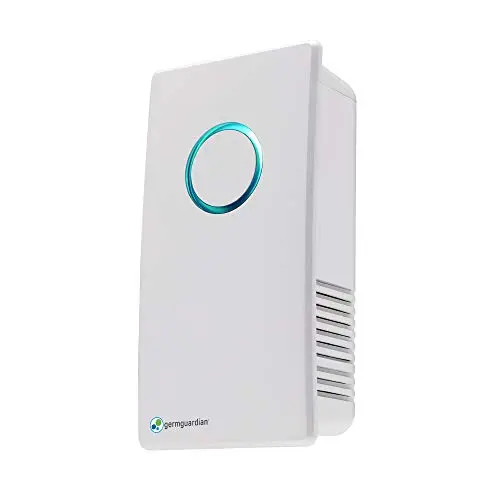
GG1100W – Pluggable UV-C Air Sanitizer
A compact plug-in air sanitizer built for small spaces. It uses UV-C light and titanium dioxide to help reduce odors and airborne germs, with a filterless design that keeps maintenance simple.

4-Pack Plug-In Ionizers – Multi-Room Odor Freshening
A four-pack of compact negative ion plug-in air fresheners for bathrooms, hallways, pet areas, and other small spaces. Filterless operation and quiet running make them easy to leave in place.
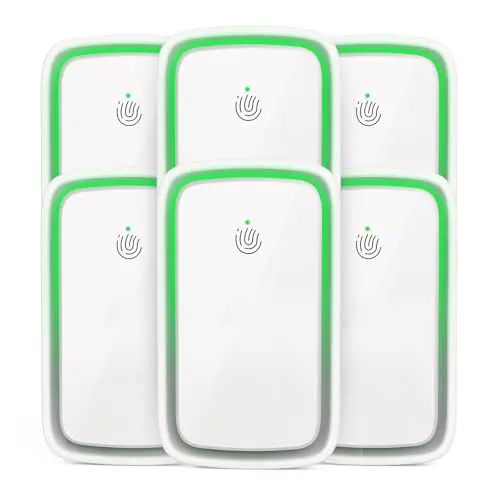
6-Pack Plug-In Ionizers – Whole-Home Freshening
A six-pack of plug-in negative ion air fresheners with three adjustable modes and low-power continuous operation. Best suited to localized odor control across multiple rooms.
How We Evaluated These Wall Plug-In Air Purifiers
We did not run controlled particle-count tests or measure ozone output in a sealed room. What we did: cross-referenced three wall-plug air purifier options from three distinct brands across five decision axes – outlet footprint, filtration approach, coverage expectations, noise and maintenance, and safety or certification details where published. We triangulated published specifications, feature sets, and owner feedback where available, then mapped each unit to realistic buyer profiles: a pet-area outlet, a bathroom or laundry nook, a home office, and a multi-room freshening setup. We audited how each unit handles upkeep – replaceable UV bulb or no filter at all – because long-term ownership matters as much as first-week performance. We also weighed whether each product is genuinely wall-plug or simply a compact floor unit with a cord, since that distinction changes where it can live. We compared how clearly each product frames its limits.
The scoring framework weighted real-world fit (70%) – how well each plug-in purifier matches its stated small-space role – against feature differentiation (30%) – unique filtration, controls, and multi-unit value. We have no commercial relationship with any brand here; recommendations track fit and differentiation, not brand preference. We kept the field tight because this category hides a lot of near-duplicates. If you want a single outlet-sized sanitizer for odors and germs, the GG1100W is the closest match; if you need to cover several rooms at once, the Paztkoo 6-pack is the more practical route.
How to Choose the Right Wall Plug-In Air Purifier
1. Wall Plug-In Air Purifiers vs. Floor Models: What Fits an Outlet
The first decision is whether you need a wall plug-in air purifier at all. A plug-in unit is best understood as a localized air freshener: it sits in the outlet closest to the problem and works on the air around it. A floor HEPA purifier moves much more air and is the better tool for room-wide dust, pollen, and dander. If your goal is whole-bedroom allergy relief, a plug-in ionizer or UV sanitizer will disappoint.
Plug-in models win on placement flexibility. They do not take up floor space, they are hard for pets and kids to knock over, and they can go exactly where odors start. The tradeoff is limited airflow and a smaller treatment zone.
2. Filtration vs. Ionization: Match the Method to the Odor Problem
Most wall-plug units fall into two camps. UV-C sanitizers use a light bulb, often with titanium dioxide, to target airborne germs and odors as air passes through. Negative ionizers release ions and rely on filterless operation to freshen a space. Neither is a substitute for a true HEPA cartridge.
If the problem is a litter box, bathroom, or pet bed in one spot, the GG1100W is the more targeted pick. If you want to scatter several low-maintenance fresheners around the house, the ShaoDelynxia 4-pack is the easier multi-room route.
3. How to Read Air Purifier Coverage Claims in Small Rooms
Coverage numbers for plug-in air purifiers need a reality check. A unit the size of a nightlight is not cleaning a large open floor plan, no matter what the box says. Treat square-footage claims as best-case, one-room guidance and place the unit close to the odor source.
For a bathroom, laundry nook, or small office, one plug-in unit can be enough. For a basement or multi-room setup, think in terms of one unit per stale-air pocket rather than one device for the whole home.
4. Noise, Maintenance, and Long-Term Ownership
Filterless designs avoid cartridge purchases, but they are not maintenance-free. UV sanitizers need a replacement bulb every several months, while ionizers have no filter but may lose effectiveness if the intake area gets dusty. Clean the exterior and follow the manual.
Noise is the other surprise. Many plug-in units are nearly silent, but fan noise varies by model and speed. If the unit will live in a bedroom, check whether it has a sleep mode or a genuinely quiet low setting.
5. Safety, Placement, and Multi-Unit Air Purifier Setups
Place a plug-in air purifier in an outlet with clear airflow, not behind a couch or under a shelf. Avoid outlets near sinks or in damp spots unless the manufacturer allows it, and keep small units away from curious pets if the housing gets warm.
For multi-room coverage, a pack like the Paztkoo 6-pack makes setup simple: one unit per room, no filter inventory. Just don’t mistake six tiny ionizers for a whole-home HEPA system. They are spot fresheners, not central air cleaning.
Frequently Asked Questions
1. What's the difference between the GermGuardian GG1100W and the ShaoDelynxia 4-pack ionizers?
The GG1100W is a single UV-C air sanitizer with a titanium dioxide element, aimed at localized odor and germ reduction near one outlet. The ShaoDelynxia set uses negative ion technology across four filterless units, so it is more about multi-room freshening than targeted sanitizing. If you want one purposeful unit for a bathroom or pet corner, the GG1100W is the closer match; if you want to cover several spots, the four-pack makes more sense.
2. How do the ShaoDelynxia 4-pack and Paztkoo 6-pack compare for multi-room use?
Both are filterless negative ionizer sets, so the difference is mainly scale and controls. The ShaoDelynxia pack gives you four compact units for a simple one-per-room setup. The Paztkoo 6-pack adds six units plus three adjustable modes and indicator lights, which is handy if you want more coverage or a night setting. Neither offers HEPA filtration; choose based on room count and control preferences, not particle-removal claims.
3. Do wall plug-in air purifiers really remove dust and pet dander?
Most wall-plug units are better at odor freshening than particle removal. Ionizers may help airborne particles settle, but they do not have the filter media or airflow of a HEPA purifier. For visible dust, pollen, and pet dander, a full-size HEPA air cleaner is the more reliable tool. Use a plug-in model as a supplement near the source, not as your main allergy machine.
4. Where should I plug in a wall air purifier for the best results?
Put it as close to the odor source as practical: near the litter box, beside the kitchen trash, or in the hallway outside a bathroom. Keep the outlet and intake area unblocked so air can move. Avoid placing it behind furniture or in a sealed corner, and follow the manufacturer’s guidance on damp locations and pet access.
5. Are filterless ionizer air purifiers safe to leave plugged in?
They are designed for continuous low-power operation, but safety still depends on the individual unit. Check for recognized safety certifications, use the original plug, and keep the housing clear. If you have pets or small children, choose units with sturdy housings and avoid outlets within reach. If you are specifically concerned about ionizer byproducts, ask the manufacturer for documentation before running one in a small sealed room.
Final Verdict
For most buyers, the GermGuardian GG1100W is the wall-plug pick that makes the most sense. It is purpose-built for a single outlet, adds UV-C and titanium dioxide to the odor-freshening job, and skips HEPA filter swaps. The caveats are real – noise and long-term reliability – so buy it for a bathroom, pet corner, or small bedroom, not as a whole-room purifier. If you want to spread coverage across several stale-air spots, the ShaoDelynxia 4-pack is the simpler multi-room route. And if you have more rooms than outlets and want adjustable modes, the Paztkoo 6-pack is the value-oriented whole-home freshening set. Match the tool to the job: outlet-sized units are for localized air freshening, not heavy dust or allergy control.
