
Best Waterproof Pillow Protectors – 2026 Reviews

A pillow protector sounds like a simple purchase until the first spilled glass of water, sick kid, or sweaty night makes you realize how much can soak into a pillow. The difference between a good waterproof protector and a mediocre one usually comes down to two things: whether the barrier is actually sealed at the seams and zipper, and whether the fabric stays comfortable enough that you don’t dread sleeping on it.
Waterproofing is the defining feature here, but it isn’t a binary. Some covers use a bonded membrane that blocks liquid while letting some air through; others lean on a tight weave or a water-resistant finish that handles splashes but not a full soak. The best options also get the zipper right, because a leak at the closure can undo an otherwise solid membrane.
We looked across the market at waterproof pillow protectors from multiple brands and compared them on barrier construction, fabric feel, zipper design, fit, care, and allergen protection. The goal is simple: help you choose the cover that matches your bed, your sleep style, and your tolerance for a little extra bedding maintenance.
Best Waterproof Pillow Protectors – 2026 Reviews
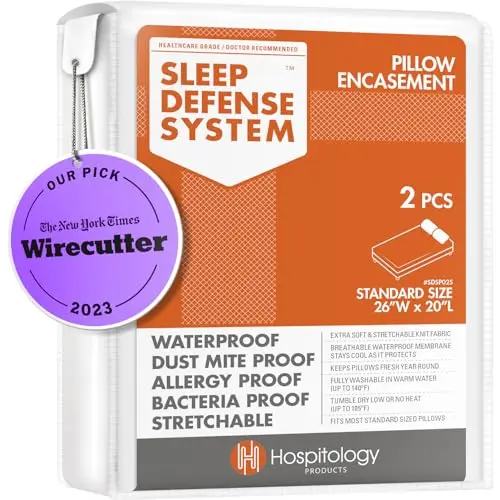
Sleep Defense System – Standard Two-Pack Waterproof Encasement
A set of two standard-size zippered pillow encasements with a soft polyester knit face and a breathable waterproof membrane. The full encasement seals the pillow on all sides and is built for spills, dust mites, and bed bugs, not just surface stains.
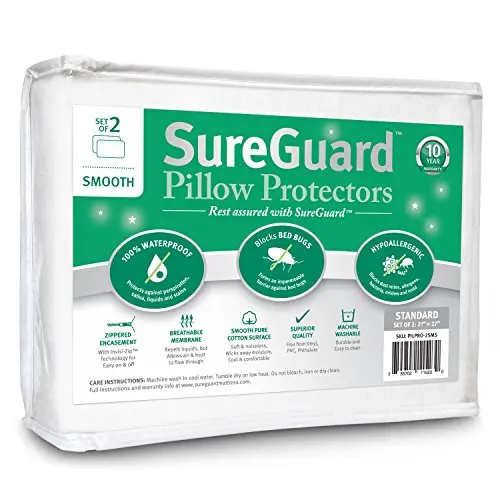
Premium Cotton Pillow Protectors – Bed Bug and Waterproof Defense
A two-pack of standard-size cotton pillow protectors with a sealed zipper and a waterproof backing. The design targets bed bugs, dust mites, and allergic households while keeping a smoother, quieter cotton feel than a basic plastic-style cover.
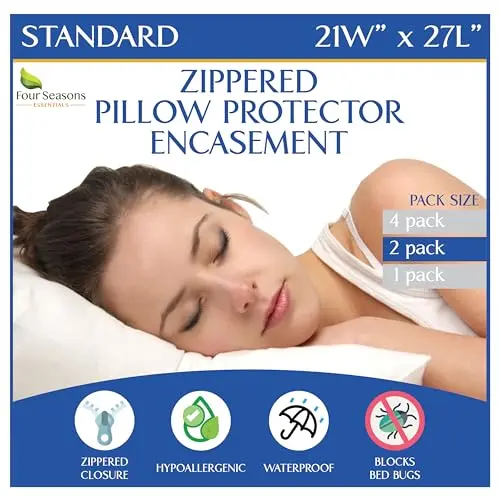
Standard Pillow Protectors – Zippered Waterproof Two-Pack
A standard-size two-pack with a soft polyester face and a polyurethane inner lining. The zippered encasement is designed for spills, pet accidents, dust, and everyday moisture while keeping the pillow surface comfortable.
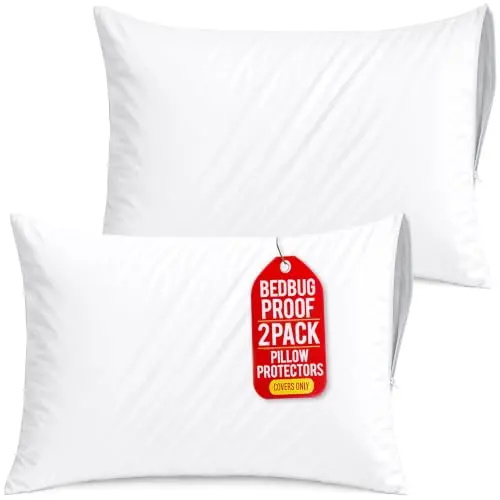
Ultimate Comfort Pillow Protectors – Budget Waterproof Encasement
A standard-size two-pack with a soft knit jersey face and a TPU waterproof barrier. The stretch fit and auto-lock zipper are aimed at guest rooms, kids’ beds, and budget-friendly everyday protection.
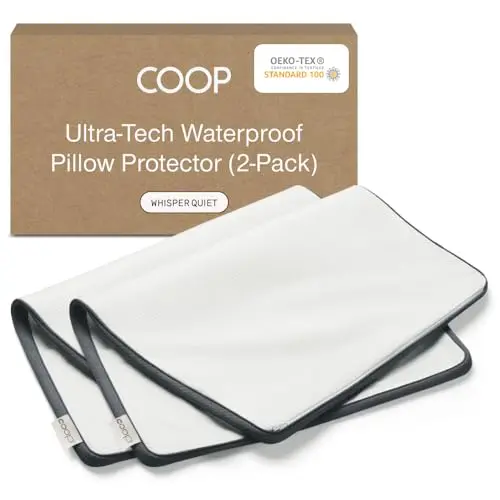
Ultra-Tech Pillow Protector – Breathable Barrier for Memory Foam
A queen-size two-pack with Coop’s Lulltra fabric and a flexible polyurethane backing. It’s designed for memory foam pillows and sleepers who want a softer, quieter moisture barrier, though Coop notes it isn’t a fail-proof liquid shield.
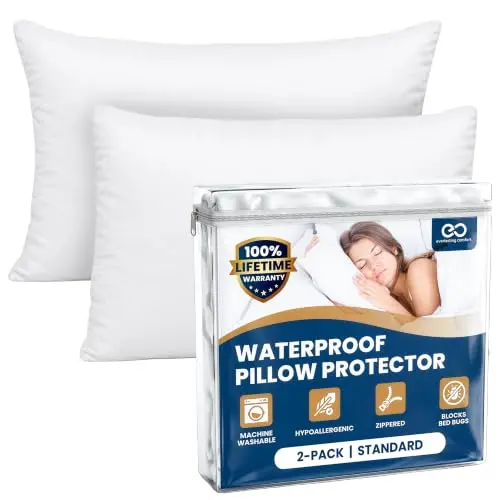
Standard Waterproof Pillow Protectors – Quiet Two-Pack Coverage
A standard-size two-pack with a quiet, breathable cover and a secure zipper. The design targets everyday moisture and hot sleepers, with a roomy cut that’s easy to wash and dry.
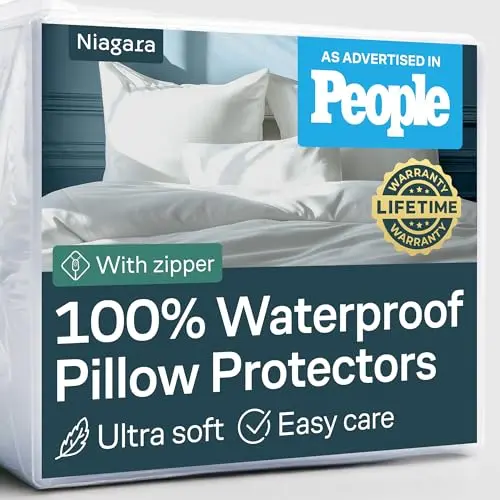
Waterproof Pillow Protectors – Soft Zippered Two-Pack
A standard-size two-pack made from brushed microfiber with a zippered encasement. It’s built as a soft, breathable cover for everyday moisture and dirt, with a guarantee against manufacturing defects.
How We Evaluated These Waterproof Pillow Protectors
We didn’t run wash-cycle durability testing or sleep trials across every pillow type. What we did: cross-referenced 7 waterproof pillow protector models from 7 distinct brands across six decision axes – barrier construction, fabric feel and breathability, zipper and closure design, fit and size range, care and durability, and allergen or bed-bug protection. We triangulated published specifications, feature sets, owner feedback where available, and use-case fit for different sleepers and bedding setups. We mapped claims against the details that actually matter at home: whether the membrane is bonded to the face fabric, whether the zipper fully seals the pillow, and whether the cover can be washed without obvious stress on the barrier. We also weighed how each cover’s sizing instructions matched real pillow dimensions, because a loose or cramped fit can compromise both comfort and waterproofing.
The scoring framework weighted real-world fit and performance (70%) – how well each protector handles moisture, stays comfortable, and holds up to its stated care routine – against feature differentiation (30%) – unique barrier designs, closure systems, certifications, and specialty protections. We have no commercial relationship with any of the brands featured; recommendations track fit and differentiation, not brand preference. If you want the most balanced waterproof encasement for a standard pillow, the Hospitology Products Sleep Defense System is the pick; if bed bugs and cotton feel are priorities, the SureGuard Premium Cotton Pillow Protectors are the stronger match.
How to Choose the Right Waterproof Pillow Protectors
1. What Actually Makes a Pillow Protector Waterproof?
A waterproof pillow protector needs a real barrier, not just a tight weave. Look for a polyurethane or TPU membrane bonded to the fabric, plus a fully sealed zipper and enclosed seams. Those three pieces decide whether a spill beads on the surface or soaks straight through to the pillow. A cover marketed as water-resistant may handle a splash but not a full glass of water, so read the construction details rather than the front-label claim.
The fabric face matters too. A soft knit or cotton surface keeps the protector comfortable, while the hidden membrane does the waterproofing. If the product doesn’t name the barrier material, that’s a sign to look closer before buying.
2. Breathability, Noise, and the Waterproof Trade-Off
Waterproof covers fail in everyday use for two reasons: heat and noise. A breathable membrane helps reduce the greenhouse effect, but any waterproof layer traps some warmth compared with an untreated pillowcase. The best covers offset that with a moisture-wicking face fabric and a construction that doesn’t sit tight against the skin.
Noise is the other giveaway. Cheap waterproofing often crinkles like a chip bag. Better options use a soft fabric face, a quiet membrane, or a brushed knit backing to muffle the sound. If you’re a light sleeper, put more weight on those details than on a generic ‘noiseless’ claim.
3. Zipper and Fit: Where Leaks and Frustration Start
The zipper is not a minor detail. A full zippered encasement seals all four sides, while a partial or loose closure leaves gaps for dust, moisture, and bed bugs. Look for an auto-lock zipper or a zipper garage that hides the pull and keeps it flat. The cover should also match your pillow’s measured size, not the size printed on an old pillowcase.
Fit affects performance. A snug but not overstuffed fit keeps the membrane smooth and reduces stress on the seams. If the cover is too large, it bunches; too small, and the zipper may pull open. For a standard pillow, check the stated inch range before ordering.
4. Allergy, Dust Mite, and Bed Bug Protection
Waterproofing and allergen control overlap but aren’t identical. A tightly woven fabric plus a sealed encasement can block dust mites, pollen, and pet dander, while a waterproof membrane handles liquids. If bed bugs are the concern, prioritize a fine-tooth zipper and a cover that fully encloses the pillow. Certifications such as GREENGUARD Gold or Oeko-Tex Standard 100 speak to material safety, not waterproof performance, so treat them as a bonus rather than the main event.
5. Care, Durability, and Warranty
A waterproof protector is only as good as its membrane after washing. Follow the care label: most need a machine-washable care cycle with mild detergent, and high heat can degrade the barrier. Skip fabric softener, bleach where not approved, and aggressive dryer settings. Warranty length is a useful signal here because a maker that expects the lining to last usually backs it for several years. Store the cover dry and unzipped between uses.
6. How to Match a Waterproof Protector to Your Bedroom
For hot sleepers, prioritize a breathable knit or cotton face over a plasticky surface. For memory foam pillows, choose a full encasement that keeps liquid away from the foam, which is difficult to dry once wet. Kids’ rooms and guest beds benefit from a two-pack with an easy-care finish. If allergies are the main driver, pair waterproofing with a dust-mite-rated weave and a sealed zipper. And if you want the best balance of cotton feel and bed-bug defense, the SureGuard Premium Cotton Pillow Protectors are the pick here; for a budget-focused setup, the Utopia Bedding Ultimate Comfort covers the basics.
Frequently Asked Questions
1. Are waterproof pillow protectors actually waterproof or just water-resistant?
Most are genuinely waterproof only when the barrier is intact and the zipper is fully closed. A polyurethane or TPU membrane can block liquid, but a cover labeled water-resistant may only slow a spill down. Check the seams and the zipper seal; those are the weak points where water finds a path.
No protector is indestructible. Sharp seams, repeated hot washing, and liquid left pooling on the surface can compromise performance over time.
2. What's the difference between the Hospitology Products Sleep Defense System and the SureGuard Premium Cotton Pillow Protectors?
The Sleep Defense System is a soft polyester-knit encasement with a breathable membrane and a flat side zipper; it’s the more comfort-first two-pack. The Premium Cotton Pillow Protectors use a smooth cotton surface, a sealed Invisi-Zip closure, and a bed-bug-focused design with GREENGUARD Gold certification. Choose Hospitology for a softer feel; choose SureGuard if allergies, bed bugs, or cotton feel matter more than price.
3. How does the Coop Home Goods Ultra-Tech compare with the Utopia Bedding Ultimate Comfort for hot sleepers?
Coop’s Lulltra fabric and flexible polyurethane backing are aimed at a softer, quieter sleep experience, and its Oeko-Tex certification adds a material-safety check. Utopia’s knit jersey face and TPU barrier are more budget-focused, with a snug stretch fit. For hot sleepers, both are breathable for waterproof covers, but Coop feels more premium and Utopia is easier to buy in multiples.
4. Do waterproof pillow protectors make noise or sleep hot?
The good ones minimize both, but no waterproof layer is completely invisible. A soft fabric face and a quiet membrane cut down crinkle, while a breathable knit or cotton surface helps with heat. If you sleep hot or light, avoid any cover that feels plasticky in the package.
5. Can I wash a waterproof pillow protector in a regular machine?
Usually yes, but follow the care label. Use a gentle machine-wash cycle, mild detergent, and low heat or air-dry to protect the membrane. Avoid fabric softener and high dryer heat, which can break down the waterproof layer and shorten the cover’s life.
Final Verdict
For most people, the Hospitology Products Sleep Defense System is the right starting point: it seals a standard pillow completely, stays soft against the skin, and keeps the waterproofing where it belongs-inside the cover, not on your sheets. It’s the pick I’d hand to a friend who wants a straightforward two-pack that works.
If budget is the deciding factor, the Utopia Bedding Ultimate Comfort covers the basics for guest rooms and kids’ beds at an entry-level tier. For allergy-focused homes or anyone dealing with bed bugs, the SureGuard Premium Cotton Pillow Protectors are the more reassuring step up, thanks to the cotton face, sealed zipper, and bed-bug-focused design. And if you sleep on memory foam and want a softer, quieter barrier, the Coop Home Goods Ultra-Tech is the comfort-first alternative. Match the cover to the job, and you’ll sleep better for it.
