
Best Weighted Blankets For Dementia – 2026 Reviews

It usually starts around dusk. Someone with dementia gets up for the fourth time, paces the hallway, and can’t settle – and the phrase ‘please just sit down for a minute’ stopped working somewhere around the second hour. Families and caregivers tend to land on the same low-tech idea: a weighted blanket, the kind that presses gently across the body and gives a restless nervous system something steady to hold onto.
Two things separate a weighted blanket that actually gets used from one that ends up folded in a closet. The first is weight relative to the person – a frail 110-pound adult and a 200-pound adult need very different blankets, and a lot of the most popular models are built for the heavier end. The second is heat and cleanup. Someone with dementia may not be able to tell you they’re too warm, and spills or incontinence happen, so breathability and machine washability matter more here than in almost any other use of these blankets.
We went through the major brands selling weighted blankets right now and pulled out the ones whose construction, weight range, and care instructions actually suit dementia care – plus the seated, lap-sized options many caregivers end up preferring once they see what gets used daily. One note before you buy anything: run the decision past the person’s physician or care team, especially if there’s a respiratory, circulatory, or mobility concern.
Best Weighted Blankets for Dementia – 2026 Reviews
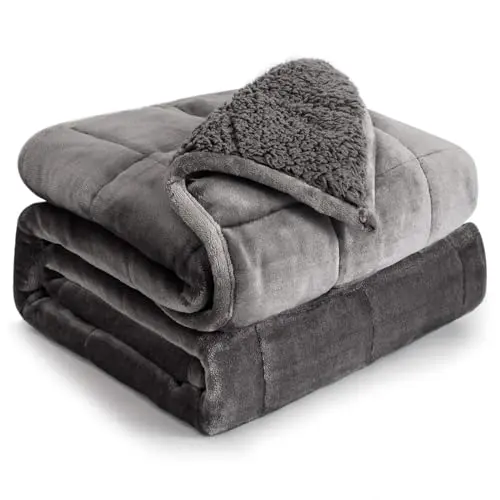
Sherpa Fleece 15 lb Queen – Full-Body Calming Weight
A 60 x 80 inch, 15-pound blanket with 220 GSM fleece on one face and 220 GSM sherpa on the other. Glass beads sit inside a seven-layer build with an extra fabric wrap, so the fill stays put in smaller sewn compartments instead of sliding into the corners.
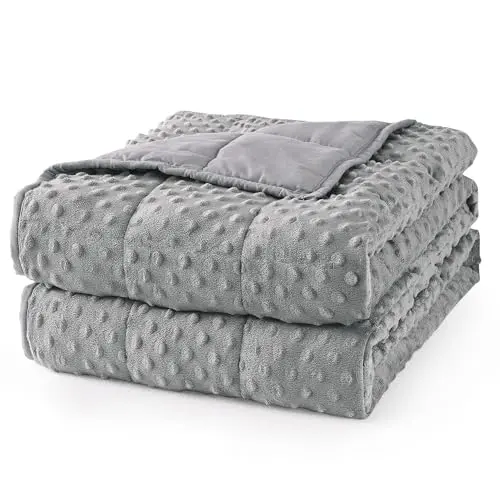
Cooling Minky 15 lb Queen – Reversible Heat-Friendly Pick
A 60 x 80 inch, 15-pound blanket with a reversible shell: smooth microfiber on one face for warmer months, embossed minky dots on the other for cooler nights. Glass beads are held in a multi-layer structure designed to keep the fill evenly spread and leak-free.
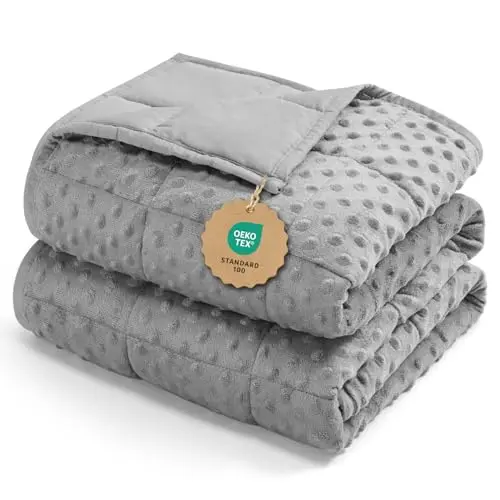
Reversible Minky Dot 15 lb – All-Season Even Weight
A 60 x 80 inch, 15-pound blanket with breathable microfiber on one side and soft minky dots on the reverse. A seven-layer shell and reinforced stitching hold ultra-fine glass beads in place, and the whole blanket is commercial machine washable.

Crystal Velvet Lap Pad 7 lb – Seated and Wheelchair Support
A 24 x 29 inch, 7-pound lap pad built for seated use rather than overnight sleep. Glass beads are locked into 50 compact grids with seamless edging, and the double-sided crystal velvet stays soft against bare arms and hands.
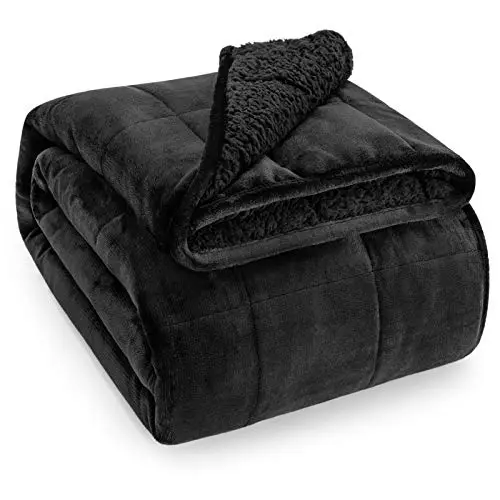
Sherpa Fleece 15 lb Black – Plush Cold-Room Comfort
A 60 x 80 inch, 15-pound blanket with 220 GSM fleece on the face and 220 GSM sherpa on the reverse, both in black. Glass beads are held between two polyester layers in a seven-layer build meant to stop shifting and rustling.
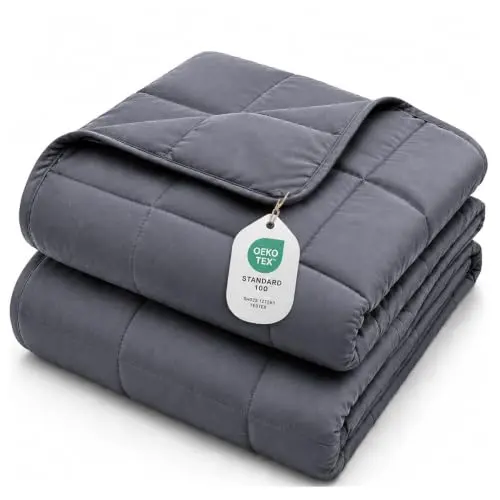
Microfiber 15 lb 48×72 – Compact Body-Hugging Fit
A 48 x 72 inch, 15-pound blanket in breathable microfiber, filled with 0.8 to 1 mm glass beads. High-strength thread and precision sewing keep the fill evenly positioned, and the smaller footprint is designed to sit on the body rather than drape over a bed.

3D Jacquard Fleece 15 lb – Warm Textured Throw
A 60 x 80 inch, 15-pound blanket with a 260 GSM jacquard fleece face and a 220 GSM sherpa reverse in a raised 3D turtle-shell pattern. Ceramic beads are locked into small pockets within a seven-layer build.

20 lb Queen – Deep Pressure for Heavier Adults
A 60 x 80 inch, 20-pound blanket built for adults in roughly the 190 to 210 pound range. Glass beads sit in 5 x 5 inch compartments stitched at high density, and the shell is a medium-weight polyester designed for year-round use.

20 lb Microfiber Queen – Entry-Tier Deep Pressure
A 60 x 80 inch, 20-pound blanket in a smooth microfiber shell with glass bead fill, built for all-season use. It’s sized to rest on the body rather than drape over the mattress edges.
How We Evaluated These Weighted Blankets for Dementia
We didn’t run these blankets through a care-facility trial or measure skin temperature overnight. What we did: cross-referenced 9 weighted blanket models from 7 distinct brands across six decision axes – fill and bead containment, shell fabric and breathability, available weight options, care instructions, sizing and footprint, and how manageable each blanket is for a caregiver to lift and reposition.
We triangulated published specifications and construction details, weighed owner feedback where available against the specific demands of dementia care, and mapped each blanket to representative buyer profiles – a frail adult in a recliner, a sturdier adult in bed, a caregiver handling laundry several times a week. The scoring framework weighted real-world fit to dementia caregiving (70%) – weight tolerance, heat management, washability, and bead stability – against feature differentiation (30%) – the construction details that separate one blanket from the next. We have no commercial relationship with any brand here; recommendations track fit and differentiation, not brand preference. If you’re setting up a full-size bed blanket, the Cottonblue Sherpa Fleece 15 lb is the safest starting point; if overheating is your main worry, the Mr. Sandman Cooling Minky 15 lb is the better match.
How to Choose the Right Weighted Blankets for Dementia
1. Why Weight Choice Matters More for Dementia Than for Anyone Else
Standard guidance says to pick a blanket that’s roughly 8% to 12% of body weight. In dementia care, treat that as a ceiling rather than a target. A frail 110-pound adult lands around 9 to 13 pounds on paper, but many people in mid-stage dementia do better starting well below the guideline – a 7 to 10 pound lap pad is often the right first step, not a 20-pound queen.
Two reasons to start light. First, tolerance varies day to day; a blanket that felt calming on Tuesday can feel confining on Friday, and a lighter one is easier to remove without a struggle. Second, caregiver handling matters. A 20-pound blanket wet out of the wash is genuinely difficult to move, and blankets that are hard to handle quietly stop being used.
2. Heat, Breathability, and the Problem of Silent Overheating
Someone with dementia may not be able to tell you they’re too warm, and may not think to push a blanket off. That makes thermal management the most underrated spec in this category. Plush sherpa and high-GSM fleece are lovely in a cold room and genuinely risky in a warm one.
The practical approach: favor reversible blankets with one smooth microfiber face, keep the room cooler than you’d keep it for yourself, and check on the person rather than waiting for a complaint. Microfiber shells and minky dot textures generally run cooler than double-plush construction.
3. Weighted Blankets for Dementia: Sizing, Footprint, and the Case for Seated Options
Weighted blankets are built to sit on the body, not drape over a mattress, so a 60 x 80 blanket on a queen bed will look small and won’t overhang. That’s by design, but it surprises almost everyone on delivery.
For dementia specifically, think about where the person actually spends their restless hours. If restlessness shows up in a chair, on the sofa, or in a wheelchair during the day, a lap-sized pad gets used far more than a bed blanket. The Cottonblue Crystal Velvet Lap Pad at 7 pounds is the easiest format to try first. If the goal is overnight sleep, a 48 x 72 or 60 x 80 body-conforming blanket makes more sense.
4. Bead Containment and Washability: The Two Specs That Decide Longevity
Glass beads that migrate to the corners turn a calming blanket into a lumpy one. Look for small sewn compartments – 5 x 5 inch grids beat long channels – and a multi-layer shell that wraps the fill before the outer fabric goes on. That construction also reduces the rustle that can wake a light sleeper.
Washability is the second filter. Commercial machine wash, or at minimum a gentle cold cycle, matters when spills and incontinence are part of daily life. Hand-wash-only blankets at 15 to 20 pounds are a genuine burden, so weigh that before you buy on price alone.
5. What Weighted Blankets Cost Across Brands
The category splits into three rough tiers. Entry-level blankets land in the mid-$20s to low-$30s and typically use simpler shells and hand-wash instructions. Mid-range options in the $35 to $50 band generally add reversible fabrics, tighter bead compartments, and real machine-wash support. Premium picks push higher for specialty fabrics and longer warranties.
The honest read: the jump from entry-level to mid-range buys you washability and bead control more than it buys softness – and those are the two things that determine whether a blanket survives a year of caregiving.
6. Cottonblue Sherpa Fleece vs Mr. Sandman Cooling: Which Fits Your Situation?
Both are 60 x 80, 15-pound blankets with solid bead control, so the decision comes down to heat. The Cottonblue Sherpa Fleece is plush on both faces and runs warm – good for a cold bedroom, less good if overheating is a risk. The Mr. Sandman Cooling Minky pairs a smooth microfiber face with a minky dot reverse, so you can flip to the cooler side without buying twice.
If you genuinely don’t know which way to go, pick the reversible one. It’s easier to add warmth than to remove it.
Frequently Asked Questions
1. What weight weighted blanket is safe for someone with dementia?
There’s no universal number, and it’s worth saying plainly that a weighted blanket is a comfort item, not a treatment – check with the person’s physician or care team before introducing one. As a starting point, most guidance suggests 8% to 12% of body weight, but in dementia care it’s better to begin below that range. A 5 to 10 pound lap pad is a reasonable first trial for a frail adult, and you can move to a 15-pound full-size blanket if the lighter option is well tolerated.
Watch for signs of distress rather than waiting for a verbal complaint. Pushing the blanket away, sweating, or increased agitation are all reasons to remove it and try again another day.
2. What's the difference between the Cottonblue Sherpa Fleece 15 lb and the Kivik Reversible Minky Dot?
Both are 15-pound, 60 x 80 blankets with seven-layer bead construction and machine-wash support, so they’re closer than they first look. The Kivik uses a smooth microfiber face on one side, which makes it the more flexible choice when room temperature varies. The Cottonblue is plush on both faces and runs warmer, with 220 GSM fleece and sherpa on either side.
If the person runs warm or the room is heated, Kivik is the safer pick. If the bedroom is cold and comfort is the priority, Cottonblue wins on feel.
3. How does the Mr. Sandman Cooling blanket compare with the Wemore Sherpa Fleece?
They’re opposites on the heat question. The Mr. Sandman Cooling Minky is reversible, with a smooth microfiber face for warm months and embossed minky dots for cool ones, plus a stated 12-month guarantee. The Wemore Sherpa Fleece is 220 GSM fleece and 220 GSM sherpa on both sides – warmer, softer, and less forgiving if overheating is a concern.
For dementia care in a normally heated home, Mr. Sandman is the more practical choice. Wemore makes more sense in a cold climate or a house kept cool at night.
4. Is a lap blanket or a full-size weighted blanket better for dementia?
It depends on when the restlessness happens, and that’s the most useful question to ask. If the person paces in the evening and settles in a chair, a lap pad will be used far more often than a bed blanket. If they struggle specifically at bedtime, a 60 x 80 body-conforming blanket is the better fit.
Many families end up with both – a lap pad for daytime and a full-size blanket for the bed – because the two formats solve different problems.
5. How do you wash a weighted blanket for someone with dementia?
Check the care label before anything else. Commercial machine wash with a low tumble dry is the most forgiving route and covers several blankets here, including the Cottonblue and Wemore full-size models. Hand-wash-only blankets at 15 to 20 pounds are a real burden – a bathtub soak and a multi-day hang dry isn’t a sustainable routine in most households.
For a lap pad the math is easier. The Cottonblue lap pad is machine washable and dryer safe, which is one reason it holds up well in daily care.
Final Verdict
For most families, the Cottonblue Sherpa Fleece 15 lb is the sensible starting point – a full-size blanket with tight bead compartments, real machine-wash support, and a weight most adults can tolerate. If overheating worries you more than anything else, the Mr. Sandman Cooling Minky 15 lb gives you a cooler face to flip to without buying twice. And if the restlessness happens in a chair rather than a bed, skip the full-size debate and start with the Cottonblue Crystal Velvet Lap Pad – 7 pounds, machine washable, and far easier to manage day to day. On a tight budget, the L’Agraty Microfiber 15 lb covers the basics at the entry tier, provided you can live with hand washing.
