
Best Western Pillows – 2026 Reviews

Somewhere between the second and third night of a hotel stay, almost everyone has the same thought: I sleep better on this pillow than the one at home. The brand on the pillowcase rarely turns out to be the secret. What those pillows share is a set of design decisions – a rectangular western silhouette rather than a contoured shape, a fill that pushes back instead of collapsing into a pancake, and a cover that lets air move instead of trapping it against your face.
The western pillow category is wider than it looks. You can buy a shredded memory foam pillow you stuff to your own loft, a down-alternative pair with a cotton cover, a gusseted set built for a boxy hotel profile, or a fiber-filled two-pack that costs less than a nice dinner. Those are not small differences. They change how the pillow behaves at 2 a.m. and how long it stays that way.
Two things separate the good options from the forgettable ones. First, whether loft is fixed or adjustable – the more control you have, the less you’re gambling on a spec sheet. Second, whether the fill recovers. A pillow that starts supportive and flattens in six weeks is a bad pillow with good marketing. Below we walk through the models worth cross-shopping across brands, and which sleeper each one actually suits.
Best Western Pillows – 2026 Reviews
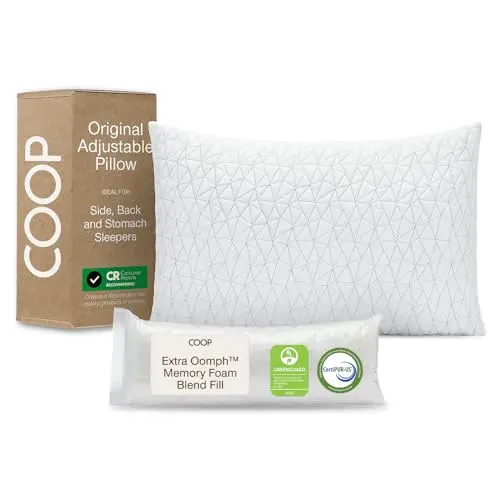
Original Adjustable Pillow – Shredded Foam You Can Dial In
A queen-size shredded memory foam pillow with a zip-open liner, a soft Lulltra cover, and a bag of extra fill so you can set the loft yourself.
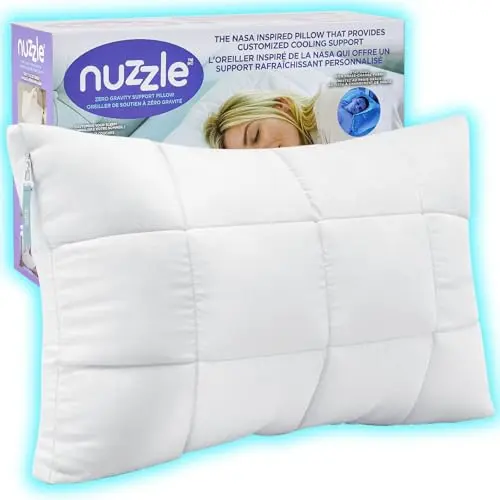
Standard Adjustable Pillow – Three-Layer Loft Control
A single standard-size pillow built from three removable layers of Nanocoil fiber under a phase-change fabric cover that absorbs and releases heat.
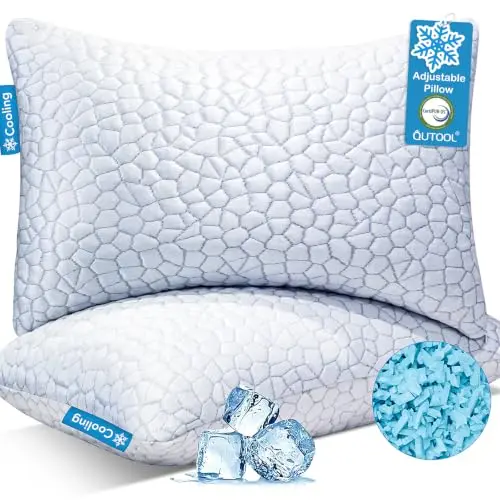
Cooling Pillow Set – Cool-Touch Cover, Adjustable Fill
A two-pack of queen shredded memory foam pillows with a reversible cover – a silky cool-touch face on one side, a polyester and bamboo-viscose blend on the other.
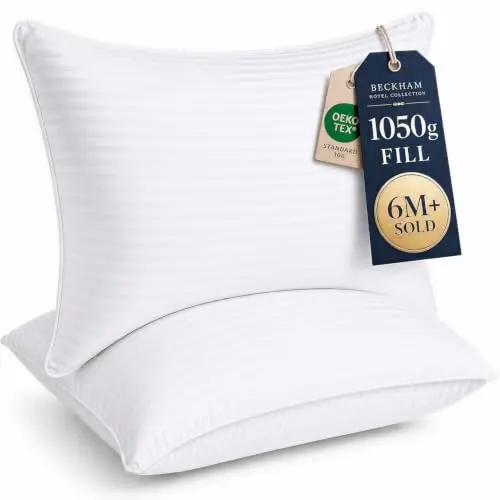
Hotel Collection Bed Pillows – Down-Alternative Pair with Cotton Cover
A pair of queen pillows with hollow down-alternative fiber inside a 100% cotton cover, sized to span a queen or full bed.
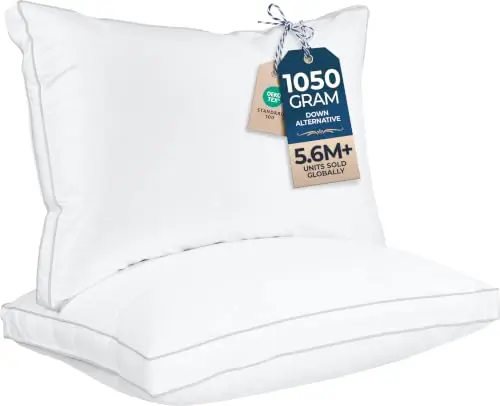
Gusset Bed Pillow – Piped Edges That Hold Loft
A queen two-pack with stitched gusseted sidewalls and piped edges, built to hold a boxy hotel silhouette instead of sagging through the middle.

Hotel Bed Pillows (Premium Stripes) – Plush Down-Alternative Pair
A two-pack of queen pillows in plush hollow polyester fiber under a striped polycotton cover – the classic hotel look at the entry-level tier.
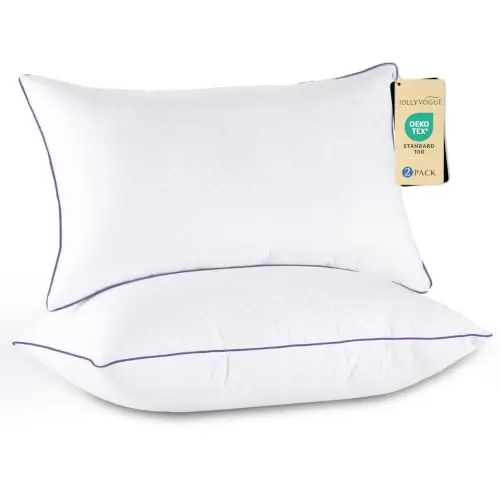
Firm Pillows – Supportive Two-Fiber Blend Pair
A two-pack that blends 40% soft 3D fibers with 60% supportive 7D down-alternative fiber under an embossed microfiber cover.
How We Evaluated These Western Pillows
We didn’t sleep on these pillows for months at a time or run lab compression tests. What we did: cross-referenced 7 western pillow models from 6 distinct brands across six decision axes – fill composition, loft and firmness adjustability, cover fabric and breathability, shape retention, care requirements, and size and pack configuration. We triangulated published specifications, feature sets, and owner feedback where available, then mapped each option onto representative buyer profiles: side sleepers who need shoulder clearance, stomach sleepers who need almost none, warm sleepers, and anyone outfitting a guest room from zero.
The scoring framework weighted real-world fit (70%) – how well a pillow supports the position it claims to serve, and whether that support survives the night – against feature differentiation (30%) – adjustable fill, temperature-regulating covers, certifications, and washability. We have no commercial relationship with any of the brands featured; recommendations track fit and differentiation, not brand preference. If you want to tune loft yourself, the Coop Home Goods Original is the straightforward answer. If you’d rather change firmness by pulling out a layer, the Nuzzle pillow is the better match.
One caveat worth stating plainly: pillow feel is personal, and no spec sheet tells you whether a cover will sleep warm against your face. Treat these notes as a way to narrow the field to two or three candidates, then buy from a seller with a return window you’re comfortable with.
How to Choose the Right Western Pillows
1. What Makes a Western Pillow Different From a Contoured One
Western pillows are the rectangular, fill-based bed pillows most of us grew up with – standard sizing, a sewn or zippered shell, and a loft you either live with or adjust. They’re the default for a reason: they fit normal pillowcases, they suit back, side, and stomach sleepers with one shape, and they can be washed or replaced without ceremony.
Compare that to a molded contoured pillow with a built-in neck ridge, which locks you into one head position, or an Eastern-style buckwheat or kapok pillow, which is firmer and higher than most western sleepers expect. Neither is wrong – they’re just solving a narrower problem. The rectangular western silhouette stays flexible, which is why almost every hotel uses it.
2. Fill Type Is the Biggest Lever in a Western Pillow
Three fills dominate this category, and each fails differently. Shredded memory foam molds and rebounds, and because it’s loose you can add or remove it – its weakness is a break-in smell and the occasional need to redistribute fill by hand. Down alternative cluster fiber gives you the plush hotel hand-feel without feathers, but it compresses over months. Hollow polyester fiber is the most affordable and the most eager to flatten, though a low-heat dryer cycle revives it better than most people expect.
What separates a good pillow from a bad one inside a single fill type is shape retention. A dense, well-packed fill holds its loft; a loosely stuffed one looks full in photos and collapses under a head. If a listing can’t tell you how much fill is inside, treat that as a yellow flag.
3. Loft and Firmness: Why Adjustability Beats a Firmness Label
Firmness labels are marketing shorthand, not measurements. One brand’s medium is another brand’s firm, and your definition depends on body weight, shoulder width, and whether you sleep on your side. Loft is the more useful number – side sleepers need more height to fill the shoulder gap, stomach sleepers need very little, and back sleepers land in between.
That’s why adjustable fill is worth paying for. It converts a guess into a dial you can turn after a few nights. If you’d rather tune loft than gamble on a label, the Coop Home Goods Original is the pick here. If you want a firmness change you can make in the dark without unzipping anything, a layered design does the same job with less mess.
4. Covers and Breathability: What Actually Helps Hot Sleepers
Most ‘cooling’ claims live in the cover. A cotton cover is the low-tech answer that consistently works, because cotton moves moisture and air without any special treatment. Bamboo viscose blends feel silkier and breathe well too. Phase-change material goes a step further by absorbing and releasing heat, though its effect depends on room temperature – no cover will chill a warm bedroom.
What matters just as much is airflow through the fill. Shredded foam lets air move between pieces; a densely packed solid fill does not. For sleepers who overheat, the QUTOOL cooling pillow set is the one built around that specific problem.
5. Coop Home Goods vs Beckham Hotel Collection: Two Routes to the Hotel Feel
These two represent opposite philosophies. Coop Home Goods leans on fill-based adjustment: loose shredded foam plus an extra bag, so the pillow becomes whatever you make it. Beckham Hotel Collection leans on materials and consistency: a cotton cover over evenly spread down-alternative fiber, sold as a matched two-pillow set that looks right the moment you unbox it.
Pick the first if you’ve never found a pillow that fits and want to experiment. Pick the second if you want two identical pillows that make a bed look finished – and if the hotel look is the goal, the Beckham Hotel Collection set is the closest match. Neither approach is more premium; they solve different problems.
6. Care, Loft Recovery, and When to Replace a Pillow
Check the care instructions before you fall in love with a pillow. A machine-washable cover – or a fully washable pillow – is a real quality-of-life difference over spot cleaning, especially in a house with allergies or kids. Anything marked spot clean only will look tired faster than it should.
Loft recovery is the other half of longevity. Fiber pillows bounce back with a low dryer cycle; foam pillows bounce back with a shake and a few minutes of hands-on fluffing. Most guidance suggests replacing a pillow every year and a half or so, or sooner if it no longer springs back when folded in half. Buy for the fill first, the cover second, and the pattern last.
Frequently Asked Questions
1. Coop Home Goods Original vs QUTOOL Cooling Pillow: which is better for hot sleepers?
The QUTOOL is the more targeted choice. Its reversible cover puts a silky cool-touch face against your skin, with a bamboo-viscose blend on the reverse, and the shredded fill lets air circulate instead of holding heat in one dense block. The Coop Home Goods Original is cooler than a solid foam pillow thanks to its Lulltra cover and loose fill, but temperature isn’t its design focus – adjustability is.
So: choose the QUTOOL cooling pillow set if overheating is your main complaint. Choose the Coop if you’ve struggled to find the right loft and warmth is secondary. Both are adjustable, so neither traps you with the wrong firmness.
2. Beckham Hotel Collection vs Utopia Bedding Gusset: how do the two hotel-style sets differ?
The Beckham Hotel Collection set is built around a 100% cotton cover, which is the breathable, familiar hotel feel, and the fill is spread edge to edge to avoid dead corners. The Utopia Bedding Gusset set is built around construction instead: a gusseted sidewall and piped edges create a boxier profile that holds shape better visually.
In practice, the cotton cover makes Beckham the better pick for warm sleepers and anyone with sensitive skin, while the gusset makes Utopia the better pick if you want that crisp, structured look on a made bed. Both are two-pillow queen sets and both come compressed, so give either a shake and a day before judging the loft.
3. Do adjustable pillows actually help side and stomach sleepers?
Yes, and more than a firmness label does. Side sleepers need enough height to fill the gap between shoulder and ear; stomach sleepers need almost none or their neck cranks upward all night. An adjustable pillow lets one product serve both, which is why it’s worth the extra cost for couples who share a bed or for anyone whose position shifts.
The tradeoff is patience. Adjustable pillows feel foreign for the first few nights, and you’ll likely pull fill out, put it back, and pull it out again. Give it a week of small tweaks. If you want layer-based adjustment rather than loose fill, the Nuzzle pillow makes those changes in seconds.
4. How long does a new pillow take to reach full loft?
Longer than most people expect, and it varies by fill. Down alternative pillows usually need a few good shakes plus up to a day to expand after being compressed for shipping. Shredded foam pillows need roughly one to two days of airing, partly for loft and partly to let manufacturing odor dissipate. Denser fiber blends can take up to a few days with hand-kneading to break up clumps.
Don’t judge a pillow on night one. Make the bed, let it sit, and reassess after three nights – and if it’s still flat at that point, that’s a real problem rather than a packaging artifact.
Final Verdict
For most people, the Coop Home Goods Original is the answer. It’s the only pillow here that hands you full control over loft and firmness, and the extra fill bag means it keeps adapting as your preferences change rather than becoming a spare. If you’re outfitting a spare bed on a tight budget, the JOLLYVOGUE set gets two pillows for less than one premium single – just expect a softer feel than the label suggests. And if you wake up overheated more often than not, the QUTOOL cooling pillow set is purpose-built for that one problem. Pick by the problem you have, not by the pattern on the case.
