
Best White Noise Machines – 2026 Reviews

It’s 2:47 a.m. and the hotel air conditioner has cycled off, which means you can now hear the elevator, the ice machine, and someone’s television through the wall. Most of us discover how much we depend on constant background sound at exactly that moment.
The category splits along one fault line. Machines built around a real fan produce broadband noise that never repeats, which makes it very hard for your brain to latch onto a pattern. Machines that play digital recordings give you twenty or thirty sound options, timers, night lights, and app control – but the cheap ones loop audibly, and a loop is worse than silence once you notice it.
There’s a second axis worth thinking about before you shop: single-purpose simplicity versus feature sprawl. A machine with two switches you’ll use every night can beat one with a phone app you’ll configure once and abandon. What follows is a market-wide look at how the leading options actually differ, and which buyer each one suits.
Best White Noise Machines – 2026 Reviews
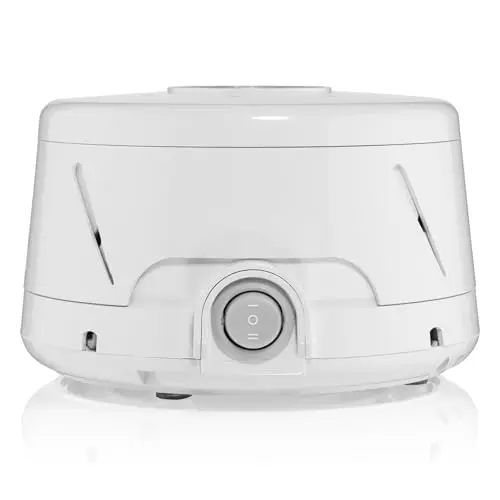
Dohm Classic – The Real-Fan Original
The machine that started the category and still the simplest way into it. One real fan, two speeds, no app and no light show – just a continuous layer of fan noise that can’t loop because nothing is being played back.
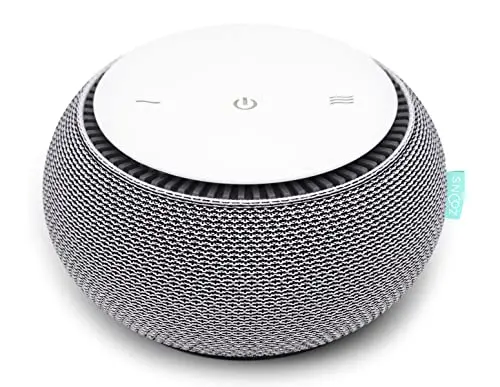
Original – Real Fan Plus App Scheduling
A real fan inside a compact, cloth-wrapped shell, with ten volume steps and an app that schedules bedtime and wake-up for you. The same non-looping principle as the classics, modernized.

Sound Machine & Night Light – Routine Builder for Nurseries
Part night light, part sound machine, part routine coach. You build bedtime programs in the app – color, sound, brightness – and the device walks your child through them, with sleep-consultant chat bundled in for the first stretch.
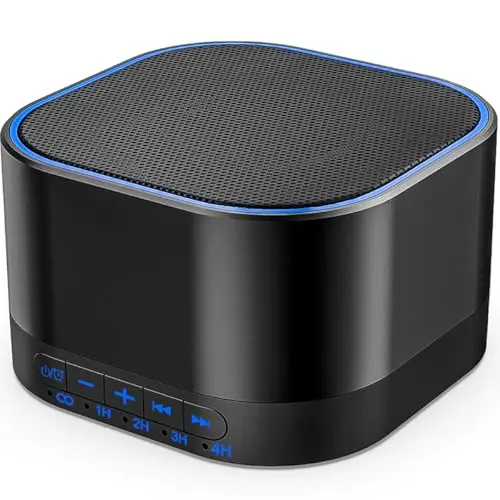
Sound White Noise Machine – 20 Sounds in a Palm-Sized Body
A tiny plug-in puck that punches through noise with twenty non-looping sound options and an unusually wide volume range. The memory function means it picks up exactly where you left off.
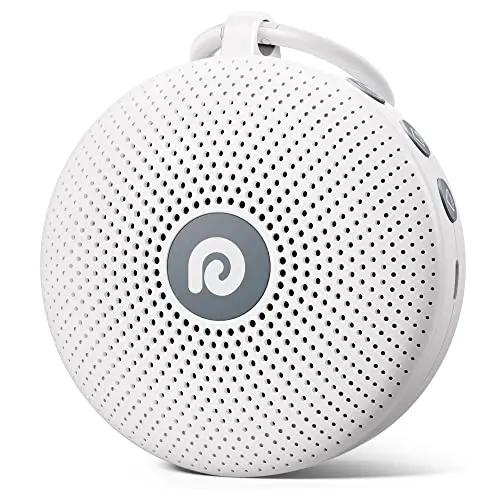
D11 Max – Rechargeable Battery for Travel
The one machine in this lineup with a built-in rechargeable battery, which makes it the obvious choice for strollers, hotel rooms, and overnight trips where an outlet isn’t guaranteed.
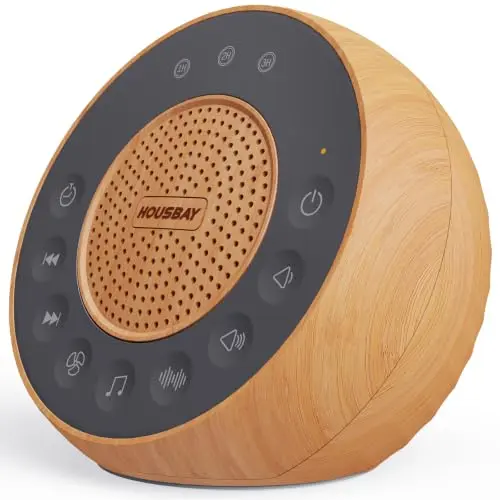
White Noise Machine – Forward-Facing Sound and Wood Grain
Thirty-one nature recordings behind a forward-facing speaker and a wood-grain shell. The angled top makes it easy to adjust in the dark without opening your eyes.
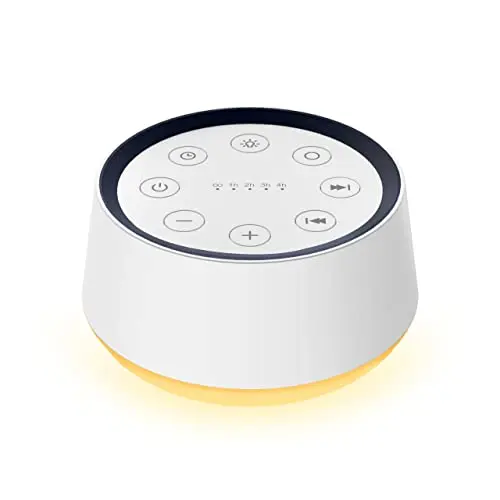
Brown Noise Sound Machine – 30 Sounds Plus Color Night Light
Thirty sounds skewed toward brown noise, plus a twelve-color night light that doubles as a nursery lamp. Plug-in only, with memory for your last settings.
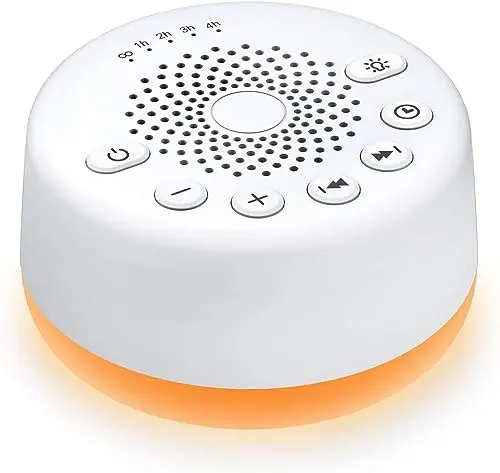
Sound Machine – 25 Sounds With Night Light
Twenty-five sounds, a warm four-level night light, and a long warranty, all at the low end of the price ladder. Small enough for a bedside table or a suitcase.
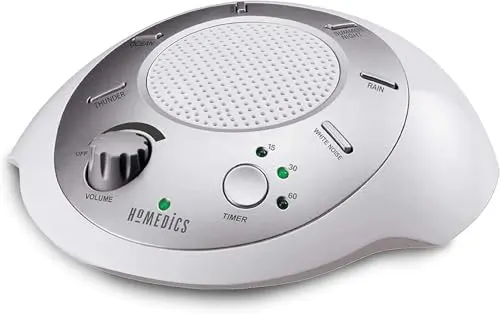
SoundSleep – Six Sounds in a Travel Body
A travel-first design with six recorded nature sounds, a three-step auto-off timer, and the option to run on AA batteries when there’s no outlet handy.
How We Evaluated These White Noise Machines
We didn’t run decibel measurements in a treated room, and we didn’t sleep beside each machine for a month of nights. What we did: cross-referenced 9 white noise machines from 9 distinct brands across six decision axes – sound source (real fan versus digital recording), sound variety, volume steps and timer options, scheduling and app features, footprint and portability, and power setup. We triangulated published specifications, manufacturer feature lists, and owner feedback where available, then mapped every option against the buyer profiles this category actually serves: light sleepers, snoring partners, nursery parents, and people who sleep away from home.
Two things separated the field. Machines built around a real fan produced a sound that never repeats, which matters more at 3 a.m. than any feature list suggests. Digital machines lived or died on how cleanly their tracks avoid audible loops and how finely you can set volume. Scoring weighted real-world fit at 70% – how well a machine does the job its buyer needs – against feature differentiation at 30%, meaning the capabilities one machine offers that another doesn’t. Recommendations track fit and differentiation rather than brand preference; we have no commercial relationship with any brand featured here. If you want the simplest proven answer, the Dohm Classic is where most people should start; if app scheduling matters more than simplicity, the SNOOZ Original is the one.
How to Choose the Right White Noise Machines
1. Fan-Based vs. Digital White Noise Machines: What Actually Masks Sound
A real fan pushes broadband noise across every frequency at once, which is why it smothers voices, televisions, and snoring so effectively – there’s nothing for your brain to lock onto. Digital machines play recordings, and the good ones stretch and layer those recordings so the result is non-looping. The cheap ones repeat every twenty or thirty seconds, and if you’re a light sleeper you’ll notice within a week.
Fan machines give you one sound done well. Digital machines give you twenty or thirty sounds, plus timers, lights, and app control. Neither is automatically better – it depends on whether you want a single reliable masking tone or a device that adapts to a nursery, a guest room, and a kid who wants rain this week and ocean next week.
2. How Many Sounds Do You Really Need?
Most people buy a thirty-sound machine and use one. That’s fine – variety is cheap to manufacture and genuinely useful in a household with kids who change their minds. What matters more is whether the specific sound you want is done well.
White noise is bright and hissy and the default for masking. Brown noise is deeper and more rumbling, and plenty of people who find white noise too sharp settle there instead. Pink noise sits between them. Fan recordings tend to feel warmer than synthesized tones. If you already know your preference, prioritize a machine that does that one sound properly over one that does forty sounds adequately.
3. Volume Range, Timers, and Which Features Earn Their Place
A machine with only three volume settings forces you to choose between too quiet and too loud. Look for a wide range: 32 volume levels lets you inch up on a snoring partner without waking them, and it matters most in small rooms where a small increase changes everything.
An auto-off timer is useful for naps and optional for overnight. A memory function – the machine returning to your last sound, volume, and timer – sounds minor until you’re resetting the thing every night in the dark. A child lock is worth having if a toddler shares the room. If you want maximum control for minimal money, the Magicteam packs a wide volume range and a memory function into a palm-sized plug-in unit.
4. White Noise Machines for Nurseries and Shared Bedrooms
Nursery buyers want something different from adult sleepers. A night light that dims low enough for night feeds matters. A child lock stops small hands from changing settings mid-nap. And if the machine can double as a routine device – one color that signals wind-down and a different one that signals morning – it’s doing two jobs instead of one.
For shared bedrooms, direction matters. A forward-facing speaker aims sound at one sleeper rather than broadcasting it across the room, which is the difference between a machine your partner tolerates and one they resent. If you’re building routines around sleep, the Hatch Baby goes further than any other pick here by turning light and sound into a schedule.
5. Size, Power, and Portability: Corded, Battery, or Rechargeable
Most machines live on a nightstand and never move, so a cord is fine. But if you want the same sleep routine in a hotel, a relative’s house, or on a stroller walk, power setup becomes the deciding spec. AA batteries are the simplest fallback and easy to replace anywhere. A built-in rechargeable battery is more convenient but ties the machine to a charging cable.
Size is the other half of it. A palm-sized unit with a lanyard loop can hang from a stroller bar; a box the size of a hardcover book packs flat in a suitcase. If the machine is going to leave the house regularly, the Dreamegg D11 Max is the only pick here designed around that from the start.
6. What White Noise Machines Cost at Each Tier
At the entry level you get more sounds than you’ll use, a night light, timers, and a plug. That tier is genuinely good now; the tradeoff is usually build quality and long-term reliability rather than missing features, so expect a wider share of units that don’t last.
Move into the mid-range and you’re paying for better construction, cleaner sound, and things like forward-facing speakers or angled controls. At the premium end you’re mostly paying for mechanical fan engineering and app control – a real fan in a well-damped enclosure costs more to build than a speaker playing a recording. Nursery devices with companion apps sit near the top too, especially where a subscription is involved.
Frequently Asked Questions
1. What's the difference between the Yogasleep Dohm Classic and the SNOOZ Original?
Both are built around a real fan, so neither loops and both produce the broadband hiss that’s so effective at masking speech and snoring. The Dohm Classic keeps it deliberately simple: one sound, two speeds, a cord, done. The SNOOZ Original sits at a higher price tier and gives you ten volume steps, a more compact shell, and an app scheduler so bedtime and wake-up happen without you touching anything.
Pick the Dohm if you want the lowest-friction version of the idea. Pick the SNOOZ Original if fine volume control and automation are worth paying for.
2. How does the Hatch Baby compare with the Dreamegg D11 Max for a nursery?
They solve different problems. The Hatch Baby is a routine device first – light colors, scheduled programs, app control, and bundled sleep-consultant chat – so it shines when you’re teaching a toddler when to stay in bed. It needs a wall outlet and, after the trial period, a subscription for the premium extras. The Dreamegg D11 Max is a rechargeable, hand-sized machine with a child lock and a lanyard loop, built for naps on the go rather than at-home scheduling. Nursery at home with a toddler: Hatch. Nursery that travels: Dreamegg.
3. How loud should a white noise machine be for a baby?
The common guidance is to keep it modest – roughly the level of a quiet shower, and further from the crib than you’d think. Sound machines work best when they create a steady background floor rather than a wall of sound, so start low and raise it only if the room is genuinely noisy.
This is where a wide volume range earns its keep. A machine with 32 levels lets you land on the right setting instead of jumping between too soft and too loud. Keep the unit several feet from the crib and never place it inside or against the crib itself.
4. Can these machines run all night, or do you need the timer?
Every machine here supports continuous play, and that’s how most people use them – the auto-off timer exists for naps, not overnight. The practical caveats are about power. Corded units run indefinitely; AA batteries and rechargeable batteries depend on charge, so if all-night coverage matters, plug in or charge nightly.
A few units across the category also cut out on their own over time, which is the strongest argument for buying one with a real warranty attached rather than the cheapest listing you can find.
5. Why do some white noise machines fail within a few months?
It’s the most common complaint in this category, and it shows up at every price point. The usual culprits are power cords and adapters rather than the speaker or the electronics, plus budget components that don’t hold up to running eight hours a night, every night.
Two practical hedges. Buy from a brand offering a real warranty – 18 months is on the generous end here. And if you’re buying a budget machine, test it in the first week; failures tend to show up early rather than after a year of quiet service.
Final Verdict
For most people, the Dohm Classic is the answer. It’s the least complicated machine here and the one that most reliably does the core job: a warm, non-looping wall of fan noise that makes snoring, traffic, and thin apartment walls irrelevant. You trade flexibility for simplicity, and for a device you’ll switch on every night, that’s a fair trade.
Want the same fan sound with real volume control and scheduling? The SNOOZ Original is the upgrade. On a tight budget, the Magicteam delivers a wide volume range and plenty of sound for very little, and it’s the cheapest way to find out whether white noise works for you. If the machine needs to leave the house, the Dreamegg D11 Max is built around a battery. And if your real problem is a toddler who won’t stay in bed, the Hatch Baby solves that better than any pure sound machine can.
