
Best Whole House Dehumidifiers For Hvac Systems – 2026 Reviews

You can run the air conditioning all summer and still watch the bathroom mirrors fog over and the basement smell faintly of wet concrete. Whole-house humidity is stubborn that way. It isn’t one damp room, it’s the entire envelope, and a small unit parked in the hallway won’t touch it.
What separates a dehumidifier that can genuinely carry a house from one that just has a big number on the box comes down to two things: capacity at realistic conditions, and drainage that doesn’t turn into a daily chore. A third factor matters if you want it working alongside your HVAC system – whether the unit can be ducted into existing runs or has to stand on its own.
We looked across the major brands in this space and focused on the units with enough capacity, pump lift, and duct flexibility to handle whole-house duty. Some are built to behave like semi-permanent equipment. Others are very good large-room appliances that happen to be rated for big square footage. Knowing which is which is the whole game, and it’s what this guide is for.
Best Whole House Dehumidifiers for HVAC Systems – 2026 Reviews
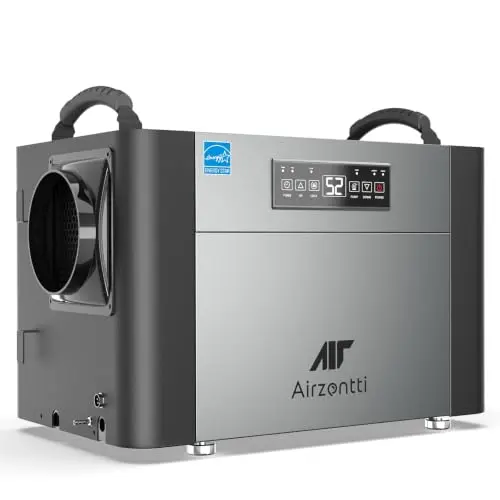
ACD155P – 155-Pint Ductable Whole-House Unit
A commercial-grade 155-pint unit with a built-in pump that lifts condensate up to 16 feet, a 6-inch duct collar, and tankless set-and-forget operation. Built for basements, crawl spaces, attics, and whole-house duty where a bucket would never keep up.
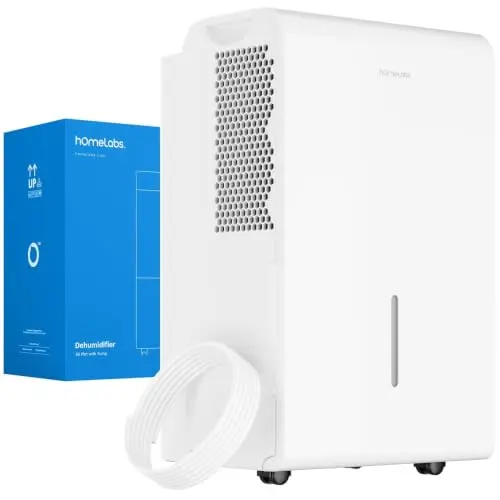
HME1004 – Pump, Wi-Fi, and Bucket Flexibility
A 50-pint pump-equipped unit rated up to 120 pints in hot, saturated air, with Wi-Fi control, three operating modes, and a backup 1.6-gallon bucket. The practical middle ground between a portable appliance and installed equipment.
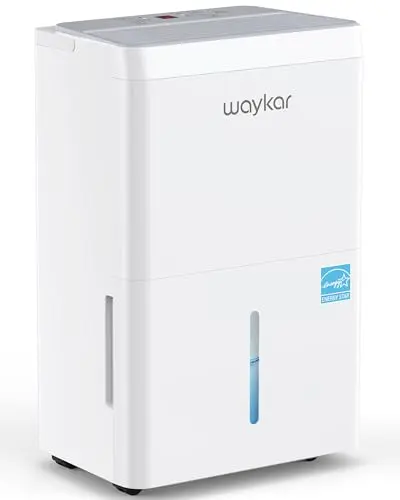
CTH120A – 120-Pint Quiet Operator
A 120-pint unit rated around 40 dB on low speed, with temperature-aware comfort mode and auto-defrost down to 42F, covering up to 6,000 square feet. Drain hose included; drainage is gravity-fed.
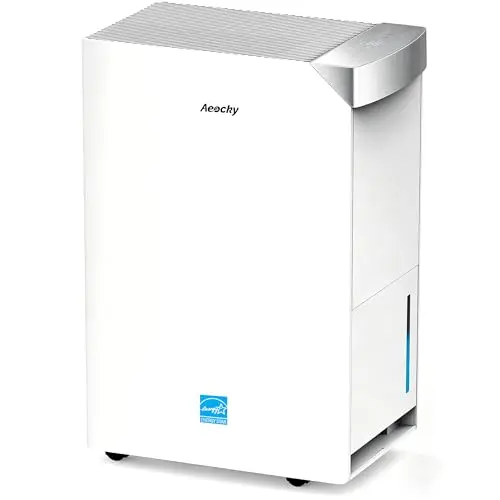
LEO-Lite-2 – Energy Star 6.0 Efficiency Pick
A 105-pint Energy Star Version 6.0 unit with copper heat-exchange construction, auto-defrost for cool basements, power-off memory, and a 3-year coverage window. Slim footprint for its output.
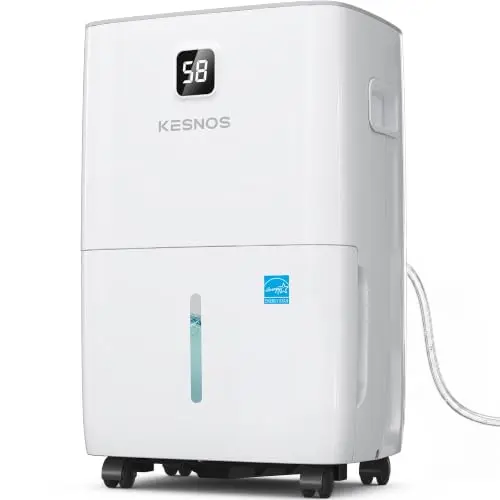
JD025N-80 – 80-Pint Budget Workhorse
An 80-pint unit drawing around 275 watts, with a front humidity display, display-off sleep mode, and 6,000 square feet of rated coverage. The efficiency-first budget option in this group.
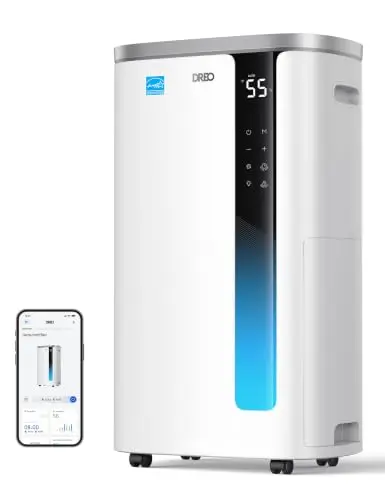
DR-HDH003S – App-Connected Compact
A 75-pint app-connected unit with the largest tank in this lineup, 41 dB operation, in-app energy tracking, and a child lock. Best suited to large rooms and finished living space rather than full-house duty.
How We Evaluated These Whole House Dehumidifiers
We didn’t run these units through a sealed-chamber moisture-removal test or a multi-month reliability trial. What we did: cross-referenced 6 dehumidifier models from 6 distinct brands across 5 decision axes – rated capacity at realistic temperature and humidity, drainage and pump lift, duct and installation fit, energy credentials, and how each unit is meant to be run day to day. We triangulated published specifications, feature sets, and owner feedback where available, then mapped each option against two buyer profiles: someone tying a unit into an existing HVAC system, and someone running a high-capacity standalone dehumidifier in a damp basement or crawl space.
The scoring framework weighted real-world fit (70%) – how well each option handles continuous whole-house duty – against feature differentiation (30%) – pump lift, duct collars, defrost thresholds, and control options. We have no commercial relationship with any of these brands; recommendations track fit and differentiation, not brand preference. If you’re retrofitting a ducted setup, the Airzentti ACD155P is the closest match here; if you want a pump-equipped unit with app control and a bucket backup, the hOmeLabs HME1004 is the more familiar route.
One scope note worth stating plainly: none of these are true in-line ducted units that install between a return and supply plenum. They’re high-capacity standalone dehumidifiers that can carry whole-house duty through continuous drainage, and we weighed them on that basis – flagging where duct collars and pump lift make an HVAC tie-in more plausible.
How to Choose the Right Whole House Dehumidifier for Your HVAC System
1. What Makes a Dehumidifier Whole House Rated
Square footage on a box is the least reliable spec in this category. A dehumidifier earns whole-house status when it can run continuously for months, dump condensate without you emptying anything, and move enough air to affect more than the room it sits in. That combination – duty cycle, drainage, and airflow – separates real equipment from a large-room appliance with big numbers on the label.
Practically, look for bypass drainage or tankless operation, a pump with meaningful lift, and a filter you can service without tools. Auto-defrost matters more than people expect: basements and crawl spaces sit right around the threshold where cheaper units ice up and stop working entirely.
2. Reading Capacity Numbers on Dehumidifiers: 80F vs 95F Ratings
Two units can both say 120 pints and mean very different things. The traditional reference point is 80F at 60% relative humidity. Many listings instead quote 95F at 90% RH, which is closer to a flooded crawl space than a normal summer basement. That’s why one spec sheet reads 50 pints and another reads 120 pints for machines of similar physical size.
Line up the conditions before you compare the numbers. A high-capacity rating at saturated conditions tells you the compressor can handle a crisis. What matters day to day is performance at ordinary basement temperature and humidity – and whether the listing publishes that figure at all.
3. How a Dehumidifier Fits Into an HVAC System
Two very different products get called HVAC dehumidifiers. The first is a true in-line ducted unit that installs between your return and supply plenums and dehumidifies the whole airstream; that’s a licensed-installer job in its own equipment category. The second is a high-capacity standalone unit with a duct collar, which can be tied into existing ductwork or used to condition a basement zone that feeds the rest of the house.
If you’re going the retrofit route, the Airzentti ACD155P is the clearest match here: a 6-inch collar, 220 CFM, and a pump that lifts condensate well above a basement floor drain. Confirm static pressure and takeoff placement with an HVAC tech before cutting into a trunk line – a dehumidifier fighting an undersized duct run is worse than one standing on its own feet.
4. Installation Details: Pump Lift, Gravity Drain, and Duct Collars
Drainage decides whether a unit is set-and-forget or a chore. Gravity drain only works if you have a floor drain or sump lower than the outlet. A built-in pump solves that by lifting condensate up and over a wall – check the rated lift distance, not just the presence of a pump.
Units without a pump still work well when gravity cooperates. The Waykar CTH120A ships with a drain hose in the box and no pump at all, which keeps the plumbing simple and serviceable. Tank volume should be your last consideration for whole-house duty, since no household tank keeps pace with a unit running flat out.
5. Budget, Mid-Range, and Premium Dehumidifiers: What Actually Changes
Entry-level units in this category give you a smaller tank, two fan speeds, and no pump – fine for one damp room, thin for whole-house duty. The mid-range step adds a built-in pump, app control, a wider humidity range, and better energy credentials. That’s the tier most homeowners should be shopping.
Premium money buys commercial-grade construction, higher CFM, duct collars, longer warranty terms, and the ability to survive crawl-space conditions. If your goal is a dehumidifier that behaves like installed equipment, that jump is worth it. If you just need a basement dry by August, the budget end is more capable than it used to be – the Kesnos JD025N-80 is the value anchor here, with 80 pints of rated capacity on modest wattage.
6. Common Mistakes When Sizing Dehumidifiers for HVAC Systems
The most common error is sizing to square footage alone. A 2,500-square-foot house with a wet crawl space and an unsealed rim joist can need more capacity than a 4,000-square-foot house with good vapor barriers. Address the obvious moisture sources first.
Second mistake: buying a pump-equipped unit and then running it on the bucket anyway. Third: assuming a portable unit replaces proper ventilation and air sealing. A dehumidifier removes moisture – it doesn’t fix why the moisture is there. And don’t overlook noise and heat gain: compressors warm the air passing through them, which is fine in a basement and less welcome in a hallway.
Frequently Asked Questions
1. Can a standalone whole house dehumidifier be tied into an HVAC system?
Yes, with caveats. A standalone unit needs a duct collar and enough static pressure capability to push air into a trunk line without choking its own fan. Most people run these as zoned units – conditioning a basement or crawl space that then feeds the rest of the house through return air – rather than as a full in-line installation.
If you want true in-line integration, that’s a separate product category installed by a pro. For retrofit flexibility, a ductable unit with a built-in pump is the practical middle ground.
2. What's the difference between the Airzentti ACD155P and the hOmeLabs HME1004?
Capacity and installation style. The ACD155P is commercial-grade with a 155-pint ceiling, a tankless pump setup, and a duct collar – it’s designed to sit in a mechanical space and run unattended. The hOmeLabs HME1004 is a consumer unit with a 1.6-gallon bucket as a backup, Wi-Fi control, and a friendlier footprint for finished basements.
Choose the Airzentti if the unit becomes permanent infrastructure. Choose the hOmeLabs if you want app control, a bucket safety net, and an easier install to reverse later.
3. How do the Waykar CTH120A and AEOCKY LEO-Lite-2 compare for basement duty?
Both are high-capacity compressor units built for cool, damp spaces. The AEOCKY LEO-Lite-2 leans on Version 6.0 energy credentials and auto-defrost below 65F, with a generous 3-year coverage window. The Waykar puts more emphasis on a low-speed noise floor and a temperature-aware comfort mode.
If the space runs cold, the AEOCKY’s defrost threshold is the deciding detail. If it’s a finished basement people use, the Waykar’s quieter operation is the better fit.
4. How do you size a dehumidifier for a house with an HVAC system?
Start with the wettest zone, not total square footage. Measure humidity in the basement or crawl space, note the temperature there, then compare ratings at matching conditions. A house with a damp crawl space and a sealed basement often needs a higher-capacity unit than the square footage suggests.
If you’re relying on continuous drainage and the unit runs year-round, size up rather than down – a slightly oversized unit that cycles less tends to be quieter and less stressed than one running flat out.
5. Are Energy Star dehumidifiers worth it when the unit runs continuously?
Yes, and the gap widens with runtime. Continuous whole-house duty is exactly where efficiency certifications pay off, since a unit drawing less power for months compounds the difference. Look at the specific version of the standard rather than the badge alone – later revisions are stricter about how efficiency is measured.
Pair that with a washable filter you actually clean and a sealed duct connection if you’re integrating, and the efficiency gains survive contact with reality.
Final Verdict
For most people searching for a whole house dehumidifier that works alongside an HVAC system, the Airzentti ACD155P is the answer. It’s the only unit here with a duct collar, a tankless pump, and enough capacity to treat a full house as one zone. You pay for that in weight and money, and it’s overkill for a single damp bedroom.
If your basement is finished and you want app control plus a bucket safety net, the hOmeLabs HME1004 is the friendlier install. If gravity drainage works in your space and quiet matters more than a pump, the Waykar CTH120A is the strongest middleweight. And if budget is the binding constraint, the Kesnos JD025N-80 delivers surprising capacity for its tier. Match the unit to your drainage situation first – everything else follows.
