
Best Whole House Steam Humidifiers – 2026 Reviews

Dry winter air doesn’t just feel unpleasant; it shows up in static shocks, cracked wood, and that scratchy-throat feeling by morning. For a whole house, the fix isn’t a single room appliance humming on a nightstand. It’s a humidifier tied into the HVAC system, and the steam models are the ones that can add moisture without relying on a furnace plenum’s warm-air cycle.
The word ‘steam’ matters. A true whole-house steam humidifier uses a canister or electrode assembly to boil water into vapor, then distributes it through ductwork. That gives you centralized control and output that doesn’t depend on the furnace running. But it also brings electrical, drainage, and maintenance questions that a room humidifier never asks.
We compared the market with that split in mind: true ducted steam, whole-house evaporative alternatives, and room-scale steam or warm-mist units for spaces where ducted steam isn’t practical. The goal is to help you pick the right tool for your square footage, installation constraints, and appetite for upkeep.
Best Whole House Steam Humidifiers – 2026 Reviews
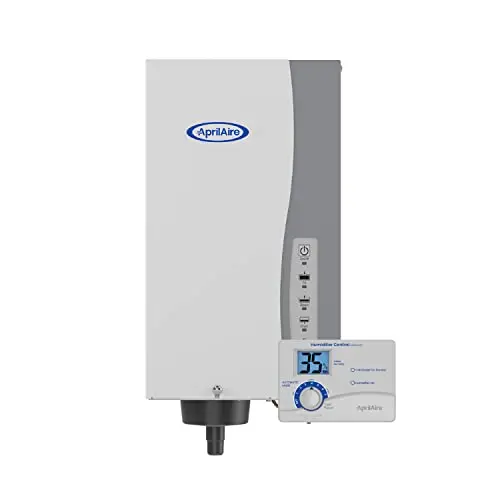
800 – Whole-House Automatic Steam
The AprilAire 800 is the true whole-house steam option in this lineup. It uses electrode steam technology, supports up to six output levels, and can serve homes up to 10,300 square feet in tight construction. Dual sensors monitor outdoor temperature and indoor humidity for automatic control.
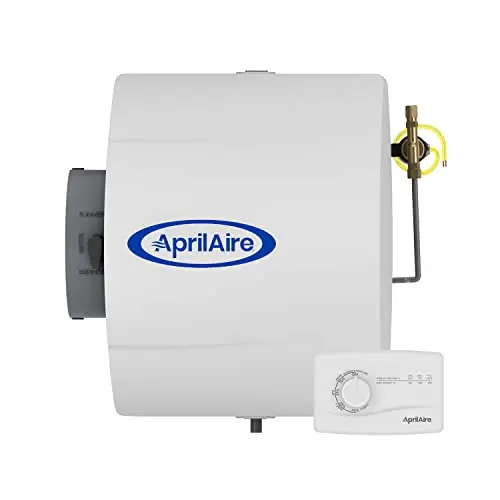
600M – Whole-House Evaporative Value
The AprilAire 600M is a whole-house evaporative humidifier, not a steam unit. It adds up to 17 gallons per day, covers up to 5,000 square feet in tight homes, and uses a manual humidistat for simple humidity control.

Cube Plus X50V – Stainless Steel Small-Space Mist
The Carepod Cube Plus X50V is a room-scale stainless steel humidifier with warm and cool mist, built-in heat sanitization, auto-humidity, and filter-free cleaning. It covers up to 700 square feet.

6L – Boiling Steam for Bedrooms
The Livatro 6L is a warm-mist humidifier that heats water to boiling and produces steam at room scale. Its 6-liter stainless steel tank, sleep mode, auto-clean function, and child lock suit bedrooms and nurseries.
How We Evaluated These Whole House Steam Humidifiers
We didn’t install these humidifiers in a test house or run them through a full heating season. What we did: cross-referenced four humidifiers from three brands across five decision axes – coverage and capacity, installation complexity, humidity control, cleaning and maintenance, and whole-house fit. We triangulated published specifications, feature sets, owner feedback where available, and use-case fit against the realities of ducted steam versus whole-house evaporative versus room-scale moisture.
The scoring framework weighted real-world fit (70%) – how well each humidifier delivers on its stated job in the home – against feature differentiation (30%) – unique technical advantages and use-case specificity. We have no commercial relationship with any of the brands featured; recommendations track fit and differentiation, not brand preference. For a true ducted setup, the AprilAire 800 is the clear starting point; if you need room-scale stainless convenience instead, the Carepod Cube Plus X50V makes more sense.
We treated ‘whole-house steam’ as a functional claim, not a label. That meant asking whether a unit actually produces vapor from boiling water, whether it distributes through ductwork, and what electrical, drain, and service requirements follow. We also weighed whether a whole-house evaporative model could be the smarter fit where steam’s power and maintenance demands don’t pencil out, and where a room-scale warm-mist or ultrasonic unit belongs only when ducted installation is impractical. That last distinction kept the lineup honest rather than treating every humidifier as interchangeable.
How to Choose the Right Whole House Steam Humidifiers
1. Whole-House Steam vs. Evaporative vs. Room Humidifiers
Start with the installation you can actually support. A whole-house steam humidifier boils water inside a canister or electrode assembly and sends vapor into the ductwork. It can run independently of furnace heat, which is why it’s the strongest fit for very dry climates and tight, well-sealed homes. An evaporative whole-house humidifier relies on airflow over a water panel, so it’s simpler but less forceful in bitter cold.
Room humidifiers are a different category. They can be warm-mist, ultrasonic, or evaporative, and they make sense for a bedroom, nursery, or office where ducted work isn’t practical. If you’re choosing a true ducted system, the AprilAire 800 is built for that job. If you want whole-house moisture with a simpler evaporative approach, the AprilAire 600M is the practical alternative.
2. Sizing a Whole-House Humidifier: Coverage and Capacity
Don’t shop by tank size alone. Whole-house humidifiers are rated by square footage and daily moisture output, usually in gallons per day. A tightly built home with good insulation needs less capacity than an older house with leaky windows and a lot of hardwood. Match the rating to your heated square footage, then leave a margin if your home runs dry in January.
Capacity also affects runtime. A unit that’s undersized will run constantly and still leave rooms feeling dry. One that’s oversized can overshoot, especially in milder weather. Look for multi-level output or automatic modulation so the system can scale back instead of cycling on and off.
3. Installation, Power, and Drainage for Steam Humidifiers
Steam models need more than a water line. Many require a dedicated circuit, and some can use 240V power for higher output. They also need a drain line for flushing and blowdown, plus a serviceable steam canister or electrode assembly. If your mechanical room is tight or your panel is full, that changes the math quickly.
Evaporative units are usually easier to fit because they tap into the ductwork and use a water supply and drain, but they still need a bypass or fan-powered airflow path. Room units need only an outlet and a flat surface, which is why they’re often the fallback when ducted installation is impractical.
4. Controls, Sensors, and Whole-House Comfort
A humidistat is the control brain. Manual models ask you to set a percentage and adjust with the seasons. Automatic models use indoor and outdoor sensors to prevent condensation on windows while keeping humidity in the comfortable range. That matters because the target isn’t a fixed number; it’s a balance between relative humidity, outdoor temperature, and how tight your house is.
Useful extras include a service indicator, auto shut-off, and app or digital control. None of these make a bad installation good, but they make a well-sized system easier to live with.
5. Maintenance, Water Quality, and Operating Costs
Steam humidifiers can scale. Electrode models actually rely on minerals in the water to conduct electricity, so purified water isn’t required, but the canister still needs replacement when it fouls. Evaporative models need a water panel swap and occasional duct cleaning. Room warm-mist units need descaling, especially in hard-water areas.
Factor in filter or canister costs, water use, and electricity. A cheaper unit with frequent service parts can cost more over several seasons. A service-friendly design with easy access and clear indicators is often the better long-term buy.
6. Budget Tiers and Whole-House Fit Without the Guesswork
Whole-house steam sits at the premium end because of the equipment, electrical work, and installation labor. Whole-house evaporative is usually the mid-range route, and room humidifiers are the entry point. The right tier depends less on upfront cost than on whether your home can support ducted steam and whether you’ll keep up with service.
If you’re sizing for a large, tight house and want automatic steam, the 800 is the defensible premium choice. If you need whole-house moisture but can accept a manual evaporative system, the 600M is the value play. For a single room, a stainless room unit like the Carepod Cube Plus X50V trades whole-house coverage for easier cleaning and no ductwork.
Frequently Asked Questions
1. Are all whole-house steam humidifiers actually steam?
No. Some products marketed as whole-house humidifiers are evaporative: they blow air across a wet water panel and send moisture into the ductwork. A true steam humidifier boils water first, using a canister or electrode assembly, then distributes vapor. That distinction affects output, electrical requirements, and maintenance. If you need steam’s output in cold weather, confirm the unit actually uses a steam canister.
2. AprilAire 800 vs Carepod Cube Plus X50V: which should you choose?
They solve different problems. The AprilAire 800 is a ducted whole-house steam humidifier with automatic dual-sensor control and coverage up to 10,300 square feet. It’s the right choice when you can support the electrical and drain work and want centralized moisture. The Carepod Cube Plus X50V is a room-scale stainless steel unit with built-in heat sanitization and filter-free cleaning. Pick it for a bedroom or office up to 700 square feet, not for whole-house duty.
3. AprilAire 600M vs Livatro 6L: evaporative whole-house or warm-mist room humidifier?
The 600M is the whole-house route. It uses an evaporative water panel and adds up to 17 gallons per day across a large home. The Livatro 6L is a room warm-mist unit that boils water and covers up to 550 square feet. Choose the 600M if you can tie into ductwork; choose the Livatro for a bedroom, nursery, or office where a ducted system isn’t practical.
4. What maintenance does a whole-house steam humidifier need?
Expect canister or electrode service, drain-line checks, and periodic inspection of the water supply. Scale is normal, and the service interval depends on water hardness and runtime. Evaporative units need water panel changes, while room warm-mist units need descaling. A service indicator helps, but it doesn’t replace a seasonal look.
Final Verdict
For most buyers who can support a ducted installation, the AprilAire 800 is the answer. It’s the only true whole-house steam unit in this group, and its dual-sensor automation, six output levels, and large-home capacity make it the closest thing to set-and-forget central humidity. If you want whole-house moisture without steam’s electrical and drain demands, the AprilAire 600M is the value-minded alternative, trading automation and steam output for a simpler evaporative system. And if ductwork isn’t happening, the Carepod Cube Plus X50V is the small-space pick we’d route to a bedroom or office, with stainless steel cleaning and heat sanitization. Choose by installation reality first, then by capacity and upkeep. The right whole-house steam humidifier is the one your home can actually support.
