
Best Wine Glasses For Cabernet Sauvignon – 2026 Reviews

Open a young cabernet in a small, narrow glass and you can taste the disappointment before you even swirl – the wine reads tight and closed, all grip and no fruit. Move that same bottle into a wide, generous bowl and it finally relaxes, softening its tannins and letting the dark fruit and oak step forward. If you’ve ever wondered why one glass flatters a wine and another flattens it, cabernet sauvignon is the varietal that makes the answer obvious.
A handful of things separate a glass that genuinely suits cabernet from one that merely looks the part. Bowl size and shape come first – cabernet wants room to breathe and a rounded bowl that focuses aromatics – followed by rim thinness, clarity, and how much abuse the glass can take in daily use. Set size and price tier matter too, because the right answer for a nightly pour isn’t always the right one for a dinner party.
We looked across the major glass makers to sort the dedicated cabernet bowls from the versatile all-rounders, so you can match the vessel to how you actually drink. Whether you want one glass tuned specifically for structured reds or a flexible set that handles a mixed cellar, the picks below cover the range.
Best Wine Glasses for Cabernet Sauvignon – 2026 Reviews

Extreme Cabernet – Purpose-Built for Bold Reds
The Extreme Cabernet is Riedel’s purpose-built glass for structured reds, with a diamond-shaped bowl engineered to soften tannin and push fruit forward. It’s a natural fit for cabernet sauvignon, and the machine-made build keeps it dishwasher safe and more forgiving than delicate hand-blown crystal.

28 oz Large Red Wine Glasses – Maximum Aeration Bowl
With a 28 oz bowl, the OJA set is built around surface area – the more wine touches air, the more a tight cabernet opens up. It’s hand-blown crystal with a wide base and a big aromatic opening, aimed squarely at people who like to swirl and savor.
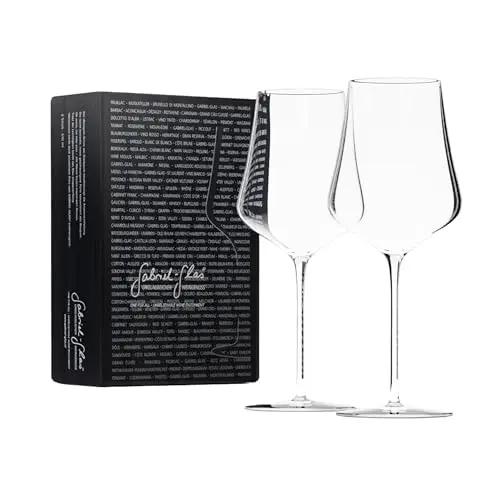
StandArt Crystal Wine Glasses – Universal All-Wine Fit
The StandArt is a universal glass – one shape Gabriel-Glas designed to flatter reds and whites alike. For cabernet it’s a versatile compromise: not as purpose-built as a Bordeaux bowl, but balanced enough to handle structured reds while doubling for everything else in your cabinet.

23 oz Burgundy Wine Glasses – Thin Rim, Long Stem
The BACLIFE set leans into the big-bowl, long-stem look that suits cabernet – a 23 oz hand-blown crystal glass with a thin rim and a generous foot. It’s aimed at wine lovers who want a restaurant-style red glass without a restaurant budget.

Bordeaux Crystal Wine Glasses – Golden Ratio Bowl
The JBHO is a Bordeaux-style glass built around a classic tulip bowl, a shape that nudges wine toward the back of the palate and tempers tannin. For cabernet that’s the right geometry, and the hand-blown crystal and gift-ready packaging add some occasion-day polish.

Layla Red Wine Glasses – Durable Everyday Set of 4
The Layla is an everyday red wine glass with a large, user-friendly bowl, sold as a set of four. It’s positioned for cabernet, merlot, and pinot noir alike, with a durable, dishwasher-safe crystal build that’s meant to survive regular use rather than sparing occasions.
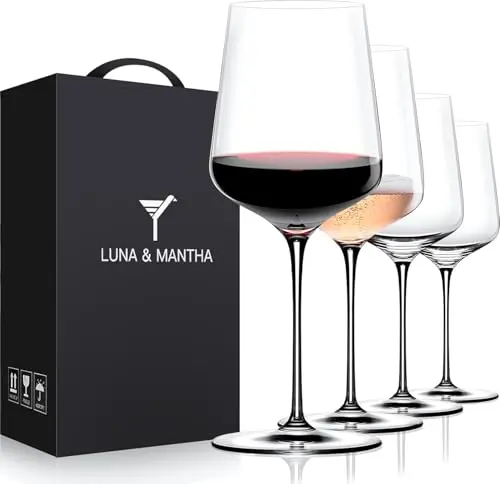
15 oz Red Wine Glasses – Budget-Friendly Set of 4
The LUNA & MANTHA set is a budget-friendly lineup of four red wine glasses with a seamless hand-blown rim and a dishwasher-safe crystal build. At 15 oz it’s on the smaller side for cabernet, but it’s a solid, good-looking everyday option for casual red drinking.
How We Evaluated These Wine Glasses
A cabernet sauvignon glass lives or dies by its bowl, so that’s the axis we built this roundup around. We didn’t pour our way through a full season of bottles or run any lab measurements on aeration. What we did: cross-referenced 7 wine glass models from 7 distinct brands across 6 decision axes – bowl capacity, bowl shape, rim thickness, crystal versus glass build, durability and dishwasher friendliness, and real-world cabernet fit. We triangulated published specifications, feature sets, and owner feedback where available, then mapped each glass against how people actually drink cabernet at home, from weeknight pours to dinner-party centerpieces. We weighed clarity and rim feel as much as raw capacity, since a cabernet glass is a tactile object first and a vessel second.
The scoring framework weighted real-world cabernet performance (70%) – how well a glass opens up a tannic red and carries its aromatics – against feature differentiation (30%) – unique shapes, build quality, and set-size practicality. We have no commercial relationship with the brands here, and the rankings track fit and differentiation rather than brand name. If you want a purpose-built cabernet glass, the Riedel Extreme Cabernet is the natural starting point; if you’d rather give your wine the largest bowl going, the OJA 28 oz is worth a close look. Both are strong cabernet options for different reasons, and the rest of the lineup rounds out the price and style spectrum around them.
How to Choose the Right Wine Glasses for Cabernet Sauvignon
1. Why Cabernet Sauvignon Benefits From a Bigger Bowl
Cabernet sauvignon is a big, tannic, aromatic red, and it responds to air. The wider and deeper the bowl, the more surface area the wine touches, and the faster those firm tannins soften and the fruit and oak start talking. A glass that’s too small can leave a young cabernet tasting tight and closed, no matter how good the bottle is.
Bowl shape matters alongside size. A rounded bowl that narrows toward the rim traps aromatics and funnels them toward your nose, while also steering the wine toward the back of your palate, where it reads more balanced. If aeration is your priority, the OJA 28 oz leans hardest into bowl size of anything here.
2. Bordeaux vs Universal Wine Glasses: Which Shape for Cabernet
The classic Bordeaux glass – a tall, tulip-shaped bowl – is the traditional match for cabernet, and it’s no accident. Its proportions are tuned to soften tannin and showcase structured reds, which is why so many dedicated cabernet glasses borrow the shape. A universal glass, by contrast, is a deliberate compromise: one bowl meant to flatter reds and whites alike.
If you drink mostly cabernet, a Bordeaux or cabernet-specific bowl gives you the most focused experience. If your cabinet already holds a mix of styles, a universal shape saves space and hassle. For the dedicated route, the Riedel Extreme Cabernet is built squarely around structured reds; for the flexible route, the Gabriel-Glas StandArt is the all-rounder to beat.
3. How Much Capacity Do Your Wine Glasses Actually Need
For cabernet, bigger generally reads better, but there’s a practical sweet spot. Glasses in the high teens to high twenties in ounces give the wine room to breathe, while leaving headroom so you never fill past the widest part of the bowl. A common mistake is pouring to the brim of a big glass, which defeats the purpose.
Pour roughly a third of the bowl and you’ll get the aeration and swirling room cabernet needs. Oversized glasses in the mid-to-high twenties push aeration further but demand more storage space and gentler handling.
4. Crystal vs Glass, Rim Thickness, and Clarity
Crystal glassware typically reads clearer and lets makers draw a thinner rim, which most people find more pleasant against the lips. Lead-free crystal is now the standard and avoids the old lead concerns entirely. Ordinary glass is often sturdier and cheaper, at some cost in clarity and refinement.
Don’t overlook the rim. A smooth, cold-cut edge improves both feel and how cleanly the wine flows, while a rolled or rough edge can distract. Clarity is cosmetic but real – a bright glass simply shows cabernet’s color better.
5. Durability and Dishwashing: What to Expect From Wine Glasses
This is where thin, elegant glasses meet real life. Many large red glasses are labeled dishwasher safe, yet thin crystal can still crack under the heat and jostling of a machine, and breakage during washing is a recurring theme. If you love a glass and want it to last, hand washing is the safer habit.
Pay attention to the stated care instructions rather than assuming – some gorgeous hand-blown sets are hand-wash only, while sturdier everyday glasses happily survive the dishwasher. Match your durability expectations to how hard you plan to use them.
6. What to Spend on Cabernet Wine Glasses
Cabernet glassware spans a wide range, and the good news is that you don’t need to overspend to drink well. Budget sets of four handle everyday cabernet capably, mid-range hand-blown options add nicer rims and bigger bowls, and premium single-glass designs charge for refinement and brand reputation.
Match the tier to how you drink. Casual weeknight pours suit an affordable, durable set, while a glass you reach for on special bottles justifies the step up. On the value end, the LUNA & MANTHA set keeps costs low; at the top, dedicated cabernet designs earn their premium through shape and finish.
Frequently Asked Questions
1. Do you really need a dedicated glass for cabernet sauvignon?
It genuinely helps, but it isn’t mandatory. A Bordeaux-shaped bowl softens tannin and focuses aromatics in a way a smaller all-purpose glass can’t fully match, so if cabernet is your main red, a dedicated shape is worth it. That said, a well-made universal glass handles cabernet impressively and saves cabinet space.
If you want one glass for everything, a universal design gets you most of the way; if cabernet is the point, a cabernet-specific bowl is the upgrade. The Gabriel-Glas StandArt is my pick for the do-it-all route, since it flatters structured reds without giving up flexibility.
2. What's the difference between the Riedel Extreme Cabernet and the OJA 28 oz glasses?
They solve the cabernet problem two ways. The Riedel Extreme Cabernet is purpose-built, with a diamond-shaped bowl tuned to structured reds and a machine-made, dishwasher-friendly build. The OJA 28 oz goes for raw scale – a bigger bowl for maximum aeration, hand-blown in crystal but calling for hand washing.
Choose the Riedel if you want a precise, low-maintenance cabernet glass and the OJA if you want the largest bowl and the most air contact, and don’t mind washing by hand.
3. Gabriel-Glas StandArt vs Riedel Extreme: which suits cabernet better?
Both are excellent, but they aim at different buyers. The Riedel Extreme is the more cabernet-focused of the two, with a bowl shaped specifically to tame tannic reds. The Gabriel-Glas StandArt is a universal glass – a touch more of a compromise for cabernet, but far more flexible if you also drink whites and lighter reds.
If cabernet is most of what you open, lean Riedel; if you keep a mixed cellar, the Gabriel-Glas earns its keep. Either way, both are among the strongest performers here.
4. How large should a cabernet sauvignon wine glass be?
For cabernet, look for a large bowl – somewhere in the high teens to high twenties in ounces is the practical range. Larger bowls give more air contact and swirling room, which helps a tannic red open up. The key is pouring about a third full, so there’s plenty of headroom above the wine.
Bigger isn’t automatically better for storage, though – oversized glasses eat cabinet space and reward careful handling, so balance capacity against how you’ll live with them.
5. Are large red wine glasses hard to clean and store?
They’re a bit more demanding, yes. Thin crystal, even when labeled dishwasher safe, does better with hand washing to avoid chips and cracks, and a big bowl means more surface to clean. Storage is the other tradeoff: oversized glasses need more shelf clearance and gentler stacking.
None of that is a dealbreaker. A dedicated set, careful washing, and a little cabinet space keep large cabernet glasses in great shape for years.
Final Verdict
For most cabernet lovers, the Riedel Extreme Cabernet is the answer. It’s the only glass here designed specifically around structured reds, it opens cabernet up beautifully, and it stays dishwasher-friendly – a rare combination of purpose and practicality.
If you want to give your wine maximum room to breathe, the OJA 28 oz leans harder into bowl size and delivers the most dramatic aeration of the lineup. And if budget is the priority, the LUNA & MANTHA set gets you clean, elegant red glasses for casual pours without overspending.
Match the glass to how you actually drink cabernet, and every bottle tastes a little better for it.
