
Best Wine Openers For Old Corks – 2026 Reviews

There’s a particular kind of silence that follows a cork crumbling into a glass of red you’d been saving. It usually happens with the bottle you care about most – the one that’s been lying down for a decade, the one with a soft, wine-stained cork that a standard corkscrew turns into confetti while you watch.
The openers that handle that moment aren’t necessarily the fanciest ones on the shelf. What separates them is approach: whether the tool drives a screw straight through the middle of the cork or grips it from the sides and lifts, and whether it applies force downward or outward. Get that part wrong and no amount of careful technique will save the bottle.
We surveyed the market for the tools people actually reach for on older bottles – two-prong pullers, blade-and-helix designs, air-pressure openers, double-hinged wine keys, wing corkscrews, self-pullers, and electric models – and sorted out which ones belong in a cellar and which are better left for Tuesday-night bottles. Every tool here opens wine. The question is what happens to the cork on the way out.
Best Wine Openers for Old Corks – 2026 Reviews
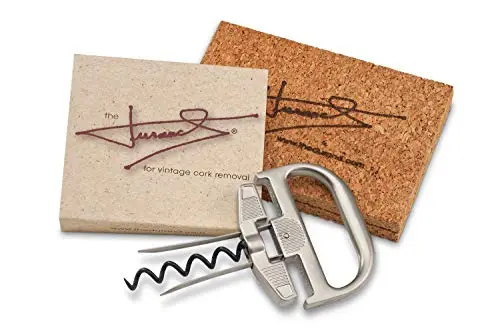
Two-Part Cork Remover – The Fragile-Cork Specialist
A two-part tool that pairs a helix with a thin flexible blade. The blade slips between cork and glass to break the seal, then the helix draws the cork out whole and holds it contained – the approach sommeliers reach for on bottles old enough to make you nervous.
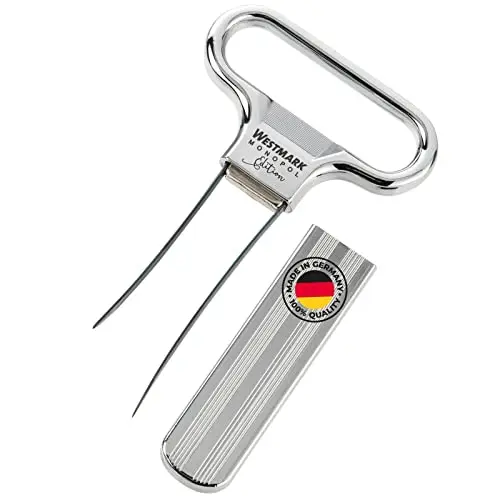
Ah-So Two-Prong Cork Puller – Vintage Bottle Workhorse
A classic two-prong puller: the prongs slide down either side of the cork, then a rocking motion lifts it free without a screw ever puncturing the centre. The die-cast handle conceals a bottle opener in its base.
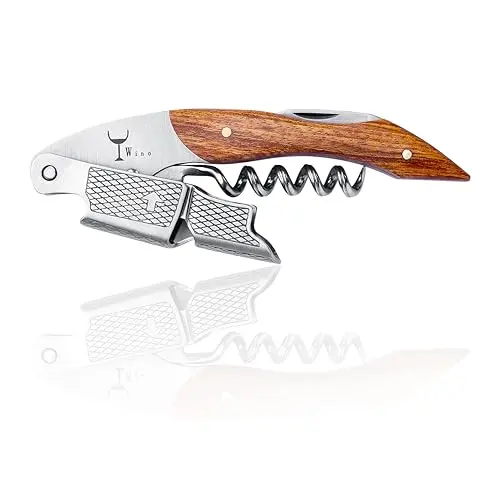
Wine Key – Double-Hinged Sommelier Corkscrew
A double-hinged waiter’s corkscrew with a grooved worm, a curved foil knife, and a spring-loaded lever. It covers everyday bottles, older corks that need a second hinge position, and beer caps in a single tool.
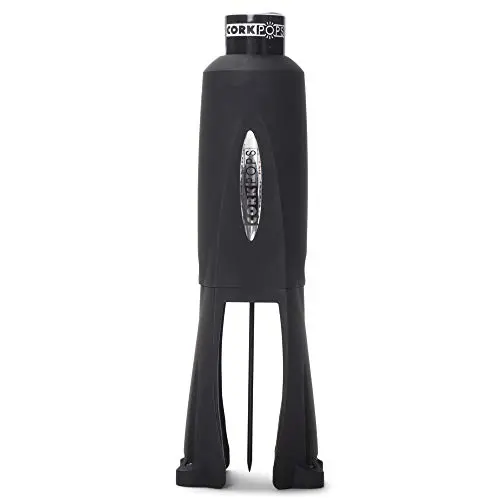
Legacy Wine Opener – Push-Button Cork Removal
Instead of pulling, this one pressurizes. A needle passes through the cork, a button releases low-pressure inert gas, and the cork rides out on the pressure. The base holds a four-blade foil cutter.
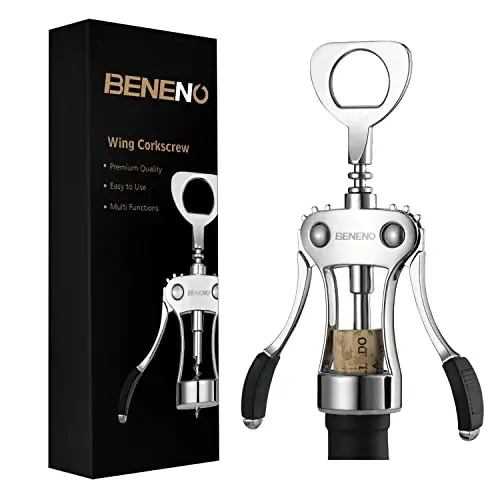
Wing Corkscrew – Zinc Alloy Everyday Opener
A zinc alloy wing corkscrew with a mechanical gear that keeps the worm centred and a built-in cap opener in the handle. Straightforward, sturdy, and easy to hand to a guest.

Cordless Electric Wine Opener – Push-Button Convenience
A cordless electric opener on a recharging base. Press a button, the spiral drives in and lifts the cork out; a foil cutter is included for the capsule.
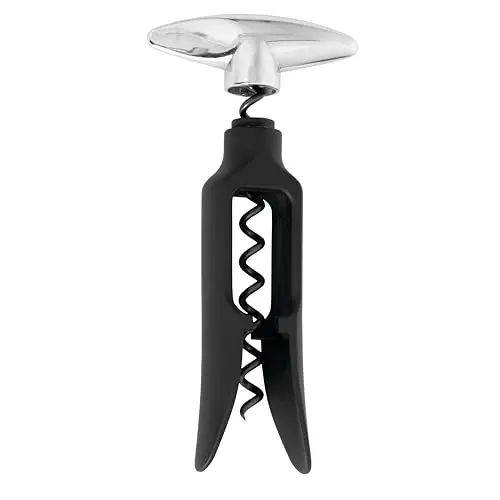
Self-Pulling Corkscrew – Twist-and-Lift Design
A self-pulling corkscrew: you turn the chrome handle, the frame braces against the bottle rim, and the cork climbs out on its own thread. No separate lever, no hard pull.

Ah-So Two-Prong Puller – Budget Vintage Cork Tool
A compact, no-frills two-prong puller in stainless steel. It uses the same side-grip approach as pricier versions, at a fraction of the cost.
How We Evaluated These Wine Openers for Old Corks
A few things we can’t tell you: how each of these feels after a hundred bottles, or which one will still turn smoothly in five years. What we can tell you is how they stack up on paper and in owner experience. We cross-referenced eight wine openers from eight distinct brands across five decision axes – extraction mechanism, how the tool contacts the cork, build materials, ease of use, and fit for aged or fragile corks. We triangulated published specifications, feature sets, and aggregated owner feedback where available, then mapped every tool against three opening scenarios: a firm recent-vintage cork, a soft twenty-year-old cork, and a cork that’s already partly compromised.
The scoring weighted real-world performance on older corks (70%) – does the tool get a fragile cork out whole without drama, and how much of the outcome depends on your hand steadying the bottle – against feature differentiation (30%), meaning build quality, included extras, and how precisely each design suits a particular kind of buyer. There’s no commercial relationship with any brand here, and recommendations track fit rather than brand preference. Where owner feedback was thin or contradictory, the write-up says so instead of filling the gap with guesswork. If your cellar leans old, The Durand is the safest call; if you’d rather spend less and lean on technique, the Monopol Germany Ah-So Two-Prong does the same job with more skill required.
How to Choose the Right Wine Opener for Old Corks
1. Why Old Corks Fail – and What Kind of Wine Opener Prevents It
A cork spends twenty years absorbing wine at the bottom and drying at the top. By the time you pull it, the lower half can be soft enough to tear with almost no resistance while the upper half still grips the glass. That mismatch is why through-the-cork tools struggle: the screw grabs the strong part and the weak part shears off behind it.
The openers that do better avoid that fight entirely. Two-prong pullers and the blade-and-helix design of The Durand grip or support the cork along its sides instead of boring down its centre. Air-pressure openers skip mechanical force altogether and push the cork out from inside the bottle. Neither approach is foolproof once a cork has already failed, but both give a fragile cork far better odds than a standard wing corkscrew.
2. Two-Prong Pullers vs Air Pumps vs Waiter's Keys for Old Corks
Two-prong pullers are the traditional answer for old corks and still the most reliable manual method: two thin steel prongs slide down between cork and glass, then a rocking motion lifts the cork whole. The catch is technique – get the angle wrong and you either bend a prong or push the cork inward.
Air-pressure openers are fast and demand almost no skill, but they depend on a solid seal between cork and neck, which is exactly what a worn cork may not give you. Double-hinged wine keys sit in the middle: the second hinge position keeps the pull vertical so an ageing cork is less likely to shear, though the worm still passes through its centre. If you want one tool for everyday bottles plus the occasional older one, the Wino Wine Key is the pick.
3. What to Look for in a Wine Opener for Old Corks
Start with prong thickness. Prongs need to be thin enough to slip into a tight neck but stiff enough not to fold under pressure, so hardened steel and stainless steel are the materials to look for. On screw-based tools, check the sharpness and coating of the worm: a blunt or heavily coated spiral tears cork instead of cutting into it.
Then think about frame rigidity and handle size. A two-prong puller with a small grip is harder to control, and that’s usually when corks get pushed in rather than lifted. On waiter’s keys, a double hinge matters more than any other single feature. And on any tool, a foil cutter that actually cuts saves you sawing at the capsule with a paring knife and nicking the top of the cork before you’ve even started.
4. Cork Condition, Bottle Age, and Storage: Reading the Bottle First
Before you pick a tool, look at the cork. Wine-stained sides and a spongy top mean it has absorbed wine and is likely to tear. A cork sitting slightly proud or slightly sunken tells you more about storage conditions than anything else on the bottle. If the top crumbles under a fingernail, reach for the gentlest method you own rather than the most convenient one.
Bottles stored upright dry out faster, which is a common reason a cork fails the moment something grips it. Lying storage keeps the cork wet and more cooperative. None of that changes which opener you choose, but it does change how much patience the job deserves.
5. Budget, Mid-Range, and Premium Wine Openers for Fragile Corks
At the entry level you can get a working two-prong puller for very little money. Expect thinner steel and a smaller grip, but the underlying method is identical, which makes it a sensible way to learn whether you like the technique before committing.
The mid-range is where most buyers land: better materials, a heavier handle, and prongs that stay straight. That’s the sweet spot for a home cellar. At the premium end you’re paying for a mechanism designed specifically around fragile corks rather than adapted to them, plus the confidence that nothing was compromised to hit a price. The E&EY Ah-So covers the budget end of this lineup.
6. Technique and Care: Getting an Aged Cork Out in One Piece
Clean the neck, cut the foil below the lip, and wipe the rim so you can see what you’re dealing with. With a two-prong puller, work one prong down at a time with a slight rocking motion, keeping both against the glass rather than against the cork. With a blade-and-helix tool, seat the blade fully before turning anything. Then lift slowly and steadily, because speed is what breaks old corks.
After use, wipe the metal parts dry rather than leaving them damp, and check prongs for a slight bend before it becomes a permanent one. A tool stored clean and straight won’t tear your next cork. If you open older bottles regularly, The Durand is the one worth learning the technique on.
Frequently Asked Questions
1. What's the difference between The Durand and a standard two-prong Ah-So opener?
Both avoid driving a screw through the centre of the cork, but they get there differently. A two-prong puller slides two steel prongs down either side of the cork and lifts it with a rocking motion, which relies on your hand keeping both prongs flat against the glass. The Durand adds a thin blade that travels between cork and neck to break the seal before a helix draws the cork up and holds it contained.
In practice the blade step gives fragile corks more support, and the helix reduces your dependence on technique. The trade-off is cost and a couple of practice bottles before it feels second nature.
2. Do air-pressure wine openers work on old, fragile corks?
They can, and when they do it’s the least physical method available – a needle through the cork, a burst of low pressure, and the cork rises without any pulling force at all. The limitation is the seal between cork and glass. A shrunken or wine-soaked cork may let pressure escape, and then nothing happens no matter how many times you press the button.
The Cork Pops Legacy is the most established version of this design in the lineup, with a replaceable cartridge and a foil cutter built into the base. Treat it as a fast option for sound corks rather than a rescue tool for a failing one.
3. Is a wing corkscrew or a waiter's key better for older bottles?
A waiter’s key with a double hinge is the better of the two for an ageing cork, because the second hinge position keeps your pull vertical instead of angled – the Wino Wine Key is the example here. A wing corkscrew such as the Beneno pushes a lot of force downward through the wings as the screw descends, which is precisely the direction a fragile cork doesn’t want.
Wings are quicker and easier to teach a guest, so they’re fine for younger bottles. Just don’t hand one to someone opening a twenty-year-old red.
4. How do you get out a cork that has already broken or dropped into the bottle?
If part of the cork still sits above the rim, grip it gently with the thinnest instrument you own and pull straight up rather than levering sideways. If fragments have dropped into the wine, decant through a fine mesh strainer before serving – the wine is fine, the cork is not.
A cork pushed entirely into the bottle is a job for long tweezers or a corkscrew angled in to hook it, and there’s no tidy version of that operation. This is exactly the outcome that two-prong and blade-based tools are designed to prevent in the first place.
5. Is an electric wine opener a bad idea for old corks?
Not bad, just mismatched. Electric openers drive a spiral through the centre of the cork and lift with motor torque, which is efficient on a healthy cork and unforgiving on a brittle one – there’s no feel to warn you that the cork is starting to give way.
Reports on models like the Oster also flag charge retention and stalling as recurring issues over time. They’re genuinely useful for anyone with limited hand strength on everyday bottles. For a fragile vintage, keep a two-prong or blade-and-helix tool in the drawer instead.
Final Verdict
For most people opening bottles they actually care about, The Durand is the answer – it’s the only tool here built from the ground up around fragile corks, and it shows in how little the outcome depends on technique. If that’s more tool than you need, the Monopol Germany Ah-So Two-Prong delivers the same side-grip approach for far less outlay, with a bit more skill required. For one everyday opener that handles both a Tuesday bottle and an occasional older one, the Wino Wine Key is what we’d keep in the kitchen drawer. And if the budget is tight, the E&EY Ah-So gets you two-prong technique for pocket change – just accept the small grip and basic build.
