
Best Wood Stove Humidifiers – 2026 Reviews

Dry winter air has a way of making a warm room feel less comfortable than it should. A wood stove throws heat, but it also pulls moisture out of the air, and that’s where a cast iron steamer earns its spot on the stovetop. The best wood stove humidifiers are simple by design: fill with water, set them on a hot surface, and let evaporation do the work without cords, filters, or a refill schedule that fights your day.
The category splits along a few practical lines. Capacity and footprint decide how often you refill and whether the pot crowds the stove. Lid design affects how quickly steam escapes. Coating and seasoning determine whether the interior stays clean or turns into a rust project. Decorative models can be charming, but they still need to hold water, sit steady, and survive heat.
We looked across the market at cast iron steamers and humidifiers built for wood-burning stoves, from whimsical statement pieces to plain workhorses. This guide is about matching the pot to your stove, room size, and tolerance for upkeep, not about chasing one brand’s aesthetic.
Best Wood Stove Humidifiers – 2026 Reviews

20-120 Lattice Top Steamer – Enamel-Coated Humidifier
A balanced enamel-coated cast iron steamer with a lattice top, two side handles, and a 2.5-quart capacity. It’s designed to release steam steadily without electricity or filters.
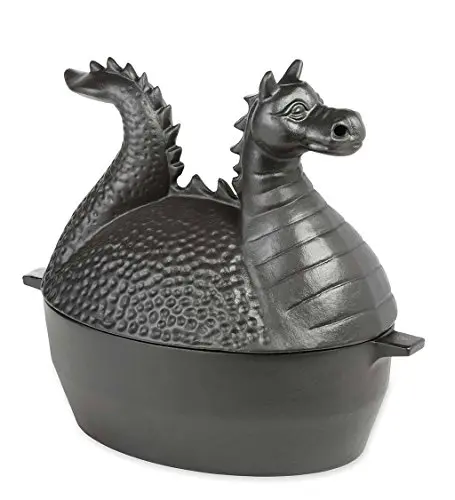
Dragon Steamer – Whimsical Cast Iron Humidifier
A 14-pound cast iron dragon steamer with a 2.75-quart top-fill pot and a removable lid. Steam exits through the dragon’s nostrils for a playful, functional centerpiece.
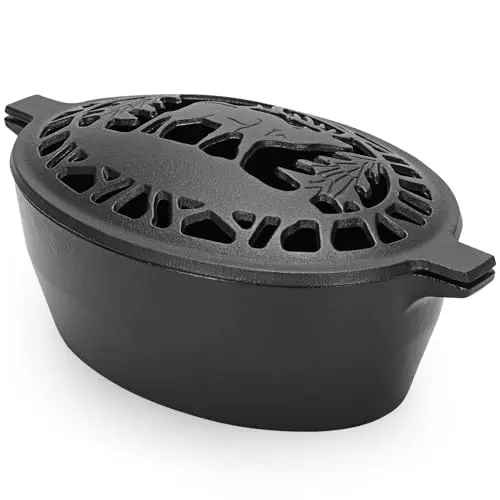
Deer-Lid Steamer – Decorative Cast Iron Humidifier
A 9-pound cast iron steamer with a enamel inner coating and a hollowed deer-pattern lid. The 2.5-quart capacity suits normal evening burns, and the matte finish blends into rustic or modern rooms.

OMF23-215 Vine-Design Steamer – Compact Rust-Resistant Humidifier
A compact round steamer with a porcelain enamel interior and a vine-design lid. The 2.5-quart pot is built for smaller stoves and easy top-filling.
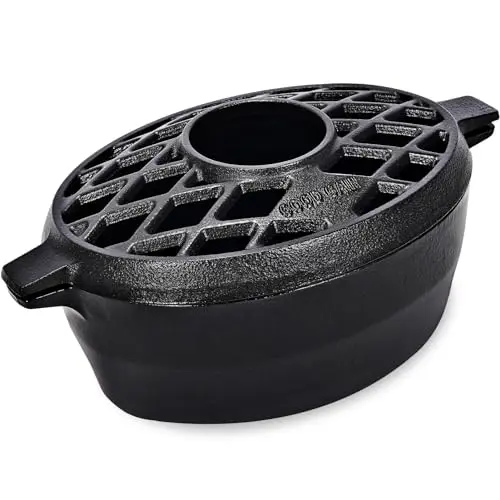
GAF22-181 Lattice Steamer – Easy-Fill Enamel Humidifier
A 2.5-quart lattice steamer with a porcelain enamel coating and a wide fill opening. Two side handles and a removable top make it practical for daily winter use.
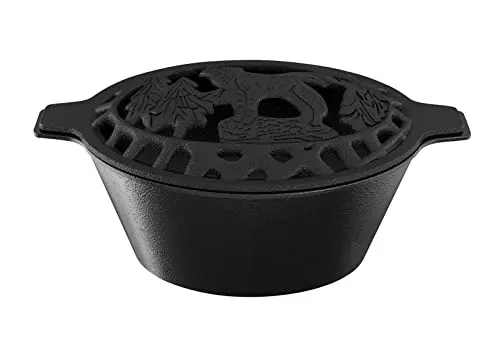
Wolf Lattice Steamer – Aromatherapy Cast Iron Humidifier
A budget-friendly cast iron steamer with a carved lattice lid, dual side handles, and a 2.3-quart capacity. The hollow lid doubles as an aromatherapy diffuser.

Chrome-Handle Iron Kettle – Large-Capacity Stove Humidifier
A classic cast iron kettle with a spring chrome cool-touch handle and a wide flat base. It’s built for long heating sessions and a more traditional cabin look.

ZQG Dual-Layer Steamer – Simmer Pot and Stove Humidifier
A compact 1.4-quart cast iron steamer with a dual-layer trivet insert and a perforated lid. It works as a humidifier, simmer pot, and protective stove base.
How We Evaluated These Wood Stove Humidifiers
We didn’t run controlled humidity-output tests or multi-season durability trials. What we did: cross-referenced 8 wood stove humidifier models from 7 brands across 5 decision axes – capacity and footprint, cast iron and coating quality, steam-release design, stability and handling, and care and rust resistance. We triangulated published specifications, feature sets, and aggregated feedback where available, then weighed each option against realistic use in cabins, living rooms, and small stove setups. We also audited the small details that separate a pleasant steamer from a chore: lid openings, handle placement, fill method, and storage needs. Where specs were thin, we leaned on design and care instructions rather than assuming performance. The goal was a practical shortlist, not a laboratory ranking.
The scoring framework weighted real-world fit and performance (70%) against feature differentiation (30%). Real-world fit covered how much water a pot holds, how steadily it releases steam, and how much upkeep it demands. Differentiation covered enamel coatings, decorative lids, handle designs, and dual-use features. We have no commercial relationship with any brand here; recommendations track fit and differentiation, not brand preference. A steamer that is hard to fill or dry will get used less, no matter how nice it looks. If you want the most balanced everyday steamer, the INNO STAGE 20-120 is the one we’d point most people toward. If you’d rather have a decorative statement piece, the Plow & Hearth Dragon Steamer is the stronger match.
How to Choose the Right Wood Stove Humidifiers
1. Capacity and Footprint: Sizing a Wood Stove Humidifier to Your Room
Start with the size of the room and the size of your stove top. A 2.5-quart capacity is a practical middle ground for most living rooms and cabins; smaller pots need more refills, while oversized pots can crowd the stove and take longer to heat. Think about footprint as well as volume. A wide oval base can sit more steadily than a tall kettle, but it may block access to a stove door or flue control. If you have a small stove, a compact steamer is easier to live with than a giant one. If you want a balanced everyday size, the INNO STAGE 20-120 is the pick. If you need the largest pot here and don’t mind a statement piece, the Plow & Hearth Dragon Steamer fits that role.
2. Cast Iron, Enamel, and Rust: What Matters for Wood Stove Humidifiers
Cast iron holds heat well, which is why it dominates this category. Bare cast iron can be seasoned like a skillet, but it needs drying and oiling to stay ahead of rust. Porcelain enamel or enamel-coated interiors are easier to wipe clean and generally resist rust better, though the coating can chip if you scrub with metal tools. Neither option is maintenance-free. A steamer that sits wet on a cold stove is asking for trouble regardless of finish. Look for a smooth interior and a removable lid if easy cleaning matters to you; both make a bigger difference than a fancy exterior.
3. Steam Output and Lid Design: Lattice, Open, and Figurative Tops
The lid is the control surface. Lattice tops spread steam across a wider area and often double as aromatherapy diffusers when you add potpourri or essential oils. Open top-fill designs are easier to refill mid-burn, but they can release steam in a more concentrated column. Figurative lids, like a dragon or deer, are mostly decorative, though the openings still affect flow. More holes and a wider surface area generally mean faster evaporation, while a tight lid slows things down. Match the lid to your routine: frequent refills favor an open or wide-mouth design, while all-evening humidity favors a larger pot with steady vents.
4. Stability, Handles, and Safe Refilling on a Hot Stove
A humidifier that slides or tips on a hot stove is a problem. Look for a wide flat base and enough weight to stay planted, especially in homes with kids or pets. Dual side handles help when the pot is cool, but no handle makes a hot cast iron pot safe to grab bare-handed. A cool-touch chrome handle or a spring handle can reduce risk if you need to shift the kettle, but still use a glove. Refill with care: pour slowly, keep water off the stove surface, and never move a steaming pot unless you have to. If budget is the priority, the Fire Beauty Wolf Lattice Steamer is the value pick, but give it a stable spot and handle it carefully.
5. Care, Seasoning, and Storage for Long-Term Use
Empty the pot once the stove cools, then dry it thoroughly before storage. Bare cast iron benefits from a light coat of food-grade oil; enameled models need a gentler touch and no abrasive scrubbers. Keep the lid off during storage so air can circulate, and tuck a paper towel inside if the room is damp. That small habit matters more than any marketing claim about rust resistance. If you use essential oils, clean the interior afterward so residue doesn’t build up. Careful storage in a cool, dry place will do more for longevity than leaving the steamer on a cold stove between fires.
6. How Much Should You Spend on a Wood Stove Humidifier?
Budget-friendly steamers cover the basics: cast iron, a lid with vents, and enough capacity for a normal room. Mid-range models add enamel coatings, easier fill openings, and more polished handles. Premium picks bring larger capacity, distinctive designs, and heavier castings that feel more stable on the stove. Spend more only if you want a specific look, a bigger water reservoir, or a coating that is easier to clean. A fancy exterior won’t make up for a pot that is hard to fill or dries out too fast. Pick the size and finish that match your routine, then choose the design you’ll actually enjoy looking at.
Frequently Asked Questions
1. Do wood stove humidifiers actually add enough moisture to a room?
They can, but they are passive evaporators, not whole-home humidifiers. Output depends on stove temperature, water capacity, and lid design. A hot stove and a wide vented lid will release more moisture than a cool fire and a tight cover. In a large open room, expect a modest boost rather than a dramatic change. A 2.5-quart pot is a reasonable starting point for a normal living room or cabin; smaller pots need more refills, and bigger rooms may benefit from more than one source of humidity.
2. What's the difference between the INNO STAGE 20-120 and the Plow & Hearth Dragon Steamer?
The INNO STAGE 20-120 is the more balanced everyday steamer, with an enamel-coated body, a lattice top, and a straightforward 2.5-quart capacity. The Plow & Hearth Dragon Steamer is larger and more decorative, with steam exiting the dragon’s nostrils and a 2.75-quart capacity. The Plow & Hearth is the better choice if you want a statement piece and can handle seasoning maintenance; the INNO STAGE 20-120 is easier to recommend for pure function. Neither is a high-output room humidifier, so match expectations to the stove.
3. Are enamel-coated cast iron humidifiers better than bare cast iron?
Not universally. Enamel coatings are easier to wipe clean and usually resist rust better, but they can chip if you use abrasive tools. Bare cast iron can be seasoned and repaired more easily, yet it demands thorough drying and oiling. The right choice depends on your patience: enamel suits low-maintenance routines, while bare iron rewards a little care. In both cases, emptying the pot and drying it fully matter more than the label on the box.
4. What's the difference between the Fire Beauty Wolf Lattice Steamer and the 1MORE OMF23-215?
The Fire Beauty Wolf Lattice Steamer is the budget-minded option, with a carved lattice lid, a 2.3-quart capacity, and a lower upfront cost. The 1MORE OMF23-215 is more compact and rust-conscious, with a porcelain enamel interior and an open top-fill design. If you want aromatherapy on a tight budget, the Fire Beauty Wolf Lattice Steamer is the value pick. If you want easier cleaning and a smaller footprint, the 1MORE is the better fit.
5. Can I use essential oils or potpourri in a wood stove humidifier?
Many cast iron steamers are designed for it. Add a few drops of essential oil or a pinch of potpourri to the water, and the steam carries the scent. Check the interior finish first: porcelain enamel is easier to clean after oils, while bare cast iron may hold residue if you skip washing. Avoid strong acids or abrasive cleaners, and rinse thoroughly between scents. If you have pets or respiratory sensitivities, keep the scent light and ventilate the room.
Final Verdict
For most buyers, the INNO STAGE 20-120 is the wood stove humidifier to beat. It has the capacity, enamel-coated build, and easy-fill design that make daily use feel simple, and it doesn’t ask you to baby a decorative finish. If you want the stove to make a statement, the Plow & Hearth Dragon Steamer is the premium choice, with the largest pot and a dragon that actually puffs steam. On a tighter budget, the Fire Beauty Wolf Lattice Steamer gets you aromatherapy and a usable capacity for less, provided you accept the finish tradeoffs. And if your stove is small or you want a compact steamer, the 1MORE OMF23-215 is the easier fit. Pick the size and finish that match your room, and the rest is just keeping the water fresh.
