
Best Wool Duvet Inserts – 2026 Reviews

There’s a specific kind of bad night where you throw the comforter off at 2 a.m., pull it back on at 3, and repeat until the alarm goes off. That’s usually not a temperature problem – it’s a humidity problem. Wool duvet inserts exist to fix exactly that, and the good ones do it without the bulk or the cost of a down comforter.
The catch is that “wool” on a product page covers an enormous range. A 100gsm summer insert and a 400gsm thermal insert are both sold as wool duvet inserts, and they solve opposite problems. The shell matters just as much: a smooth sateen cotton sleeps very differently from a plain weave, and noise is a genuine variable if you’re a light sleeper. Care is the third axis – a few of these can be laundered at home, most demand dry cleaning, and that gap compounds over years of ownership.
What follows is a market survey, not a brand pitch. We sorted the category by fill weight and build quality, then matched each option to the kind of sleeper it actually suits – the perpetually overheated, the cold-bedroom crowd, and everyone in between.
Best Wool Duvet Inserts – 2026 Reviews
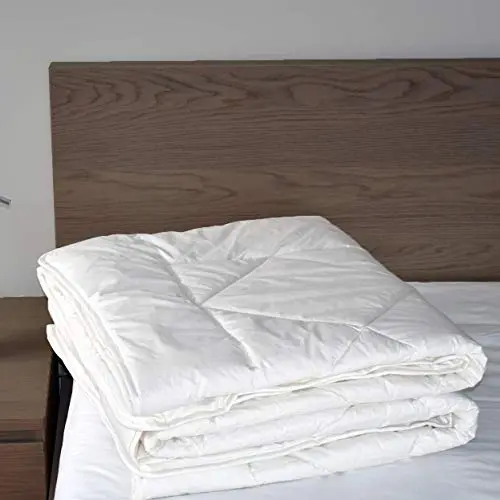
Premium Australian Wool Comforter – Mid-Weight Year-Round Warmth
A true mid-weight insert built on 400gsm of Australian wool inside a 300 thread count sateen cotton shell. The wool is naturally odor-resistant, the finished product carries OEKO-TEX Standard 100 certification, and the king size runs a generous 104 by 90 inches. Sold from crib through king.
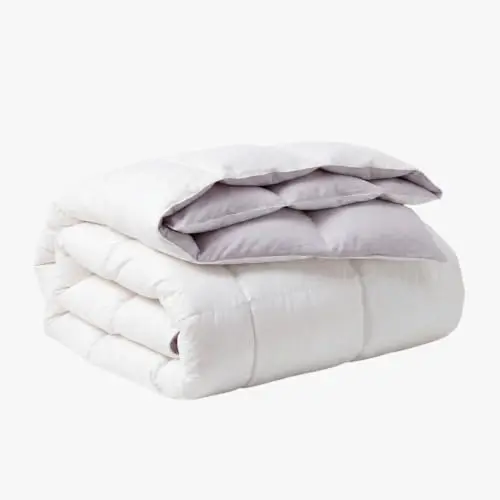
Merino Wool & Down Comforter – Humidity-Fighting Climate Control
A 70/30 blend of Australian Merino wool and Hungarian white goose down, built with a sewn-in chamber design and a lightweight breathable cotton shell. Aimed at sleepers who want wool’s moisture handling with a little extra loft, and offered in a space grey finish as well as white.
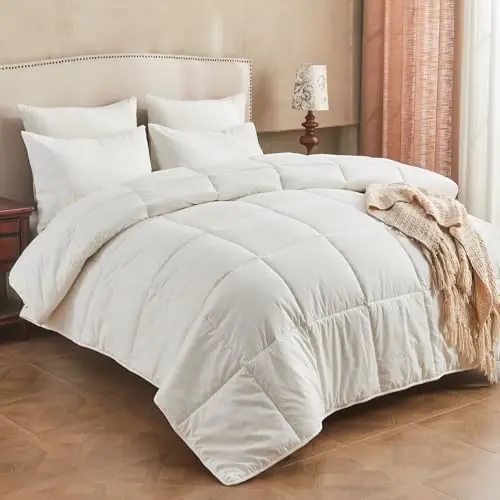
Australian Wool Duvet Insert – Organic Cotton, Machine Washable
An entry-level all-season insert pairing Australian wool fill with an organic cotton shell carrying both OEKO-TEX and OCS certification. Box-stitch construction keeps the fill distributed, hidden corner loops hold a duvet cover in place, and it’s listed as machine washable – rare in this category. Sold from twin through king.
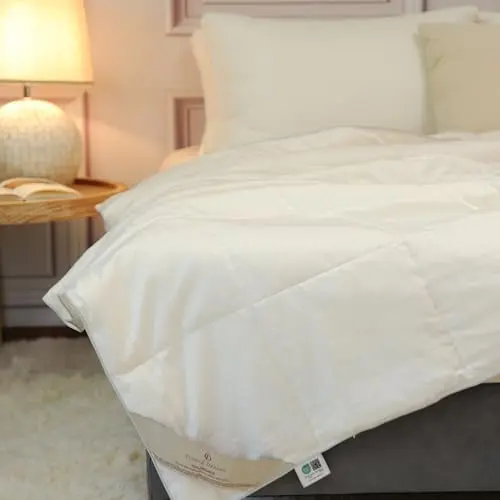
Classic Wool Comforter – Lightweight Summer Weight
A summer-weight insert with 120gsm of Australian wool under a jacquard cotton shell finished in a subtle checkered pattern. Double-stitched seams with piping, eight ties across corners and edges, and a short inspection zipper that lets you check the fill. OEKO-TEX Standard 100 certified; this listing is the twin, 68 by 88 inches.
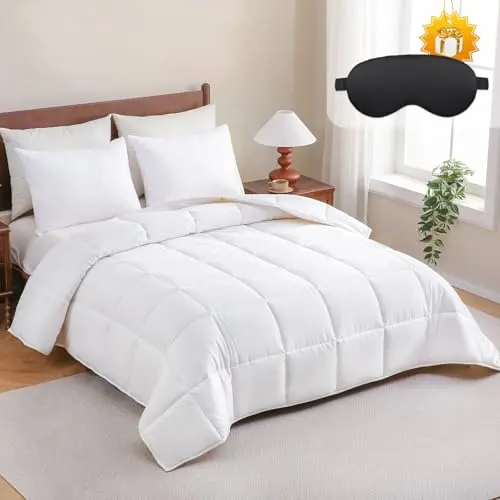
All-Season Lamb Wool Comforter – 300gsm Balanced Warmth
A 300gsm all-season insert filled with finer Australian lamb wool, listed at 22 micron, inside a 100% cotton shell. Lattice quilting keeps the fill from shifting, reinforced 3D edging protects the perimeter, and eight corner loops anchor a cover. The queen measures 90 by 90 inches and arrives vacuum compressed – a low tumble dry brings the loft back.
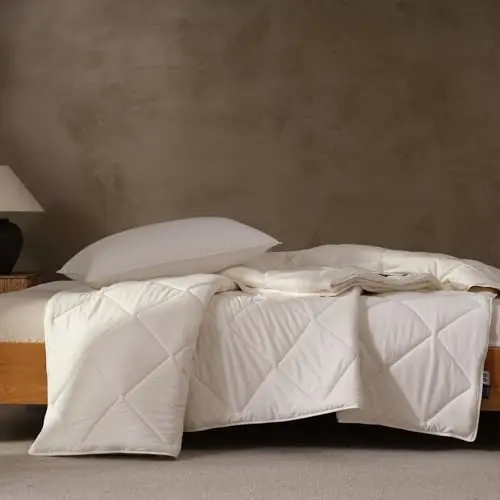
Pure Wool Comforter – Thermal Weight for Cold Bedrooms
A thermal-weight insert with 400gsm of Australian wool under a 310 thread count sateen cotton cover. Diamond quilting keeps the fill distributed, eight fabric loops hold a duvet cover in place, and the build carries both OEKO-TEX and Responsible Wool Standard certification. This listing is the twin, 68 by 90 inches.
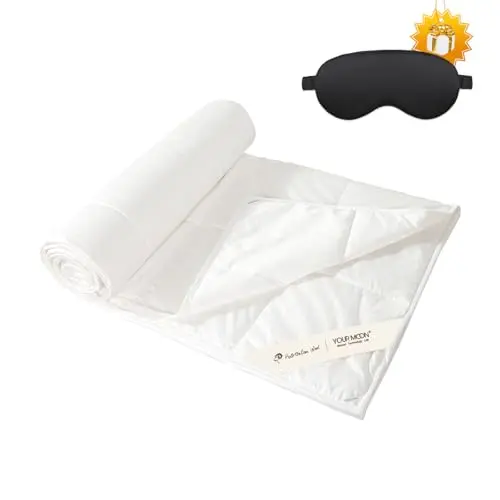
Summer Weight Wool Comforter – 100gsm for Hot Sleepers
A 100gsm summer-weight insert filled with Australian lamb wool and wrapped in a 100% cotton shell. Lattice quilting holds the fill flat, 3D edging protects the border, and four corner loops keep a cover in place. The queen measures 90 by 90 inches and arrives compressed, refluffing with a low tumble dry.
How We Evaluated These Wool Duvet Inserts
We didn’t sleep under each of these inserts through a full winter and a full summer. What we did: cross-referenced seven wool duvet inserts from seven distinct brands across seven decision axes – fill weight in GSM, wool fiber type and sourcing, shell fabric and thread count, quilting pattern and loft retention, breathability and temperature regulation, care requirements, and sizing with cover-attachment hardware. Fill weight carried the most weight in our notes, because it’s the single number that best predicts whether an insert runs hot, cold, or year-round.
We triangulated published specifications, certification details, feature sets, and owner feedback where available, then mapped each insert against representative buyer profiles – hot sleepers, cold-bedroom sleepers, and people who want one comforter to handle everything. Two inserts can look identical in photos and sleep completely differently.
The scoring framework weighted real-world sleep fit (70%) – whether an insert delivers on its stated warmth class without overheating – against feature differentiation (30%), meaning the shell quality, quilting, certification, and care terms that separate one wool insert from another. We have no commercial relationship with any of these brands; recommendations track fit and differentiation, not brand preference.
If you want one insert for all four seasons, the Woolino Premium Australian Wool Comforter is the closest match. If the budget is tighter, the KUSNUG Australian Wool Duvet Insert covers most of the same ground for far less.
How to Choose the Right Wool Duvet Inserts
1. Fill Weight Is the Real Spec in a Wool Duvet Insert
Ignore the adjectives and find the GSM. Fill weight in grams per square meter is the number that actually predicts how an insert will sleep. The spread in this category is wide: summer inserts run around 100 to 150gsm, all-season inserts cluster near 300gsm, and thermal inserts push 400gsm and above. Two inserts with identical shells and wildly different fill weights are effectively different products.
Treat those bands as a starting point, not gospel. Wool’s crimped fiber structure moves moisture instead of trapping it, so a 400gsm wool insert still breathes better than a 400gsm polyester one. That’s why a well-made wool comforter can feel warm without the clammy, heavy sensation synthetics produce. If you sleep hot, err light. If your bedroom drops cold at night, err heavy.
2. Why Wool Sleeps Cooler Than Down and Polyester
Wool’s advantage isn’t magic, it’s moisture management. A wool fiber absorbs a meaningful share of its own weight in water vapor and releases it again, which keeps the microclimate under your duvet from turning humid. Humidity, more than raw heat, is what wakes most people up sweating.
Two other properties matter. Wool is naturally odor-resistant, so it stays fresher between cleanings, and it has a wide thermal comfort band – it insulates when you’re cold and sheds excess warmth when you’re not. Down is exceptional at trapping heat but has no comparable moisture handling without a technical shell, while polyester is cheap and washable but holds humidity and static. If you alternate between freezing and sweating through the night, wool is usually the fix.
3. Cotton Shells, Thread Count, and Why Noise Matters
The shell is what you actually touch, so it deserves more attention than it usually gets. A sateen-weave cotton in the 300 to 310 thread count range – used on a couple of the inserts here – gives a smooth, slightly glossy hand and, crucially, stays quiet as you move. Cheaper shells rustle. If you’re a light sleeper or share a bed with one, that rustle is a genuine annoyance at 3 a.m.
Jacquard and checkered weaves add texture and a slightly more structured feel, while plain weaves breathe best. Whatever the weave, look for a noise-free or silent claim and weigh the thread count against the fill weight – a heavy shell on a summer insert defeats the entire purpose.
4. Woolino vs YOUR MOON: Two Very Different Wool Duvet Inserts
These two get compared constantly because both market themselves as four-season inserts, but they aren’t interchangeable. The Woolino runs 400gsm of Australian wool under a 300 thread count sateen shell and comes in crib, twin, queen, and a notably generous king. It’s the heavier, smoother, more premium build of the pair.
The YOUR MOON all-season insert uses 300gsm of finer lamb wool – listed at 22 micron, softer than the coarser wool in budget inserts – in a plain cotton shell. It sleeps a touch lighter and feels softer under a cover. If you want the warmer build and the wider size range, the Woolino Premium Australian Wool Comforter is the pick. If you run temperature-neutral and want the softer hand, the YOUR MOON all-season model makes more sense.
5. Washable, Hand-Wash, or Dry Clean Only: Care Reality for Wool Bedding
Wool bedding is not low-maintenance, and the care label should influence your purchase as much as the fill weight. Most inserts in this category specify dry clean only or professional wool cleaning; some allow hand washing, and a smaller subset claim machine washable construction. Agitation and heat are what felt wool, so anything machine-washable usually arrives with cold-water and low-heat caveats.
The practical workaround is a duvet cover, washed weekly while the insert itself gets aired. A few inserts here add an inspection zipper or extra ties so the cover stays put through repeated laundering. If easy care is a priority, the KUSNUG Australian Wool Duvet Insert is the one in this lineup that leans that direction.
6. Sizing, Loops, and Quilting: Details That Decide Daily Comfort
Two queens aren’t always the same. A standard queen insert is 90 by 90 inches, but king sizing varies a lot – some run 104 by 90, which is the difference between a cover that drapes properly and one that leaves a gap. Measure your cover before you buy, and remember wool inserts don’t stretch.
Then look at quilting and loops. Lattice, diamond, and box-stitch patterns all hold the fill in place, but denser stitching means less loft and less shifting. Eight attachment points – four corners plus four edges – hold a cover noticeably better than the standard four. If you want the most secure cover attachment here, the CUDDLE DREAMS Classic Wool Comforter uses eight ties plus a piped, double-stitched edge.
Frequently Asked Questions
1. What's the difference between the Woolino comforter and the YOUR MOON all-season comforter?
Both sit in the all-season band, but they get there differently. The Woolino runs a 400gsm Australian wool fill behind a 300 thread count sateen shell, which makes it the warmer and smoother of the two, and it spans crib through king with a roomy 104 by 90 inch king. The YOUR MOON uses 300gsm of finer lamb wool in a plain cotton shell, so it’s slightly lighter, softer to the hand, and sold in queen at 90 by 90 inches. Pick the Woolino Premium Australian Wool Comforter if you want one insert for a cold room and a wide size range; pick the YOUR MOON if you sleep temperature-neutral and prefer a softer wool at a lower tier.
2. Is a 400gsm wool duvet insert too warm for year-round use?
Usually not, and that surprises people. 400gsm of wool sounds heavy, but wool’s moisture-wicking behavior dumps excess humidity instead of holding it against your skin, so it sleeps cooler than the number implies. That said, 400gsm is genuinely a cold-room weight – in a mild climate or a warm bedroom it can be too much. If you sleep hot or live somewhere without real winters, a 300gsm all-season or 100 to 150gsm summer weight is the safer bet. Match the fill to your bedroom, not to the product page.
3. KUSNUG vs CUDDLE DREAMS: which wool duvet insert should a hot sleeper buy?
They solve different problems. The CUDDLE DREAMS is a dedicated summer-weight insert at 120gsm, with a jacquard cotton shell, eight cover ties, and stricter dry-clean-only care – it’s the better choice if overheating is your main complaint and you want a purpose-built light layer. The KUSNUG is a thicker all-season build with an organic cotton shell and a machine-washable claim, so it’s more versatile and easier to live with, but it holds more warmth. If you overheat easily and want a single insert for the warm half of the year, go with the CUDDLE DREAMS Classic Wool Comforter.
4. Can you machine wash a wool duvet insert?
Rarely, and the label is the only thing that counts. Most wool inserts here specify dry clean only or hand wash, because agitation and heat can felt the fibers and collapse the loft. A few list machine-washable construction, and those are worth prioritizing if you have pets or kids. In every case, a duvet cover is your first line of defense – launder the cover weekly and the insert itself rarely needs more than airing out.
5. How do I refluff a wool duvet insert after it arrives compressed?
Give it air and low heat. Vacuum compression is standard shipping practice for wool bedding, and several inserts here arrive looking flat or slightly hardened. The fix is a low tumble dry for roughly half an hour, which loosens the fibers and restores loft. Skip high heat – it’s the fastest route to damaged wool. After that, airing the insert over a railing every few weeks keeps it fresh and helps it recover shape between washes of the cover.
Final Verdict
For most buyers, the Woolino Premium Australian Wool Comforter is the answer. Its 400gsm mid-weight fill covers the widest slice of real bedrooms, the sateen shell stays quiet, and the certified build justifies sitting at the top of the range. If the budget is tighter, the KUSNUG Australian Wool Duvet Insert gets you an organic cotton shell and washable care for a lot less. Sleeping hot? The CUDDLE DREAMS Classic Wool Comforter is the purpose-built light layer. And if your bedroom genuinely runs cold, the EP Mode Pure Wool Comforter brings the thermal weight. Match the fill to your room, buy a decent cover, and wash the cover often – that’s the whole game with wool bedding.
