
Best Yoga Meditation Pillows – 2026 Reviews

You sit down, cross your legs, close your eyes, and within four minutes your left foot is asleep and your lower back has opinions. That’s not a discipline problem. It’s a geometry problem, and it’s the reason floor sitting goes badly for so many people who would otherwise stick with meditation.
The fix is almost always a meditation pillow that raises your hips above your knees, and the differences between them come down to two things: what’s inside, and what shape it’s cut into. Buckwheat hulls shift and hold where you put them. Foam and cotton stay put but resist molding to your body. A round zafu, a crescent, a rectangular bolster, and a flat zabuton mat each solve a different part of the same problem.
We looked across brands in this category and sorted the options by who they actually suit: the daily sitter with cranky knees, the restorative-yoga person who needs a firm prop, the apartment dweller who wants something that doesn’t look like gym equipment. Below you’ll find the picks, plus the fill and height tradeoffs that decide whether a cushion helps or just gets in the way.
Best Yoga Meditation Pillows – 2026 Reviews
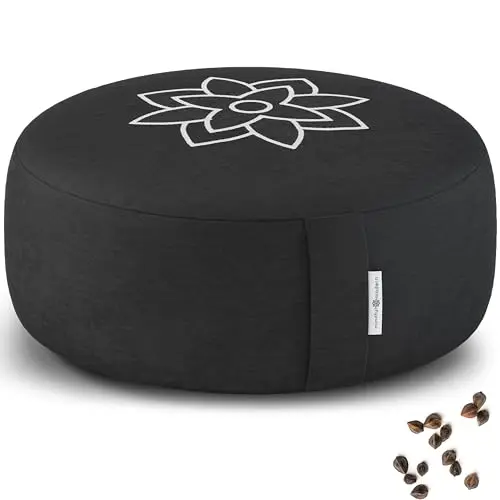
Round Buckwheat Zafu – Adjustable Fill, 16-Inch Seat
A round buckwheat zafu about 16 inches across and 4.5 inches tall, with a removable organic cotton cover and a zippered inner pouch you can top up or thin out. It reads as decor rather than gym gear.
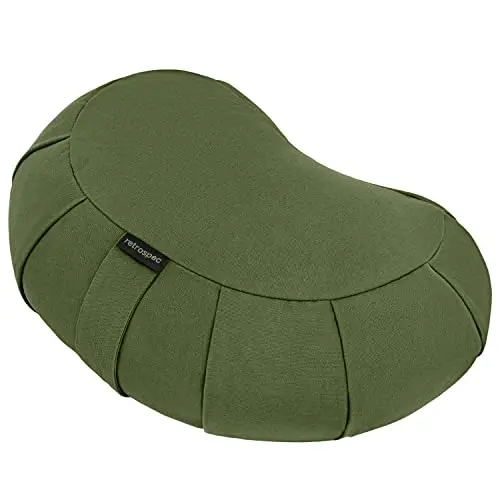
Sedona Crescent Cushion – Hip and Leg Support
A crescent-shaped buckwheat cushion with a zippered inner compartment so you can dial the fill in. The wedge profile tips your hips forward and takes weight off the backs of your thighs, and the cotton cover comes off for the wash.
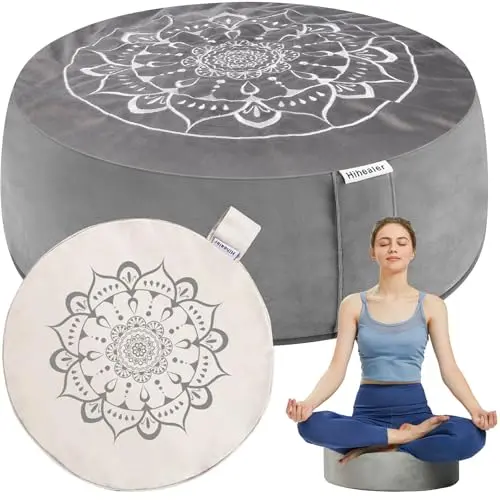
Tibetan Velvet Zafu – Buckwheat Support, Two Covers
A Tibetan-style round zafu in velvet with buckwheat hull fill and a lotus pattern. It ships with a second cover, which is unusual for this category, and the outer layer comes off for washing.
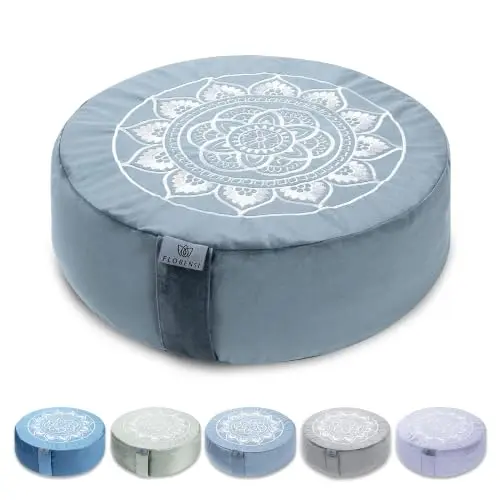
Velvet Zafu – Buckwheat Floor Seat for Daily Practice
A round zafu filled with buckwheat hulls and wrapped in a removable velvet cover in an ocean-blue print. A hidden handle makes it easy to move between rooms, and the cover is machine washable.
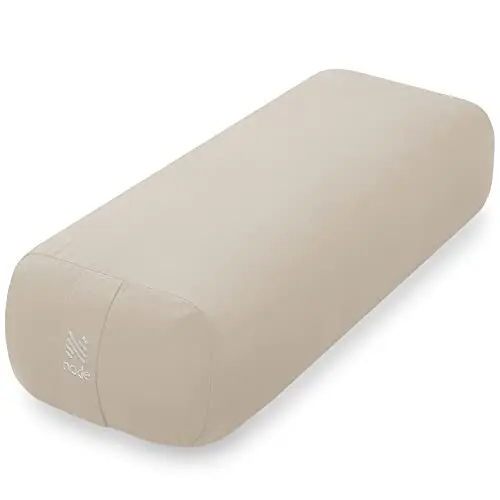
Organic Cotton Bolster – Firm Alignment Support
A 25-by-12-by-6 inch rectangular bolster stuffed with organic cotton and wrapped in a GOTS-certified organic cotton cover. It’s firm enough to hold alignment under body weight, and a hidden YKK zipper keeps the removable cover clean-looking.
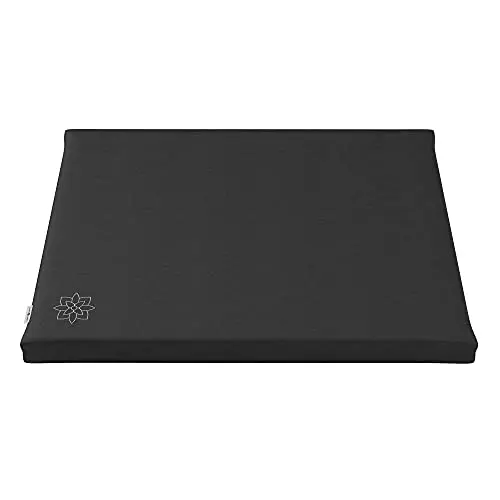
Zabuton Meditation Mat – Knee and Ankle Cushioning
A 36-by-28 inch rectangular floor mat with all-cotton fill and a removable cotton twill cover. It goes under a zafu or a bench to cushion knees, ankles, and feet against a hard floor.
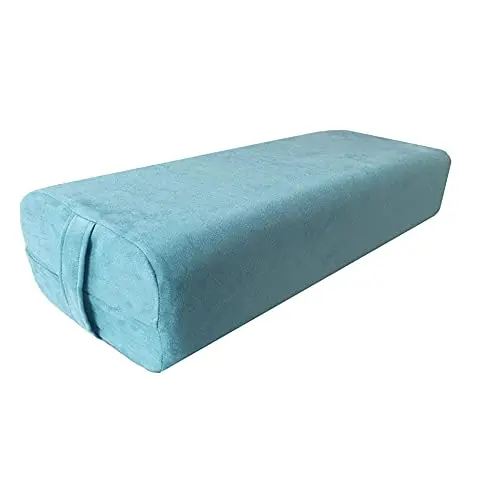
Tri-Layer Foam Bolster – Dual-Firmness Support
A rectangular bolster built from three laminated foam layers rather than a loose fill, so it holds a wedge shape instead of settling. Washable suede-feel cover, a carry handle, and a 25.6-by-9.8-by-6 inch footprint.
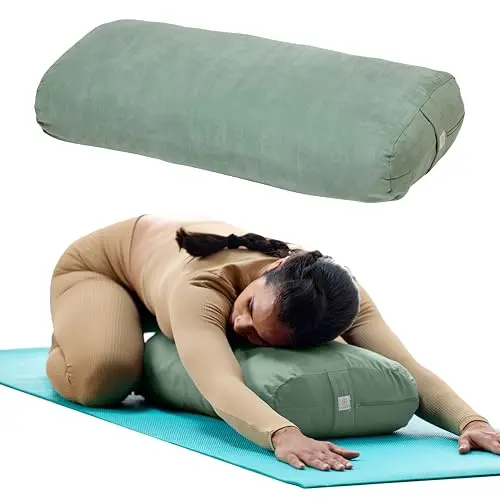
Restorative Yoga Bolster – Cushioned Fiber Support
A rectangular bolster with a dense polyester-cotton blend fill and a polyester cover that zips off for washing. The sewn-in handle makes it easy to reposition mid-practice, and it works for restorative poses, pranayama, and simple leg elevation.
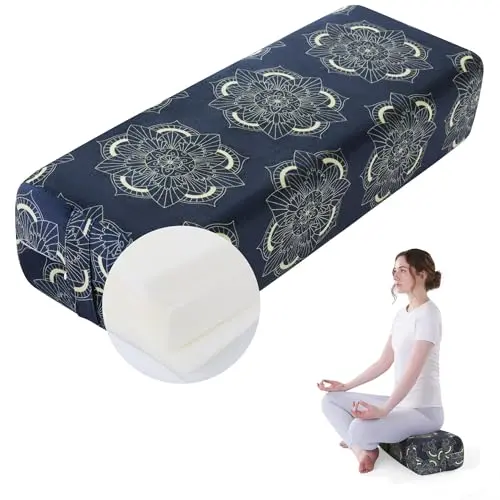
Triple-Layer Sponge Bolster – Soft Support for Restorative Work
A 25.6-by-9.8-by-6 inch rectangular bolster with a three-layer sponge core and a soft cotton pillowcase that zips off for washing. The handle makes it easy to shift between the mat and the sofa.
How We Evaluated These Yoga Meditation Pillows
We didn’t run a multi-week sitting trial on each of these cushions or measure compression under body weight with a gauge. What we did: cross-referenced nine meditation pillows from eight brands across six decision axes – fill material, shape and seat height, firmness adjustability, footprint and portability, cover care, and the practice style each cushion is built for. We triangulated published specifications, audited what actually ships in the box, and weighed owner feedback where available against the buyer profiles that show up in this category: daily sitters, restorative practitioners, and people who just want to sit on the floor without their knees filing complaints.
The scoring framework weighted real-world fit (70%) – how well a cushion does its stated job, whether that’s lifting hips above knees for a long sit or holding a rigid wedge under your spine – against feature differentiation (30%) – adjustable fill, washable covers, dual-firmness foam cores, and the small design decisions that keep one option from being interchangeable with the next. We have no commercial relationship with any brand listed; recommendations track fit and differentiation, not brand preference.
What we can’t tell you is how a specific cushion feels under your specific sit bones on day forty. What we can do is point you at the right shape for your practice and flag the tradeoffs before you buy. If you sit cross-legged and want one cushion that adapts as you learn what your body wants, the Mindful Modern round cushion is your match. If your practice leans restorative and you need a rigid prop under your spine, the Node Fitness bolster is the better tool.
How to Choose the Right Yoga Meditation Pillow
1. Zafu, Bolster, or Zabuton: Which Meditation Cushion Shape Fits Your Practice
A zafu is the round or crescent cushion most people picture. It lifts your hips so your knees drop below them and your spine can stack without effort, which makes it the right tool for cross-legged sitting. A bolster is the long rectangular prop: it goes under your spine, hips, or knees in restorative poses and holds a wedge shape under body weight. A zabuton is the flat rectangular mat underneath everything, cushioning knees and ankles against a hard floor.
Most people need one of these, not all three. If you sit cross-legged to meditate, start with a zafu. If your practice is mostly lying-down restorative work, a bolster earns its space first – the Node Fitness bolster is the obvious starting point there. The zabuton is the third purchase, the one you make when your knees start complaining about the floor itself.
2. What's Inside: Buckwheat Hulls vs. Cotton vs. Foam Filling
Buckwheat hulls are the most common fill for meditation cushions, and for good reason: they shift to match your contours, they don’t compress into a flat disc, and you can add or remove them to change seat height. The tradeoff is weight and a little rustle when you settle in. Cotton filling is quieter and lighter but compresses over time under daily use. Foam, especially laminated multi-layer foam, holds a shape reliably and shrugs off moisture, though a solid core can’t be tuned the way loose fill can.
Two practical rules. If you plan to sit for more than fifteen minutes at a stretch, prioritize a fill you can adjust. And if you’re sensitive to smells, air out a new natural-fill cushion for a few days before you judge it – organic cotton and buckwheat both arrive with a warehouse scent that fades.
3. Why Seat Height Matters More Than Cushion Thickness
Thickness is the wrong spec to shop by. Seat height is the one that decides whether your practice is comfortable. The goal is hips above knees, ideally with a gentle forward tilt in the pelvis so your spine stacks without muscular effort. For most sitters that means a cushion roughly four to six inches high, though hip flexibility, leg length, and whether you’re sitting on a mat all move that number.
This is why adjustable fill matters more than any single measurement on a spec sheet. A cushion you can thin out will fit you after a few weeks of practice; a fixed-height cushion either works on day one or never does.
4. Adjustable Fill Is the Feature That Keeps a Meditation Pillow Useful
A zippered inner pouch is the least glamorous feature in this category and the one that most affects whether a cushion survives the first month. Unzip it, remove a cup or two of hulls, and a seat that was too tall becomes one that fits. Add hulls back and it suits a firmer practice or a taller sitter.
If you’re between sizes or buying your first cushion, prioritize this above everything else. A crescent shape with adjustable fill, like the Retrospec Sedona, is the more forgiving starting point: the wedge profile tilts your pelvis forward and the fill lets you correct your own guess later.
5. Pairing a Cushion With a Mat: When You Actually Need Both
A zabuton isn’t a replacement for a cushion, and a cushion isn’t a replacement for a mat. The cushion does the alignment work; the mat does the contact work, keeping knees, ankles, and the tops of your feet off a hard floor during longer sits and kneeling practice.
Buy the mat second. If you sit on carpet, you may never need one. If your floor is tile, concrete, or hardwood over a slab, a zabuton like the Mindful Modern Zabuton turns a twenty-minute sit from an endurance test into something you’d repeat tomorrow.
6. What Meditation Pillows Cost at Each Tier
At the entry tier, expect a simple buckwheat or foam cushion with a washable cover and not much else. The mid-range is where adjustable fill, organic or velvet covers, and two-cover bundles show up. The premium tier buys larger footprints, denser fills, and longer warranties, which is useful if you sit daily and less so if you’re still figuring out whether floor sitting is for you.
One honest note on value: the differences that matter most are shape and fill adjustability, and both are available well below the top of the market. Spending more mostly gets you better covers and more generous dimensions, not a fundamentally better sit.
Frequently Asked Questions
1. Retrospec Sedona vs. Mindful Modern round cushion: what's the difference?
The Sedona is a crescent, cut lower at the back so your legs drape down and your pelvis tips forward. The Mindful Modern round cushion is a classic circular zafu with a 16-inch footprint that gives you a wider base and more room for a loose cross-legged position. Both use adjustable buckwheat fill and a washable cotton cover, so the real fork is shape.
Choose the Retrospec Sedona if your hips are tight or you want the cushion doing more of the tilting for you. Choose the round Mindful Modern if you sit in a wide, open posture or want more surface under each knee.
2. Node Fitness bolster vs. Gaiam bolster: which is better for restorative yoga?
The Node Fitness is the firmer of the two, with organic cotton fill and a GOTS-certified cover, so it holds its height under a full backbend. The Gaiam uses a polyester-cotton blend that gives more, which suits pranayama, neck support, and leg elevation better than it suits deep supported backbends.
If you want a rigid platform under your spine, go Node Fitness. If you want something to prop your legs on at the end of the day and a synthetic cover doesn’t bother you, Gaiam is fine.
3. Do I need both a zafu and a zabuton?
Only if the floor is the problem. A zafu fixes hip and knee height. A zabuton fixes contact pressure on the knees, ankles, and feet. On carpet most people never need the mat; on hardwood or tile, the mat is often what makes a thirty-minute sit possible, because the cushion alone leaves your ankles resting on a hard surface.
4. Is buckwheat better than foam for a meditation pillow?
They solve different problems. Buckwheat hulls mold to your body, stay cooler, and can be added or removed to change height, which is why most zafus use them. Foam holds a shape permanently, doesn’t rustle, and can be laminated in layers with different firmness, which is why bolsters favor it.
For seated meditation, buckwheat is the more flexible choice. For a prop you lie on or brace your legs against, a firm foam or dense cotton bolster is easier to live with over time.
5. What helps most if cross-legged sitting hurts your knees?
Height first, padding second. Raising your hips so your knees drop below them takes strain off the hip flexors and the inside of the knee, and it’s the single biggest change most people can make. If that isn’t enough, add a mat underneath so the knees and ankles aren’t resting directly on a hard floor.
If you’re starting from scratch, the Mindful Modern Zabuton addresses the floor-contact problem directly, and pairing it with any buckwheat zafu gets you both fixes at once.
Final Verdict
For most people, the Mindful Modern round buckwheat cushion is the answer. The adjustable fill means it fits your body now and still fits after a month of practice, the cotton cover is actually washable, and it doesn’t demand a second purchase to be comfortable.
If you’re just starting out and want the lower-risk shape, the Retrospec Sedona crescent tips your pelvis forward for you, which is forgiving for tight hips and holds up over years.
Restorative practitioners should skip zafus entirely and get the Node Fitness bolster, which stays rigid under body weight in a way no buckwheat cushion will. And if your knees complain about the floor rather than your hips, the Mindful Modern Zabuton is the missing layer under whatever cushion you already own.
Whichever you pick, buy one you can adjust. That single feature decides whether a meditation pillow ends up in daily rotation or in the closet.
